
Prawn Facts for Kids
“Prawn” is a common name rather than one perfectly fixed scientific group. In many biological descriptions it refers especially to shrimp-shaped decapod crustaceans in the suborder Dendrobranchiata, which have tree-like branching gills and usually release their eggs into the water. Everyday names vary by country, so some animals called prawns belong to other groups and may be called shrimp elsewhere.
Quick Prawn Facts
- Scientific Focus: Suborder Dendrobranchiata, the group most often called true prawns
- Animal Type: Decapod crustacean
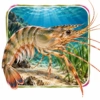
- Known For: Branching gills, long antennae, stalked eyes, muscular abdomen, and tail fan
- Walking Legs: Usually five pairs, for ten total
- Habitat: Mostly marine water from coasts to the deep sea; common-name “prawns” also include freshwater species
- Diet: Algae, plankton, detritus, worms, tiny crustaceans, and other available food
- Young: Free-swimming larvae that change through several stages
- Range: Species occur in waters around the world
- Conservation: Varies by species and fishery; habitat damage, pollution, bycatch, and unsustainable harvest can cause problems
What You’ll Learn
Explore 10 fascinating prawn facts for kids about antennae, shells, swimming legs, tail fans, molting, and watery habitats, with a quiz, glossary, and activity
Easy explanations make them great for children, families, teachers, and young nature fans.
10 Fun Prawn Facts for Kids
1. Prawn Is an Imprecise Common Name
Scientists often use prawn for Dendrobranchiata, but ordinary English does not follow one worldwide rule. Size alone cannot reliably separate every prawn from every shrimp, and markets in different countries use the words differently.
Kid Decode: A seafood label is not always a scientific family tree.
2. Prawns Are Crustaceans
Prawns are arthropods related to shrimp, crabs, lobsters, krill, and barnacles. Their bodies have jointed limbs, segmented regions, a hard outer covering, and gills for taking oxygen from water.
Kid Decode: A prawn is closer to a crab than to any fish.
3. Their Gills Branch Like Tiny Trees
Dendrobranchiate prawns are named for the feathered, branching gills protected beneath the carapace. “Dendro” means tree and “branchia” means gills, describing the structures used for gas exchange.
Kid Decode: Hidden under the shell is a miniature forest of breathing branches.
4. Five Pairs Are Walking Legs
A typical decapod has five pairs of thoracic walking legs, giving the order Decapoda its “ten-footed” name. Other appendages serve as mouthparts or swimming structures and are not counted among those ten walking legs.
Kid Decode: The ten in decapod counts walking legs, not every moving attachment.
5. A Hard Carapace Protects the Front
The head and thorax are joined into a cephalothorax covered by a shield called the carapace. It protects the gills and internal organs, while the segmented abdomen remains flexible for swimming.
Kid Decode: The front wears a shield while the back stays bendy.
6. Antennae and Stalked Eyes Explore
Long antennae detect touch, water movement, and chemicals, while compound eyes sit on movable stalks. Together these senses help a prawn find food, notice shelter, communicate, and detect predators.
Kid Decode: A prawn samples its watery world with feelers and movable lookout eyes.
7. The Tail Fan Powers a Fast Escape
Strong abdominal muscles snap the body downward and forward, driving the tail fan against the water. The sudden movement shoots the prawn backward away from danger.
Kid Decode: When surprised, a prawn can leave tail-first in a single springy flick.
8. Most Are Flexible Feeders
Many prawns eat a mixture of algae, plankton, decaying material, worms, tiny crustaceans, and other small organisms. Diet changes with species, age, habitat, time of day, and available food.
Kid Decode: A prawn may graze, scavenge, and hunt during the same watery night.
9. Growing Requires a Molt
The rigid exoskeleton cannot expand, so a prawn forms a new covering beneath the old one, splits the old shell, and pulls free. The new shell is soft until it absorbs minerals and hardens.
Kid Decode: For a short time after changing armor, a prawn wears a soft new suit.
10. True Prawns Release Eggs Into Water
Female dendrobranchiate prawns generally spawn eggs directly into the water rather than carrying them beneath the abdomen. The hatchlings pass through several tiny larval forms before becoming postlarvae and juveniles.
Kid Decode: A baby prawn begins as a drifting shape that changes again and again.
The Weirdest Prawn Fact
The branching gills of true prawns look so much like tiny trees that they inspired the scientific name Dendrobranchiata. These delicate breathing structures stay hidden beneath the hard carapace instead of waving in open water.
Try This Prawn Activity
Build a Tail-Fan Escape
Draw a prawn from the side and label the carapace, antennae, stalked eyes, five walking-leg pairs, segmented abdomen, swimmerets, and tail fan. Fold the paper at each abdominal segment like an accordion. Curl it tightly and release it to model a tail flip, then draw an arrow showing why the animal moves backward.
Quick Prawn Quiz
- Does “prawn” identify one perfectly fixed scientific group everywhere? Answer: No.
- What kind of animal is a prawn? Answer: A decapod crustacean.
- How many pairs of walking legs does a typical decapod have? Answer: Five pairs.
- What powers a prawn’s backward escape? Answer: Strong abdominal muscles and the tail fan.
- Why must a prawn molt? Answer: Its hard exoskeleton cannot grow with the body.
Mini Glossary
- Crustacean: An arthropod in the group containing prawns, shrimp, crabs, and lobsters.
- Decapod: A crustacean with five pairs of walking legs.
- Carapace: The hard shield covering the cephalothorax.
- Exoskeleton: A supportive outer covering.
- Larva: An early life stage with a body different from the adult.
 Decorator Crab Facts for Kids
 Emu Facts for Kids
 Peacock Spider Facts for Kids
 Torosaurus Facts for Kids
More Animal Facts for Kids
Visit the full animal facts library or explore a focused animal group.
More Extinct Animal Facts for Kids
Discover dinosaurs, Ice Age giants, prehistoric sea creatures, recently extinct species, and other animals from the past.
Fact check note: Fact checked against the Australian Museum eastern king prawn profile; Australian Fisheries Research and Development Corporation guidance on prawn and shrimp names; World Register of Marine Species Dendrobranchiata taxonomy; and authoritative decapod biology references. Naming ambiguity, branching gills, body plan, legs, senses, tail escape, diet, molting, spawning, larvae, habitats, and fisheries concerns were cross-checked.

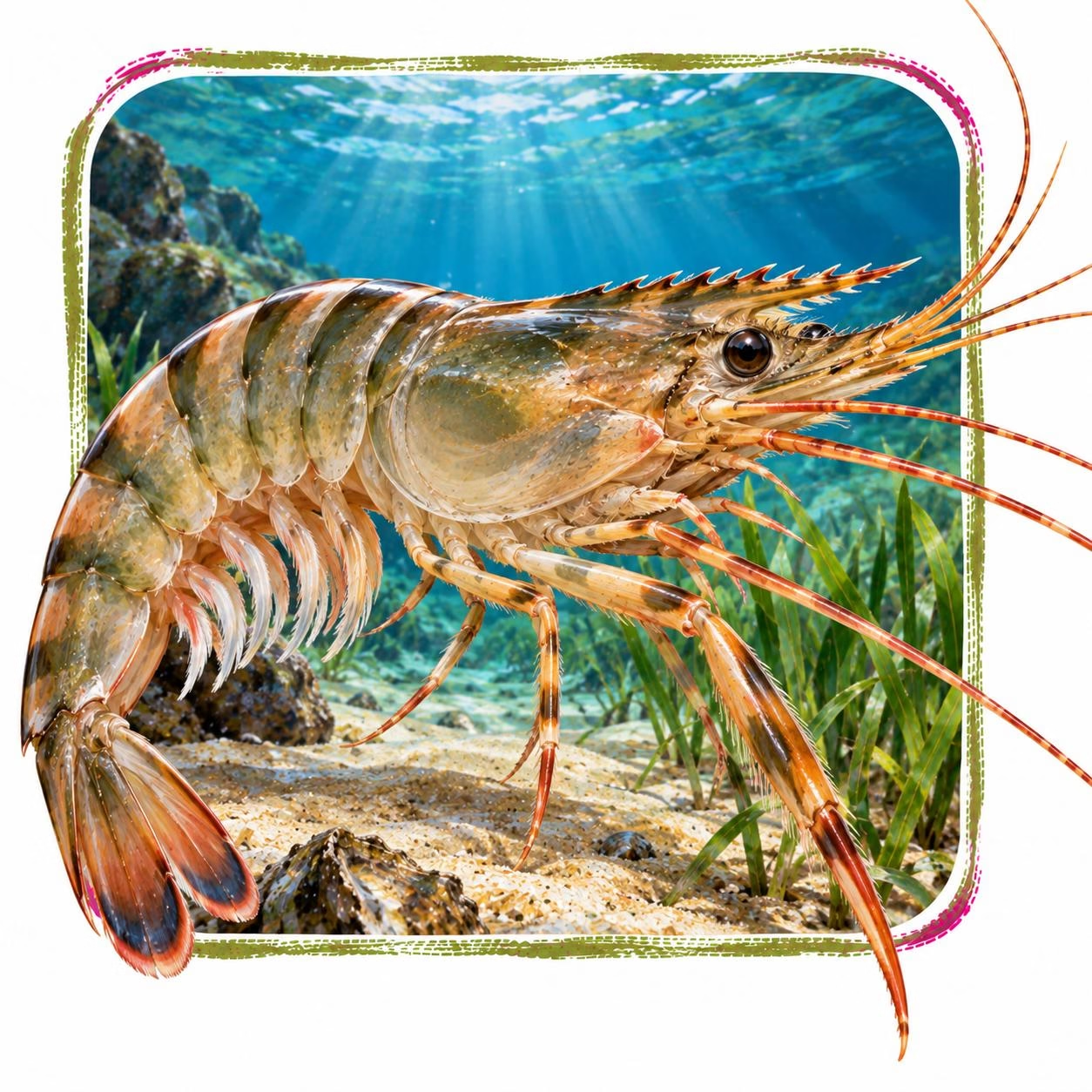
Prawn in its natural Mostly marine coastal shallows, estuaries, continental shelves, open ocean, and deep sea; some animals called prawns live in freshwater habitat