
Pufferfish Facts for Kids
Pufferfish are unusual fish famous for puffing their bodies into round balloon shapes when threatened. Many have tough skin, small fins, strong beak-like teeth, and powerful toxins that help protect them from predators.
Quick Pufferfish Facts
- Animal Type: Fish
- Group: Pufferfish and blowfish
- Known For: Inflating bodies, beak-like teeth, toxins, and spines
- Habitat: Coral reefs, rocky reefs, seagrass beds, sandy bottoms, estuaries, mangroves, coastal waters, rivers, and tropical or subtropical waters depending on species
- Diet: Algae, shellfish, snails, crabs, shrimp, worms, coral, sponges, and other small foods depending on species
What You’ll Learn
Explore 10 puffed-up pufferfish facts for kids about inflatable bodies, beak-like teeth, defenses, swimming, and ocean habitats, with a quiz, glossary, and activity
Easy explanations make them great for children, families, teachers, and young marine-life fans.
10 Fun Pufferfish Facts for Kids
1. Pufferfish Are Fish
Pufferfish are fish with fins, gills, and bodies made for life in water.
Kid Decode: A pufferfish is a swimming balloon with fins.
2. They Can Puff Up
Pufferfish can swallow water or air to inflate their bodies when threatened, making them harder for predators to eat.
Kid Decode: Puff mode says, too round to snack on.
3. Many Have Toxins
Many pufferfish contain a powerful toxin called tetrodotoxin, so people and predators must never treat them as toys or snacks.
Kid Decode: The warning label is hidden inside the fish.
4. Some Have Spines
Some pufferfish have spines that stick out more when the body inflates.
Kid Decode: The puff turns tiny spikes into a prickly warning jacket.
5. Pufferfish Have Beak-Like Teeth
Pufferfish have strong fused teeth that form a beak-like mouth for crunching hard foods.
Kid Decode: Their mouth is a tiny shell-cracking tool.
6. Baby Pufferfish Are Fry
Baby fish are often called fry after they hatch and begin growing.
Kid Decode: A pufferfish fry is a tiny future puffball.
7. Pufferfish Lay Eggs
Many pufferfish lay eggs, and some species have interesting nesting or courtship behaviors.
Kid Decode: The next puff generation starts as tiny eggs.
8. They Are Not Fast Swimmers
Pufferfish often swim slowly using small fins, so puffing up helps make up for not being speedy.
Kid Decode: They choose balloon defense over racing stripes.
9. Pufferfish Eat Crunchy Foods
Many pufferfish eat hard-shelled animals such as snails, clams, crabs, and shrimp.
Kid Decode: Dinner can be crunchy ocean cereal.
10. Pufferfish Need Healthy Waters
Pufferfish depend on clean reefs, seagrass beds, coastal habitats, and balanced ocean food webs.
Kid Decode: Healthy water keeps the little puff machines safe.
The Weirdest Pufferfish Fact
A pufferfish can turn itself into a round spiky balloon, but that trick is for defense and should never be forced by people.
Try This Pufferfish Activity
Pufferfish Drawing Activity
Draw a pufferfish puffed up near a coral reef. Add tiny fins, round body, little spines, beak-like mouth, bubbles, eggs, crabs, shells, seaweed, and a safe-respect sign.
Quick Pufferfish Quiz
- What are pufferfish famous for doing? Answer: Puffing up.
- What animal group are pufferfish in? Answer: Fish.
- What are baby fish often called? Answer: Fry.
- What toxin is found in many pufferfish? Answer: Tetrodotoxin.
- Why do pufferfish puff up? Answer: To make themselves harder for predators to eat.
Mini Glossary
- Fish: A water-living animal that usually has gills and fins.
- Fry: A young fish after it hatches.
- Tetrodotoxin: A powerful toxin found in many pufferfish.
- Predator: An animal that hunts other animals.
- Estuary: A place where river water mixes with seawater.
 Bilby Facts for Kids
 Burrowing Owl Facts for Kids
 Chinstrap Penguin Facts for Kids
 Cave Hyena Facts for Kids
More Animal Facts for Kids
Visit the full animal facts library or explore a focused animal group.
More Extinct Animal Facts for Kids
Discover dinosaurs, Ice Age giants, prehistoric sea creatures, recently extinct species, and other animals from the past.
Fact check note: Fact checked with National Geographic pufferfish resources, National Geographic Kids pufferfish resources, and trusted marine biology education references.

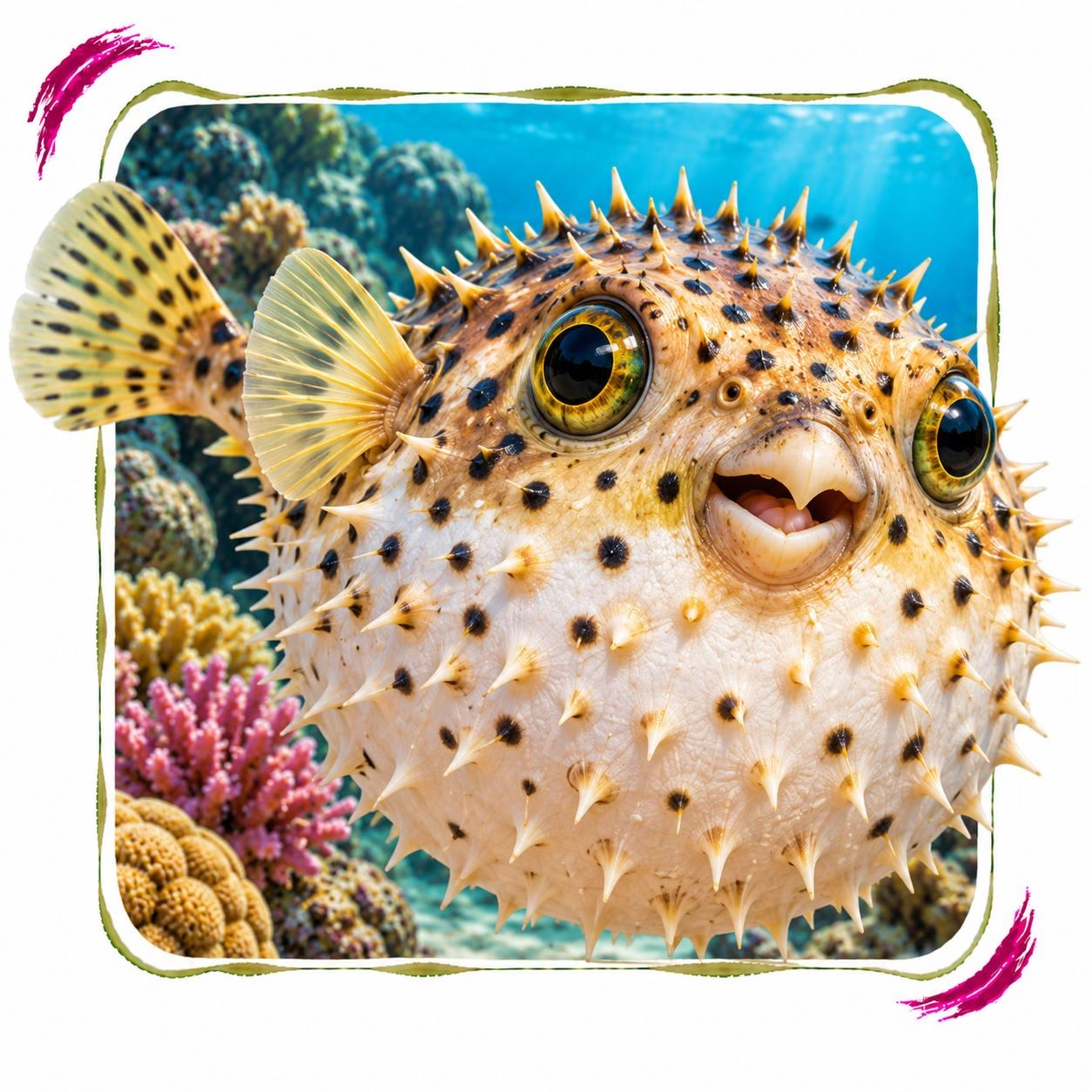
Pufferfish in its natural Coral Reefs habitat