
Quoll Facts for Kids
Quolls are spotted carnivorous marsupials from Australia, Tasmania, and New Guinea. They have pointed noses, sharp teeth, long tails, and beautiful spotted coats that help make them one of the most interesting small predators in their habitats.
Quick Quoll Facts
- Animal Type: Mammal
- Group: Marsupial and dasyurid
- Known For: Spotted fur, joeys, pouches, climbing, and carnivorous diets
- Habitat: Forests, woodlands, rocky areas, grasslands, wet forests, coastal habitats, and island habitats in Australia, Tasmania, and New Guinea depending on species
- Diet: Insects, small mammals, birds, reptiles, frogs, eggs, carrion, and other animal foods
What You’ll Learn
Explore 10 spotted quoll facts for kids about sharp teeth, climbing, hunting, pouches, and Australian forests, plus a quiz, glossary, and activity
Easy explanations make them great for children, families, teachers, and young nature fans.
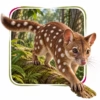
10 Fun Quoll Facts for Kids
1. Quolls Are Mammals
Quolls are mammals, which means they feed milk to their young.
Kid Decode: A quoll is a spotted little hunter with marsupial magic.
2. Quolls Are Marsupials
Quolls are marsupials, so their young are born tiny and continue growing while attached to the mother.
Kid Decode: They belong to the same big marsupial world as kangaroos, but with sharper teeth.
3. Baby Quolls Are Joeys
Baby quolls are called joeys, just like many other marsupial babies.
Kid Decode: A quoll joey begins life tiny enough to feel almost unbelievable.
4. Quolls Have Spotted Fur
Most quolls have white spots on their coats, which can help them blend into dappled forest light.
Kid Decode: Their spots look like someone sprinkled stars on their fur.
5. Quolls Are Carnivores
Quolls eat insects, small mammals, birds, reptiles, eggs, and other animal foods.
Kid Decode: They are snack-sized predators with serious hunting plans.
6. Some Quolls Climb Well
Quolls can climb trees, logs, and rocks while searching for food or shelter.
Kid Decode: Tree climbing turns the forest into a quoll playground.
7. Quolls Use Dens
Quolls rest in dens such as hollow logs, rock crevices, burrows, or hidden spaces.
Kid Decode: A den is the quoll’s secret nap room.
8. Quolls Are Often Nocturnal
Many quolls are most active at night, when they hunt and explore.
Kid Decode: The quoll’s busy time begins when the forest dims.
9. Quolls Have Long Tails
A quoll’s tail helps with balance as it moves through branches, rocks, and rough ground.
Kid Decode: The tail is a furry balance helper.
10. Quolls Need Protection
Some quoll species are threatened by habitat loss, introduced predators, poison, and other dangers.
Kid Decode: Protecting wild habitats helps spotted marsupials survive.
The Weirdest Quoll Fact
A newborn quoll joey is extremely tiny, but it grows into a bold spotted predator.
Try This Quoll Activity
Quoll Drawing Activity
Draw a spotted quoll on a fallen log at night. Add white spots, pointed nose, long tail, joeys, hollow log den, insects, leaves, moonlight, and forest plants.
Quick Quoll Quiz
- What animal group are quolls in? Answer: Mammals.
- What type of mammal is a quoll? Answer: A marsupial.
- What are baby quolls called? Answer: Joeys.
- What pattern do many quolls have on their fur? Answer: White spots.
- What do quolls mostly eat? Answer: Other animals.
Mini Glossary
- Mammal: An animal with fur that feeds milk to its young.
- Marsupial: A mammal whose babies are born very tiny and continue developing after birth.
- Joey: A baby marsupial, including a baby quoll.
- Dasyurid: A group of mostly carnivorous marsupials that includes quolls and Tasmanian devils.
- Den: A safe shelter where an animal rests or raises young.
 Eastern Grey Kangaroo Facts for Kids
 Toucan Facts for Kids
 Peacock Facts for Kids
 Bachman's Warbler Facts for Kids
More Animal Facts for Kids
Visit the full animal facts library or explore a focused animal group.
More Extinct Animal Facts for Kids
Discover dinosaurs, Ice Age giants, prehistoric sea creatures, recently extinct species, and other animals from the past.
Fact check note: Fact checked with Britannica quoll resources, Britannica Kids spotted-tailed quoll resources, and trusted Australian wildlife education references.

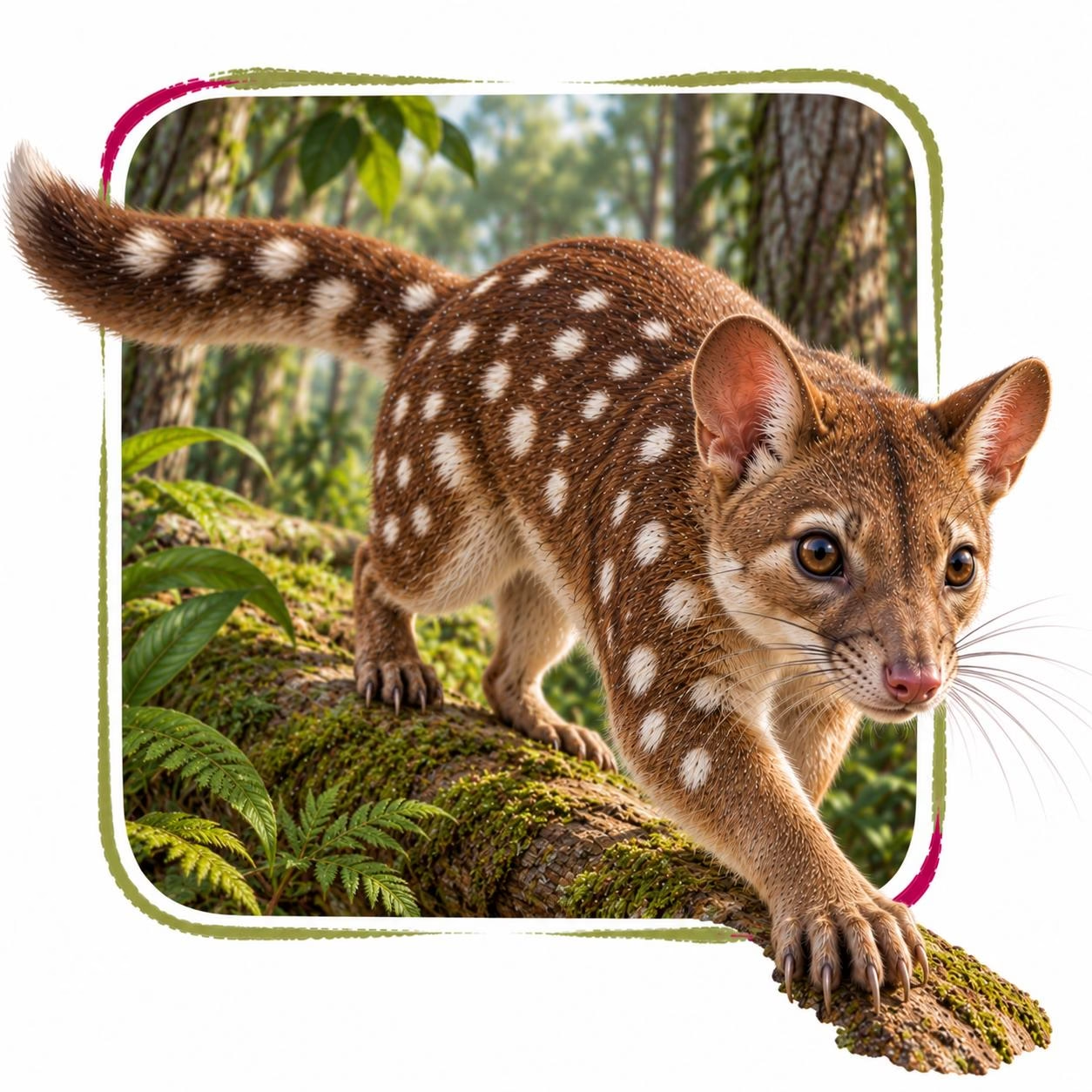
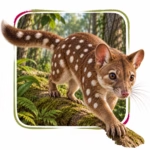
Quoll in its natural Forests habitat