
Rattlesnake Facts for Kids
Rattlesnakes are venomous snakes from the Americas, famous for the rattle at the end of the tail. They use camouflage, heat-sensing pits, fangs, and warning rattles to survive in deserts, grasslands, forests, and rocky places.
Quick Rattlesnake Facts
- Animal Type: Reptile
- Group: Pit viper snake
- Known For: Tail rattle, venom, heat-sensing pits, and warning sound
- Habitat: Deserts, grasslands, forests, rocky hillsides, scrublands, wetlands, and open habitats in the Americas depending on species
- Diet: Mice, rats, rabbits, lizards, birds, frogs, and other small animals
What You’ll Learn
Discover 10 rattling rattlesnake facts for kids about venom, rattles, heat sensing, hunting, and desert life, plus a quiz, glossary, and activity
These facts are explained simply for kids, parents, teachers, and curious little learners.
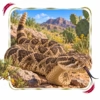
10 Fun Rattlesnake Facts for Kids
1. Rattlesnakes Are Reptiles
Rattlesnakes are reptiles with scales, fangs, eggs or live young depending on snake group, and body temperatures that change with their surroundings.
Kid Decode: A rattlesnake is a scaly sun-powered hunter with a built-in warning shaker.
2. Rattlesnakes Are Pit Vipers
Rattlesnakes belong to a group of venomous snakes called pit vipers. The pit organs on the face help them sense warm animals.
Kid Decode: Those face pits work like tiny heat detectors.
3. They Have Tail Rattles
A rattlesnake’s rattle is made of dry, hollow segments of keratin, the same material found in human fingernails.
Kid Decode: The rattle is a nature-made maraca on the tail.
4. Rattlesnakes Use Warning Sounds
When threatened, a rattlesnake may shake its tail to make a buzzing warning sound. This tells other animals to stay away.
Kid Decode: The rattle means back up, buddy.
5. Baby Rattlesnakes Are Snakelets
Baby rattlesnakes are often called snakelets or neonates. They are born with a small button at the tail tip instead of a full rattle.
Kid Decode: A baby rattlesnake starts with a tiny tail button, not a big buzz.
6. Rattlesnakes Have Venom
Rattlesnakes use venom to catch prey and defend themselves. People should never touch or bother a rattlesnake.
Kid Decode: Venom is for hunting and protection, not for playground drama.
7. They Swallow Food Whole
Like other snakes, rattlesnakes swallow prey whole because they cannot chew food into small pieces.
Kid Decode: Dinner goes down in one long snake gulp.
8. They Use Camouflage
Many rattlesnakes have colors and patterns that help them blend into sand, rocks, leaves, or dry grass.
Kid Decode: Camouflage turns the snake into a sneaky ground puzzle.
9. Many Give Birth to Live Young
Rattlesnakes do not lay eggs like many reptiles. Females give birth to live young.
Kid Decode: The babies arrive as tiny ready-to-slither noodles.
10. Rattlesnakes Need Safe Distance
Rattlesnakes help control rodent populations, but they should always be watched from far away and left alone.
Kid Decode: The best rattlesnake rule is look, learn, and leave space.
The Weirdest Rattlesnake Fact
A rattlesnake adds a new rattle segment when it sheds, but broken segments mean you cannot count the rattle to know its exact age.
Try This Rattlesnake Activity
Rattlesnake Drawing Activity
Draw a rattlesnake coiled on a warm desert rock. Add diamond patterns, a tail rattle, heat-sensing pits, cactus, sand, mouse tracks, and a safe-distance sign.
Quick Rattlesnake Quiz
- What sound is a rattlesnake famous for? Answer: A buzzing rattle sound.
- What animal group are rattlesnakes in? Answer: Reptiles.
- What are baby rattlesnakes often called? Answer: Snakelets or neonates.
- What do pit organs help rattlesnakes sense? Answer: Warm animals.
- Should people pick up rattlesnakes? Answer: No, they should watch from a safe distance.
Mini Glossary
- Reptile: A cold-blooded animal group that includes snakes, lizards, turtles, crocodiles, and tuataras.
- Venom: A toxic substance some animals use for hunting or defense.
- Pit Viper: A snake with heat-sensing pits on the face.
- Keratin: The tough material found in hair, nails, claws, and rattlesnake rattles.
- Camouflage: Colors or patterns that help an animal blend into its surroundings.

 Yellow-Eyed Penguin Facts for Kids
 Olm Facts for Kids
 Salmon Facts for Kids
 Supersaurus Facts for Kids
More Animal Facts for Kids
Visit the full animal facts library or explore a focused animal group.
More Extinct Animal Facts for Kids
Discover dinosaurs, Ice Age giants, prehistoric sea creatures, recently extinct species, and other animals from the past.
Fact check note: Fact checked with Britannica rattlesnake resources, National Geographic rattlesnake resources, and trusted reptile education references.

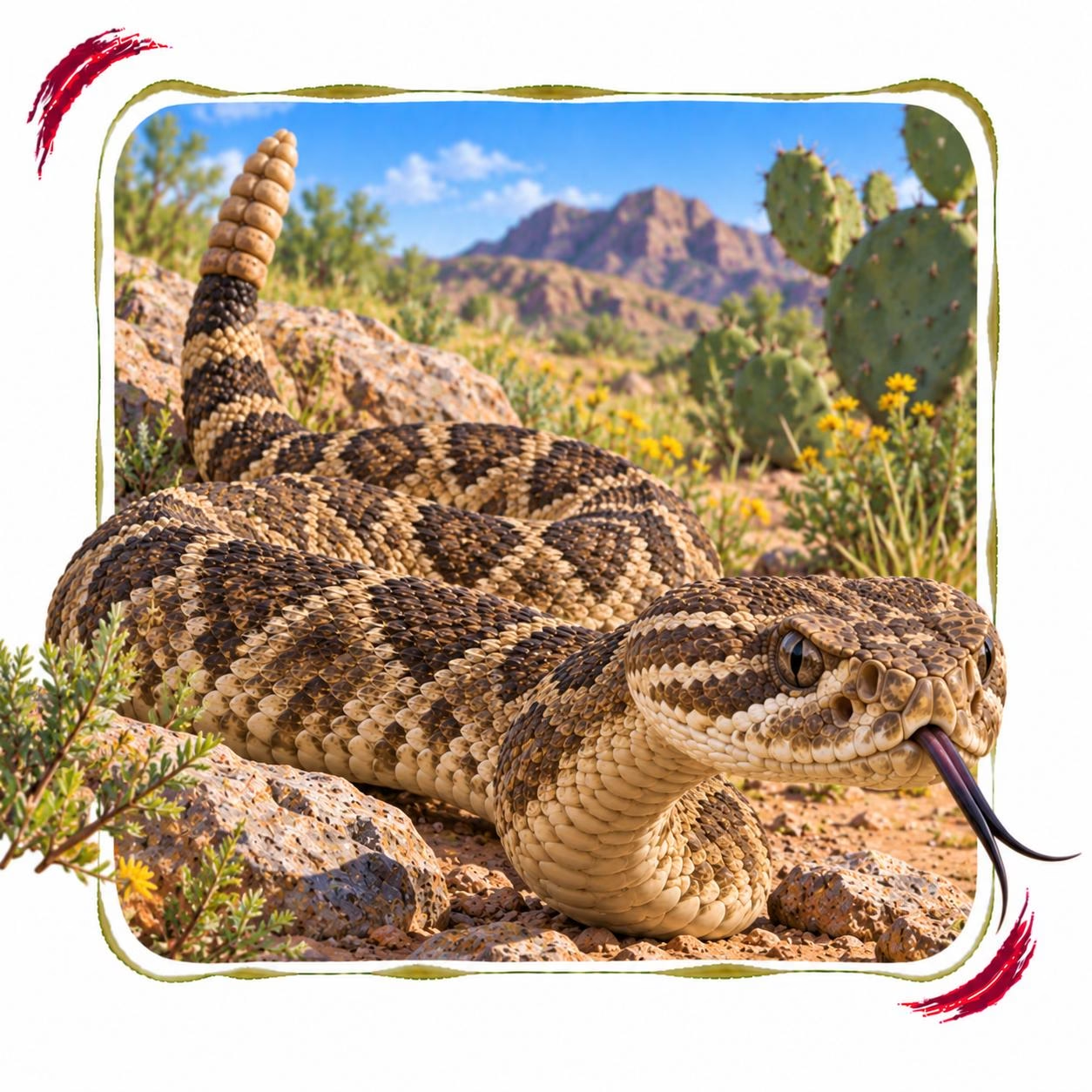
Rattlesnake in its natural Deserts habitat