
Razorbill Facts for Kids
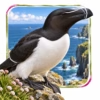
The razorbill, Alca torda, is a black-and-white seabird in the auk family. Its thick, flattened bill and upright stance may remind you of a penguin, but razorbills can fly. They breed on rocky North Atlantic coasts and spend most of the rest of the year at sea, where their wings become powerful underwater paddles for chasing fish.
Quick Razorbill Facts
- Scientific Name: Alca torda
- Animal Type: Bird and seabird
- Family: Alcidae, the auk family
- Size: About 37–39 centimetres long with a wingspan around 63–67 centimetres
- Known For: Thick black bill, white bill line, upright posture, fast flight, and wing-powered dives
- Range: North Atlantic coasts and open ocean
- Habitat: Rocky islands, sea cliffs, ledges, crevices, coastal waters, and offshore seas
- Diet: Mostly small schooling fish, plus some crustaceans and other marine prey
- Young: Usually one chick from one egg each breeding season
- Conservation: Globally Least Concern, although some colonies and regions face declines and threats
What You’ll Learn
Discover 10 striking razorbill facts for kids about black-and-white feathers, deep diving, fish, cliff nests, and North Atlantic life, plus a quiz, glossary, and activity
These facts are explained simply for kids, parents, teachers, and curious little fact-finders.
10 Fun Razorbill Facts for Kids
1. Razorbills Are Auks, Not Penguins
Razorbills belong to the auk family and live in the Northern Hemisphere. Their black backs, white bellies, and upright pose resemble penguins, but their smaller wings still lift them into fast flight.
Kid Decode: A razorbill can look penguin-like on a cliff and then fly away.
2. The Bill Changes With the Season
During breeding season, an adult has a deep black bill crossed by a narrow white line, plus a white line from bill to eye. After breeding, the face becomes whiter and the bill looks less boldly patterned.
Kid Decode: Its summer bill wears a bright white racing stripe.
3. Wings Work Like Underwater Paddles
A razorbill folds its feet back and beats its short wings beneath the surface, almost as if flying underwater. Its feet and tail help steer while it pursues quick fish.
Kid Decode: The same wings that flap through air can power a chase below the waves.
4. They Catch Schooling Fish
Razorbills mainly hunt small fish such as sand eels, capelin, sprats, and young herring, depending on place and season. They may carry several fish crosswise in the bill when returning to a chick.
Kid Decode: One bill can hold a silvery row of fish without dropping them all.
5. Most of the Year Is Spent at Sea
Outside the breeding season, razorbills disperse across northern ocean waters and may stay far from land. Waterproof feathers, stored body fat, and skilled diving help them live through rough marine weather.
Kid Decode: A cliff is the nursery, but the rolling ocean is the year-round dining room.
6. Crowded Cliffs Become Nurseries
Razorbills breed in colonies on islands and steep rocky coasts. Pairs use protected ledges, cracks, boulder spaces, or caves, often near other seabirds such as guillemots and puffins.
Kid Decode: A narrow crack in a sea cliff can be valuable nesting real estate.
7. One Egg Is Usually Laid
A pair usually raises a single egg each season. The egg is placed on bare rock or a few pebbles rather than in a carefully built nest, and both parents take turns incubating it.
Kid Decode: Razorbill parents invest their energy in one large cliff-side egg.
8. The Chick Leaves Before It Can Fly
At roughly three weeks old, a partly grown chick leaves the colony and heads toward the sea, often by jumping from its ledge. The male accompanies and continues feeding it while it grows at sea.
Kid Decode: A young razorbill starts its ocean life before its wings are ready for flight.
9. Fast Flight Takes Rapid Wingbeats
Short wings are excellent for diving but require quick beats in air. Razorbills fly rapidly over the water, and their legs trail behind the body to help create a streamlined shape.
Kid Decode: A razorbill trades slow soaring for a rapid buzzing wingbeat.
10. Ocean Changes Can Affect Colonies
Bycatch in fishing gear, oil pollution, disturbance, invasive predators at nest sites, severe weather, and shifts in fish caused by climate change can all cause trouble. Global status is Least Concern, but local results differ.
Kid Decode: Protecting feeding seas matters just as much as protecting nesting cliffs.
The Weirdest Razorbill Fact
A razorbill chick may leap from a high nesting ledge while still unable to fly. Its small size, fluffy feathers, and fluttering wings help soften the descent, and the waiting father guides it into a new life at sea.
Try This Razorbill Activity
Design a Razorbill Life Map
Fold a sheet into an upper cliff zone and a lower ocean zone. Draw one egg in a protected rock crack, two parents taking turns, a chick route to the sea, fish at different depths, and a flying adult. Add arrows showing wing-powered diving and three protection ideas for safe cliffs and clean feeding water.
Quick Razorbill Quiz
- What bird family contains the razorbill? Answer: The auk family, Alcidae.
- How does a razorbill propel itself underwater? Answer: By beating its wings like paddles.
- What does it mainly eat? Answer: Small schooling fish.
- How many eggs does a pair usually raise? Answer: One.
- Can a chick fly when it first leaves the cliff? Answer: Usually not yet.
Mini Glossary
- Auk: A Northern Hemisphere seabird adapted for swimming and diving.
- Colony: A place where many animals of the same kind breed close together.
- Incubate: To keep an egg warm so the embryo can develop.
- Bycatch: An animal accidentally caught by fishing gear meant for something else.
- Streamlined: Shaped to move through air or water with less resistance.
 Weedy Seadragon Facts for Kids
 Pademelon Facts for Kids
 Siberian Tiger Facts for Kids
 Toxodon Facts for Kids
More Animal Facts for Kids
Visit the full animal facts library or explore a focused animal group.
More Extinct Animal Facts for Kids
Discover dinosaurs, Ice Age giants, prehistoric sea creatures, recently extinct species, and other animals from the past.
Fact check note: Fact checked against BirdLife International’s Razorbill species factsheet and current IUCN assessment; Cornell Lab of Ornithology Birds of the World and All About Birds; Animal Diversity Web; the Royal Society for the Protection of Birds; and seabird conservation research. Taxonomy, identification, measurements, range, diet, diving, breeding, chick departure, threats, population trend, and Least Concern status were cross-checked.

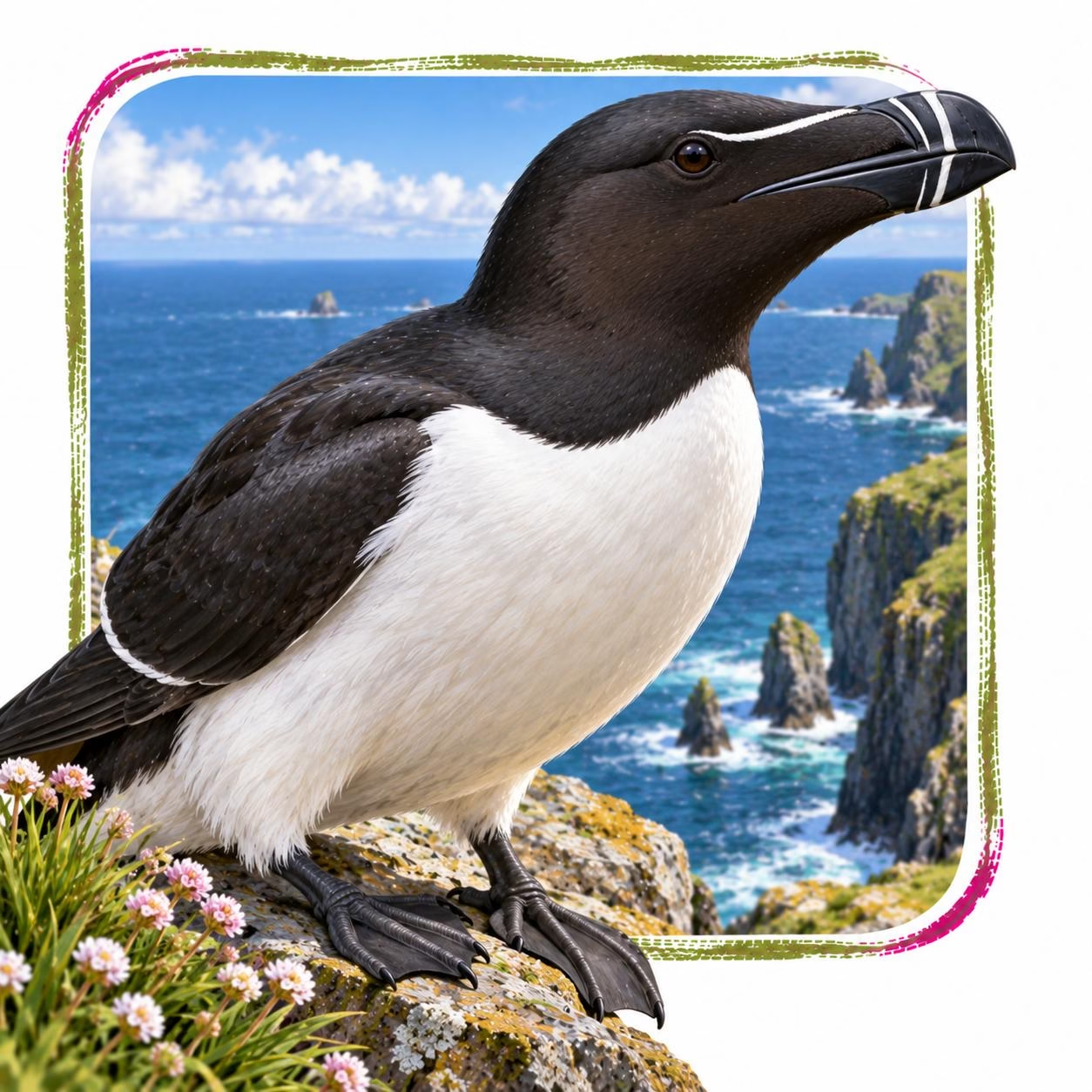
Razorbill in its natural North Atlantic open ocean, coastal waters, rocky islands, sea cliffs, ledges, crevices, boulder fields, and caves habitat