
Red Squirrel Facts for Kids
The red squirrel, Sciurus vulgaris, is also called the Eurasian red squirrel. This agile tree-dwelling rodent lives across a huge stretch of Europe and northern Asia. It is famous for its bushy tail and winter ear tufts, but not every individual is bright red. Coats can range from orange and chestnut to dark brown or nearly black, usually with a pale belly.
Quick Red Squirrel Facts
- Scientific Name: Sciurus vulgaris
- Animal Type: Mammal, rodent, and tree squirrel
- Family: Sciuridae
- Size: Body about 19–23 centimetres long, plus a tail around 15–20 centimetres
- Known For: Bushy tail, seasonal ear tufts, agile climbing, cone feeding, and hidden food stores
- Range: Europe and northern Asia
- Habitat: Conifer, broadleaf, and mixed woodland, plus wooded parks and gardens
- Diet: Mostly seeds, nuts, fungi, buds, shoots, fruit, and bark, with occasional animal food
- Young: Kits or kittens raised in a lined tree nest
- Conservation: Globally Least Concern, but declining or protected in parts of western Europe
What You’ll Learn
Discover 10 lively red squirrel facts for kids about tufted ears, bushy tails, climbing, hidden food, and forest life, with a quiz, glossary, and activity
Clear explanations make them fun for children, families, teachers, and little fact-hunters.
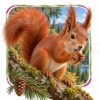
10 Fun Red Squirrel Facts for Kids
1. Red Squirrels Come in Many Colors
The coat may be orange-red, chestnut, brown, grayish, or nearly black depending on genetics, region, and season. A creamy-white belly is much more consistent than the color of the back.
Kid Decode: A red squirrel does not have to look red to belong to the species.
2. Ear Tufts Grow for Winter
Long hairs rise above the ear tips during the cold-season coat. The tufts become shorter or may nearly disappear after the spring molt, then grow again later in the year.
Kid Decode: Its furry winter ear points are seasonal accessories.
3. The Tail Is a Multi-Tool
A long bushy tail helps with balance during leaps, steering in the air, visual signals, and warmth when curled around the body. It may also give some protection from rain or snow.
Kid Decode: One tail can be a balance pole, signal flag, blanket, and umbrella.
4. Rotating Ankles Help With Climbing
Flexible ankle joints let the hind feet turn so sharp claws can grip bark while the squirrel climbs headfirst down a trunk. Strong back legs also power leaps between branches.
Kid Decode: Its backward-turned feet act like climbing hooks on the way down.
5. Cone Seeds Are Favorite Food
Red squirrels strip the scales from conifer cones to reach the nutritious seeds inside. They also eat nuts, fungi, buds, shoots, bark, flowers, fruit, and occasional insects or eggs.
Kid Decode: A neatly shredded cone can be a red squirrel’s dinner clue.
6. They Hide Food for Later
A squirrel stores nuts, cones, and seeds in many separate places called caches. Memory and smell help it recover supplies, although some forgotten seeds survive and may sprout.
Kid Decode: A forgotten squirrel snack can become a future tree.
7. Their Front Teeth Never Stop Growing
Like other rodents, red squirrels have chisel-shaped incisors that grow continuously. Gnawing hard seeds, cones, and other materials wears the teeth down and keeps them useful.
Kid Decode: Constantly growing teeth need constant natural wear.
8. A Tree Nest Is Called a Drey
A red squirrel builds a rounded nest of twigs high in a tree, then lines it with moss, leaves, grass, bark, or other soft material. Tree hollows may also provide shelter.
Kid Decode: A drey looks like a leafy ball but has a soft, sheltered center.
9. They Stay Awake Through Winter
Red squirrels are active by day and do not truly hibernate. In severe weather they may stay inside a drey for a while, then emerge to feed from natural supplies and stored food.
Kid Decode: Cold weather can delay breakfast, but it does not cause months of hibernation.
10. Local Threats Can Be Serious
The species is globally Least Concern, yet habitat fragmentation can isolate populations. In Britain and Ireland, introduced gray squirrels compete for food and can spread squirrelpox, which is often deadly to native red squirrels.
Kid Decode: A species can be common worldwide while needing urgent help in one region.
The Weirdest Red Squirrel Fact
A red squirrel can run down a vertical tree trunk headfirst. It rotates its hind ankles so the claws point backward and grip the bark, turning its feet into secure anchors as gravity pulls the other way.
Try This Red Squirrel Activity
Follow the Forest Feeding Clues
Draw a woodland map with five possible squirrel caches, a drey, a tree hollow, and a safe route through connected branches. Place paper cone scales, nutshells, and mushroom pieces near feeding spots. Ask a partner to follow the clues, find three caches, and explain how the tail, claws, teeth, and memory help the squirrel survive.
Quick Red Squirrel Quiz
- Must every red squirrel have a bright red coat? Answer: No.
- When are the ear tufts usually longest? Answer: During the winter coat.
- What is a squirrel’s tree nest called? Answer: A drey.
- Why does a squirrel hide seeds and nuts? Answer: To save food for later.
- Do red squirrels hibernate all winter? Answer: No.
Mini Glossary
- Rodent: A mammal with continuously growing front incisors.
- Drey: A squirrel’s rounded nest of twigs and soft plant material.
- Cache: A hidden store of food.
- Molt: The process of replacing old fur or feathers.
- Fragmentation: The splitting of continuous habitat into smaller isolated areas.
 Archerfish Facts for Kids
 Panda Facts for Kids
 Arctic Fox Facts for Kids
 Norfolk Kaka Facts for Kids
More Animal Facts for Kids
Visit the full animal facts library or explore a focused animal group.
More Extinct Animal Facts for Kids
Discover dinosaurs, Ice Age giants, prehistoric sea creatures, recently extinct species, and other animals from the past.
Fact check note: Fact checked against the IUCN Red List account for Sciurus vulgaris; Mammal Diversity Database; Animal Diversity Web; Woodland Trust and Red Squirrels United resources; European mammal references; and research on squirrelpox and introduced gray squirrels. Taxonomy, measurements, color variation, ear tufts, tail use, climbing, diet, caching, incisors, dreys, winter activity, reproduction, ecosystem roles, range, and conservation were cross-checked.

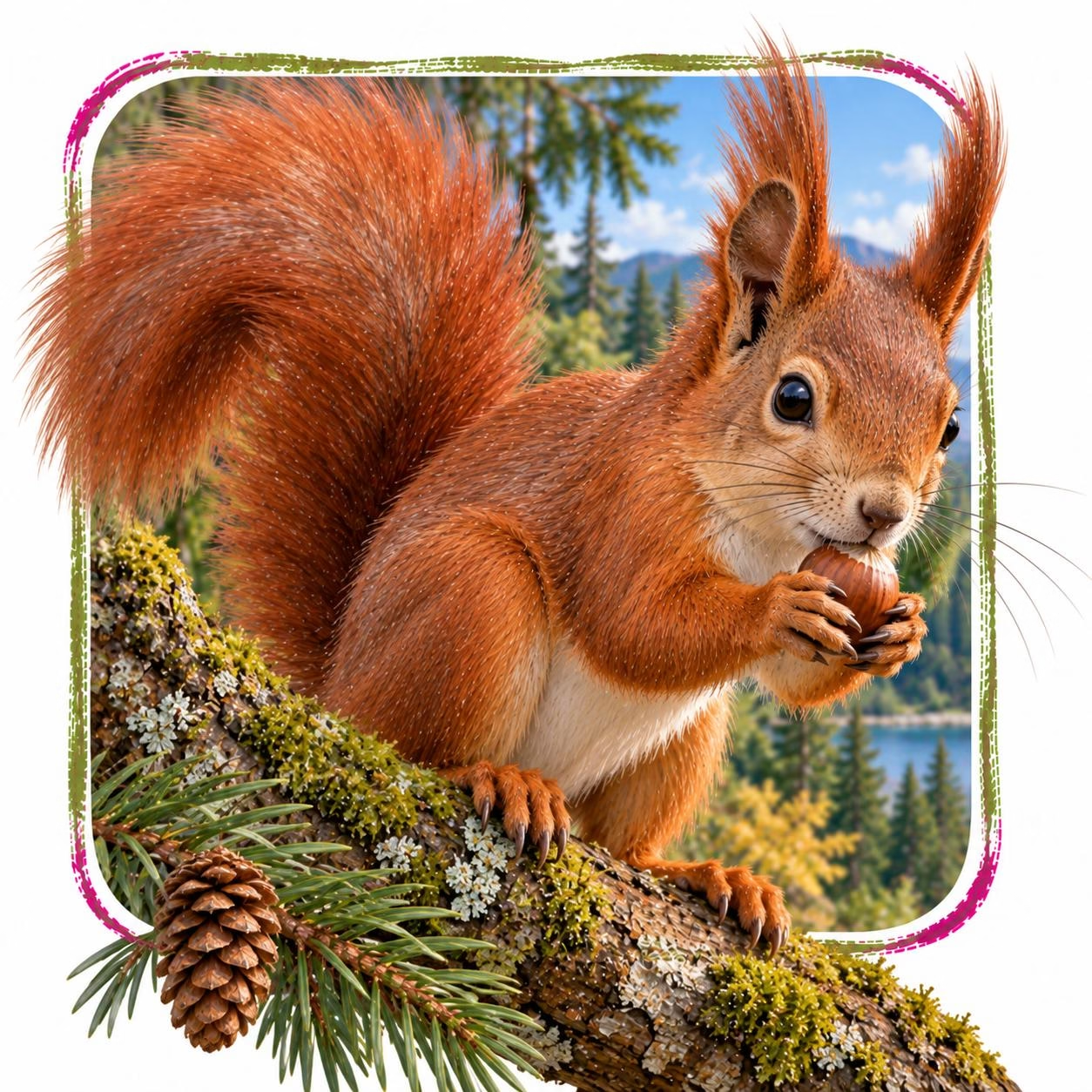
Red Squirrel in its natural Coniferous, broadleaf, and mixed woodland, forest edges, wooded parks, large gardens, and connected tree corridors habitat