
Rhesus Macaque Facts for Kids
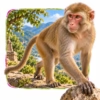
The Rhesus Macaque, Macaca mulatta, is a highly adaptable Old World monkey native across a broad part of Asia, from Afghanistan and Pakistan through India, Nepal, Bangladesh, Bhutan and Myanmar to parts of China and mainland Southeast Asia. It can live in forests, grasslands, rocky country, farms, villages, temple complexes, and busy cities. Adults usually have brown to gray-brown fur, a pink to reddish face, rounded ears, and a medium-length non-prehensile tail. Rhesus Macaques are intelligent omnivores that eat fruit, seeds, leaves, roots, insects, and many human-associated foods. They live in multi-male, multi-female troops built around female family lines, while males usually leave their birth group as they mature. The species is currently listed as Least Concern.
Quick Rhesus Macaque Facts
- Animal Type: Mammal and Old World monkey
- Scientific Name: Macaca mulatta
- Known For: Pink-red face, cheek pouches, adaptable behavior, strong swimming, female family lines, male dispersal, grooming, and close association with people
- Habitat: Forest, scrub, grassland, rocky slopes, river valleys, farms, villages, temples, towns, and cities
- Diet: Fruit, seeds, leaves, shoots, roots, bark, flowers, insects, eggs, and many human-associated foods
What You’ll Learn
Discover 10 fun Rhesus Macaque facts for kids with accurate primate science, quick facts, a quiz, glossary, drawing activity, and Asian wildlife links.
Simple explanations make them fun for children, families, teachers, and curious young primate fans.
10 Fun Rhesus Macaque Facts for Kids
1. It Lives Across a Huge Part of Asia
Rhesus Macaques have one of the broadest native ranges of any nonhuman primate, extending from Afghanistan and Pakistan across the Indian subcontinent to China and parts of mainland Southeast Asia. Different populations therefore experience very different climates, foods, and landscapes.
Kid Decode: One monkey species can live from snowy mountain regions to hot crowded cities.
2. The Face Is Pink or Reddish
Adults have mostly bare pink to reddish facial skin and similarly colored sitting areas on the rump. Fur ranges from dusty brown and gray-brown to warmer auburn shades, with regional and seasonal variation.
Kid Decode: The bright face stands out like a splash of warm color against the brown coat.
3. The Tail Cannot Grab Branches
The tail is medium length and non-prehensile, meaning it cannot curl around a branch like an extra hand. Rhesus Macaques move on all four limbs and may spend substantial time on the ground or in trees depending on habitat.
Kid Decode: The tail travels everywhere with the monkey, but it never becomes a fifth hand.
4. Cheek Pouches Carry Food Away
Like many macaques, Rhesus Macaques have expandable cheek pouches. They can quickly collect food, store it temporarily beside the mouth, move to a safer place, and then chew it later.
Kid Decode: The monkey can leave lunch with its pockets hidden inside its cheeks.
5. They Are Surprisingly Strong Swimmers
Rhesus Macaques are skilled swimmers and have been observed crossing bodies of water up to about a kilometre wide. Swimming can help them travel, escape danger, find food, cool down, or simply play.
Kid Decode: A monkey built for land and trees can also tackle a kilometre of open water.
6. Their Diet Changes With Opportunity
Wild Rhesus Macaques eat fruit, seeds, leaves, roots, flowers, insects, and other foods, while animals living near people may also raid crops or eat discarded and provisioned food. The exact diet differs greatly from place to place.
Kid Decode: The menu can shift from wild berries to beetles to a farm crop in one neighborhood.
7. Female Family Lines Form the Social Core
Rhesus Macaques live in multi-male, multi-female troops. Females typically stay in their birth group for life, so the troop contains several generations of mothers, daughters, sisters, aunts, and other female relatives called matrilines.
Kid Decode: The troop’s long-term address book is written mostly through mothers and daughters.
8. Males Usually Leave Their Birth Troop
As males reach maturity, they usually disperse from the troop where they were born and try to join another group. Adult males may change groups again later, which helps reduce close inbreeding.
Kid Decode: Growing up often means packing an invisible suitcase and joining a completely new monkey neighborhood.
9. One Baby Is the Usual Birth
After a pregnancy of about five and a half months, a female normally gives birth to one infant. The baby clings tightly to the mother, nurses, rides with her, and gradually learns the troop’s foods, signals, alliances, and travel routes.
Kid Decode: A baby begins as a furry passenger and slowly becomes a full member of a complicated society.
10. Its Name Became Part of Blood-Type History
The term Rh blood group was named after experiments that used rhesus macaque red blood cells. Scientists later learned that the human Rh blood-group antigen is not identical to the monkey antigen involved in those original experiments, but the shortened name Rh remained.
Kid Decode: A monkey’s name ended up inside hospital blood typing, even after the science became more precise.
The Weirdest Rhesus Macaque Fact
The Rh in Rh-positive and Rh-negative blood traces back to experiments involving rhesus macaques, yet the human Rh antigen was later shown not to be exactly the same antigen that first inspired the name.
Try This Rhesus Macaque Activity
Rhesus Macaque Adaptability Activity
Draw one Rhesus Macaque troop across three connected Asian habitats: forest, riverside, and city edge. Add brown-gray adults with pink-red faces, medium non-prehensile tails, cheek pouches holding fruit, one monkey swimming, females and young grouped in a matriline, a dispersing young male, grooming, a mother carrying one infant, and a small Rh blood-group history card explaining that the medical name came from rhesus-monkey experiments but the human antigen was later shown to be different.
Quick Rhesus Macaque Quiz
- What is the Rhesus Macaque’s scientific name? Answer: Macaca mulatta.
- Can its tail grip a branch? Answer: No, the tail is non-prehensile.
- What can cheek pouches do? Answer: Temporarily store food.
- Which sex usually stays in the birth troop? Answer: Females.
- What is the current IUCN category? Answer: Least Concern.
Mini Glossary
- Macaque: An Old World monkey belonging to the genus Macaca.
- Prehensile: Able to grasp or hold something.
- Matriline: A family line traced through mothers and female relatives.
- Dispersal: Leaving the birth area or social group to live elsewhere.
- Cheek Pouch: An expandable pocket inside the mouth used to hold food temporarily.
 Swallow Facts for Kids
 Mudpuppy Facts for Kids
 Sun Bear Facts for Kids
 Brontornis Facts for Kids
More Animal Facts for Kids
Visit the full animal facts library or explore a focused animal group.
More Extinct Animal Facts for Kids
Discover dinosaurs, Ice Age giants, prehistoric sea creatures, recently extinct species, and other animals from the past.
Fact check note: Fact checked with the American Society of Mammalogists Mammal Diversity Database current account for Macaca mulatta, which lists the Rhesus Macaque as Least Concern and records its broad Asian range; Wisconsin National Primate Research Center for morphology, body size, pink-red face, medium tail and strong swimming, including observed crossings of water up to about one kilometre; Animal Diversity Web and eLife’s natural-history review for flexible habitat use, omnivorous diet, multi-male multi-female troops, female philopatry, matrilines and male dispersal; and the NCBI Blood Groups and Red Cell Antigens reference for the history and later correction of the Rh blood-group name.

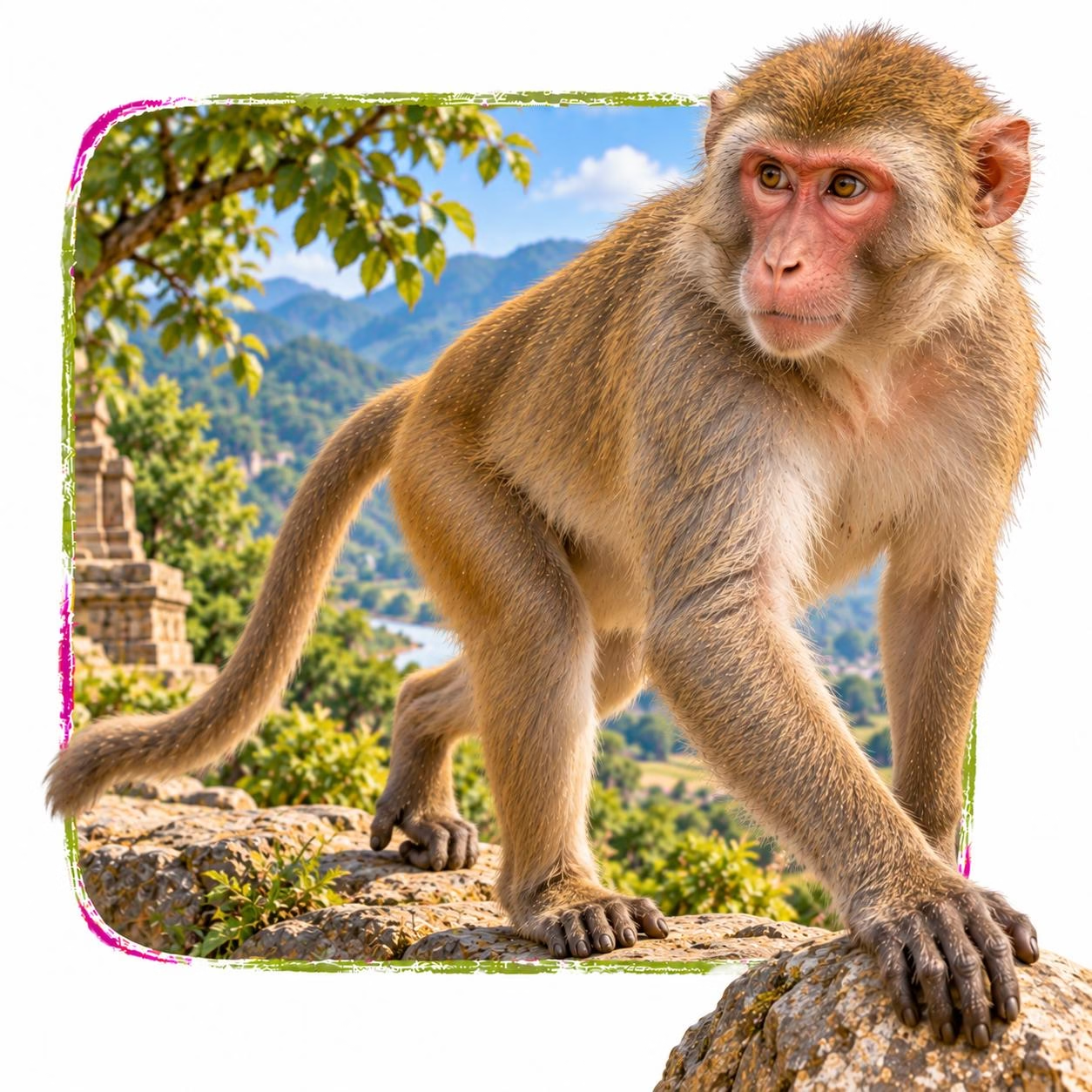
Rhesus Macaque in its natural Forest, scrub, grassland, rocky slopes, river valleys, farms, villages, temple grounds, towns, and cities across a broad part of Asia habitat