
Ringed Seal Facts for Kids
The ringed seal, Pusa hispida, is a small true seal adapted to icy northern waters. Pale rings and spots pattern its darker back, while strong front claws keep breathing holes open in sea ice. Most ringed seals live around the Arctic Ocean, but distinct subspecies also inhabit the Baltic Sea and the freshwater lakes Ladoga and Saimaa. Snow, ice, and access to water shape nearly every part of their lives.
Quick Ringed Seal Facts
- Scientific Name: Pusa hispida
- Animal Type: Mammal, marine mammal, pinniped, and true seal
- Family: Phocidae
- Recognized Subspecies: Arctic, Okhotsk, Baltic, Ladoga, and Saimaa ringed seals
- Size: Usually about 1.1–1.5 metres long, varying by sex, age, season, and subspecies
- Known For: Pale coat rings, strong ice-scratching claws, breathing holes, snow lairs, and white-coated pups
- Range: Arctic Ocean and nearby seas, Baltic Sea, Lake Ladoga, and Lake Saimaa
- Diet: Fish and marine invertebrates
- Young: Usually one pup
- Conservation: Globally Least Concern, but subspecies and legal listings differ and warming threatens ice habitat
What You’ll Learn
Learn 10 amazing ringed seal facts for kids about ring-shaped markings, breathing holes, snow lairs, swimming, and Arctic ice, with a quiz, glossary, and activity
Simple explanations make them great for children, families, teachers, and young marine-life fans.
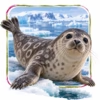
10 Fun Ringed Seal Facts for Kids
1. Their Coats Wear Ring Patterns
Light gray or cream rings and spots scatter across the darker back and sides, while the belly is paler. Each individual has its own arrangement of markings rather than perfectly matched circles.
Kid Decode: The rings are fur patterns, not ridges wrapped around the body.
2. They Are Small True Seals
Ringed seals are among the smallest members of the true seal family. They have no external ear flaps, and their hind flippers cannot rotate forward to walk beneath the body like a sea lion’s.
Kid Decode: On land, a true seal wriggles instead of walking on four flippers.
3. Front Claws Maintain Ice Holes
Thick claws on the front flippers scrape and enlarge breathing holes as new ice forms. A seal may maintain several holes so it can surface for air while traveling and feeding beneath the ice.
Kid Decode: A ringed seal carries its ice-hole tools on its front flippers.
4. Snow Hides Birth Lairs
A pregnant female digs a chamber inside deep snow that has drifted over a breathing hole or ice ridge. The hidden lair shelters her pup from wind and cold and can reduce detection by predators.
Kid Decode: A snowbank above the sea can hide a warm seal nursery.
5. Pups Begin With White Fur
Most pups are born with a fluffy white natal coat called lanugo. The coat insulates them in the lair and is shed after several weeks as a sleeker juvenile coat grows.
Kid Decode: The white baby coat is temporary Arctic insulation.
6. They Dive From Air Hole to Air Hole
A ringed seal stores oxygen in its blood and muscles, slows some body functions, and swims efficiently underwater. It can forage beneath ice, then return to a known opening for a breath.
Kid Decode: The seal’s underwater map includes invisible paths between tiny doors in the ice.
7. The Menu Changes Across the Range
Arctic cod, capelin, herring, sculpins, shrimp, amphipods, and other prey may be eaten, depending on region and season. Young seals often take more small crustaceans than experienced adults.
Kid Decode: A ringed seal’s menu can reveal which northern sea or lake it calls home.
8. Polar Bears Depend on Them
Ringed seals are a major prey species for polar bears, especially mothers and pups near birth lairs. Arctic foxes, walruses, killer whales, Greenland sharks, and people may also hunt them.
Kid Decode: A small seal transfers energy from fish beneath the ice to predators above it.
9. Spring Sunshine Brings Molting
After breeding, ringed seals spend more time hauled out on ice in spring while old hair is replaced. Sunlight and warmer air help the skin stay warm enough for efficient molt growth.
Kid Decode: A seal may sunbathe on ice while changing into a fresh coat.
10. Less Snow and Ice Create Risks
Earlier ice breakup, thinner snow, rain, and unstable ice can damage lairs or expose pups. Climate change is the largest long-term threat, with bycatch, pollution, disturbance, shipping, and disease adding regional pressures.
Kid Decode: A hidden nursery needs both dependable ice below and enough snow above.
The Weirdest Ringed Seal Fact
A ringed seal can keep a breathing hole open through winter by repeatedly scraping the ice with heavy front claws. The hole may be far smaller than the seal’s body, yet it remains a vital doorway between an under-ice world and the air.
Try This Ringed Seal Activity
Build an Under-Ice Seal Map
Use blue paper for seawater, white paper for ice, and loose cotton for snow. Cut three small breathing holes and build one hidden lair above a hole. Move a paper seal between fish patches without crossing the ice, then add a mother, white pup, polar bear tracks, and labels showing why stable ice and deep snow are both necessary.
Quick Ringed Seal Quiz
- What pattern gives the ringed seal its name? Answer: Pale rings and spots on its coat.
- How does it maintain a breathing hole? Answer: By scraping ice with strong front claws.
- What is a snow lair? Answer: A shelter dug in snow above the ice and water.
- What is a pup’s white baby coat called? Answer: Lanugo.
- What is the largest long-term threat? Answer: Climate-driven loss and change of snow and ice habitat.
Mini Glossary
- Pinniped: A member of the seal, sea lion, and walrus group.
- True seal: An earless seal whose hind flippers do not rotate beneath the body for walking.
- Lair: A sheltered resting or birth chamber.
- Lanugo: The soft white natal coat worn by a young ringed seal.
- Bycatch: An animal accidentally caught in fishing gear.
 Blue Jay Facts for Kids
 Burmese Python Facts for Kids
 Prairie Dog Facts for Kids
 Beelzebufo Facts for Kids
More Animal Facts for Kids
Visit the full animal facts library or explore a focused animal group.
More Extinct Animal Facts for Kids
Discover dinosaurs, Ice Age giants, prehistoric sea creatures, recently extinct species, and other animals from the past.
Fact check note: Fact checked against NOAA Fisheries’ Ringed Seal species profile and 2024 five-year status review; the IUCN Red List; Arctic Council and national polar research resources; Animal Diversity Web; and peer-reviewed studies of sea-ice habitat, snow lairs, diving, diet, molt, and climate vulnerability. Taxonomy, five subspecies, measurements, markings, claws, breathing holes, reproduction, lanugo, prey, predators, legal status, and threats were cross-checked.

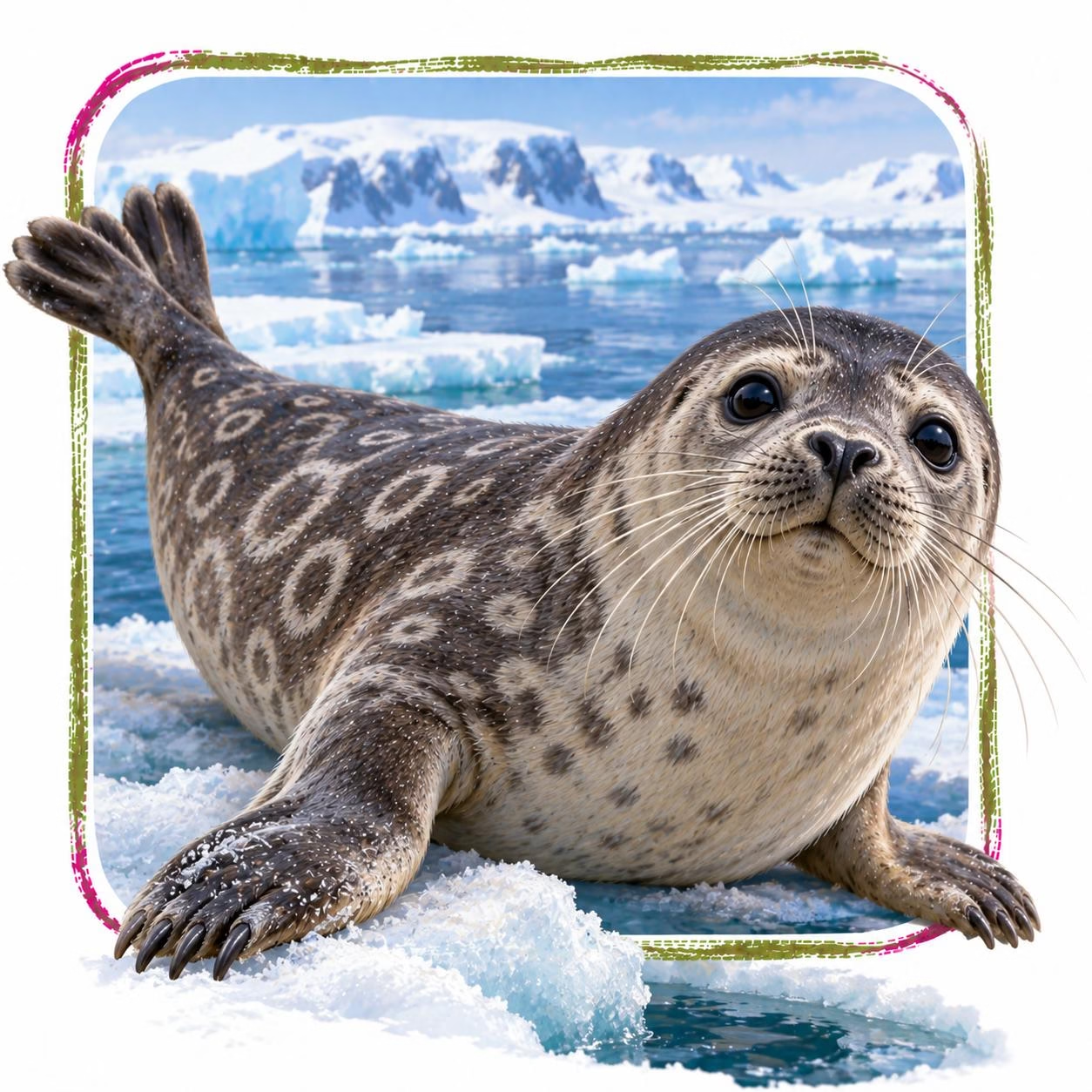
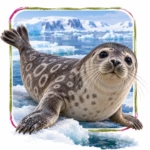
Ringed Seal in its natural Arctic and subarctic sea ice, pack ice, coastal waters, snow-covered ice, Baltic Sea, Lake Ladoga, and Lake Saimaa habitat