
Roe Deer Facts for Kids
This page focuses on the European roe deer, Capreolus capreolus, also called the western roe deer. It is a small, quick deer found from western Europe into western Asia. A short tail, bright white rump patch, reddish summer coat, gray-brown winter coat, and barking alarm call help distinguish it. The larger Siberian roe deer is a separate species called Capreolus pygargus.
Quick Roe Deer Facts
- Scientific Name: Capreolus capreolus
- Animal Type: Mammal, true deer, and ruminant
- Family: Cervidae
- Male: Buck or roebuck
- Female: Doe
- Young: Kid or fawn
- Known For: Small size, white rump patch, seasonal coat, barking alarm, short male antlers, and delayed implantation
- Range: Most of Europe and parts of western Asia
- Diet: Leaves, shoots, buds, herbs, grasses, fruit, seeds, and some crops
- Conservation: Globally Least Concern and widespread, with local management and safety concerns
What You’ll Learn
Learn 10 graceful roe deer facts for kids about small antlers, seasonal coats, forest edges, browsing, and delayed pregnancy, plus a quiz, glossary, and activity
These simple facts are written for kids, parents, teachers, and curious young minds.
10 Fun Roe Deer Facts for Kids
1. Roe Deer and Siberian Roe Deer Differ
The European or western roe deer is Capreolus capreolus. The larger Siberian roe deer, Capreolus pygargus, lives farther east and is recognized as a separate species rather than a regional name for the same animal.
Kid Decode: Two roe deer species meet across Eurasia, but this page follows the western one.
2. The Coat Changes Color
Warm-season fur is usually rich reddish-brown, while the thicker winter coat becomes gray, gray-brown, or dark brown. Seasonal molting matches both temperature and the changing colors of vegetation.
Kid Decode: A roe deer swaps its rusty summer jacket for a duller winter coat.
3. A White Rump Patch Flashes
The bright rump patch, sometimes called a caudal patch, stands out when a deer runs away. It can help nearby deer notice danger and follow one another through cover.
Kid Decode: The white patch becomes a woodland follow-me signal.
4. Roe Deer Can Bark
When alarmed, a roe deer may make a loud, rough bark that can sound surprisingly dog-like. Bucks and does also use scent, posture, and other calls to communicate.
Kid Decode: A bark in the bushes may come from a deer rather than a dog.
5. Bucks Regrow Antlers Every Year
A male normally carries short antlers, often with up to three points on each side when mature. He sheds them in autumn, grows a velvet-covered set through winter, and rubs off the velvet before spring territorial activity.
Kid Decode: A roebuck starts rebuilding his bony crown during the cold months.
6. They Select Nutritious Plant Parts
Roe deer are selective browsers that choose tender leaves, shoots, buds, herbs, fruit, seeds, and high-quality grasses rather than eating every plant equally. Their diet changes through the seasons.
Kid Decode: A roe deer eats like a careful salad picker, choosing the richest bites.
7. Small Groups Change With the Season
Adults may live alone or in small family groups during much of the year. In winter, several animals sometimes gather in open feeding areas, while bucks become more territorial in spring and summer.
Kid Decode: A roe deer’s social calendar changes with food, weather, and breeding season.
8. Pregnancy Includes a Long Pause
Mating occurs mainly in July and August, but the tiny embryo pauses for about five months before attaching to the uterus. This delayed implantation shifts most births to favorable spring weather.
Kid Decode: A roe deer can mate in summer and pause development until winter.
9. Twins Are Common
A doe often gives birth to two spotted young, although litter size varies. She hides them separately in vegetation and returns to nurse, reducing the chance that a predator will find both together.
Kid Decode: Twin roe deer may begin life in two different hiding places.
10. Fawns Should Usually Be Left Alone
A motionless fawn found by itself is usually hiding while its mother feeds nearby. Roads, dogs, fencing, machinery, and disturbance can be dangerous, so people should keep away and contact local wildlife experts only if injury is clear.
Kid Decode: A quiet hidden fawn is often waiting safely, not abandoned.
The Weirdest Roe Deer Fact
Roe deer mate in midsummer, but the embryo remains in a paused state for about five months before rapid development begins. This unusually long embryonic diapause helps the tiny spotted young arrive when spring food and cover are improving.
Try This Roe Deer Activity
Create a Roe Deer Year Wheel
Divide a circle into spring, summer, autumn, and winter. Add spotted twins and spring plants, a reddish coat and summer rut, antler shedding in autumn, then a gray-brown coat, growing velvet antlers, and paused embryo in winter. Draw safe cover beside a road and write one rule for leaving hidden fawns undisturbed.
Quick Roe Deer Quiz
- Which species does this page describe? Answer: The European or western roe deer, Capreolus capreolus.
- What color is the summer coat? Answer: Usually reddish-brown.
- What surprising alarm sound can it make? Answer: A bark.
- What happens during delayed implantation? Answer: The embryo pauses before attaching and developing rapidly.
- What should you usually do if you find a hidden fawn? Answer: Leave it alone and keep dogs and people away.
Mini Glossary
- Roebuck: An adult male roe deer.
- Browse: Leaves, shoots, buds, and other plant parts eaten by an animal.
- Velvet: Living blood-rich skin covering a growing antler.
- Territorial: Defending an area against others of the same species.
- Embryonic diapause: A temporary pause in an embryo’s development.
 Magpie Facts for Kids
 Moon Jelly Facts for Kids
 Colobus Monkey Facts for Kids
 Procoptodon Facts for Kids
More Animal Facts for Kids
Visit the full animal facts library or explore a focused animal group.
More Extinct Animal Facts for Kids
Discover dinosaurs, Ice Age giants, prehistoric sea creatures, recently extinct species, and other animals from the past.
Fact check note: Fact checked against the IUCN Red List account for Capreolus capreolus; Mammal Diversity Database; British Deer Society and Forestry England guidance; Animal Diversity Web; peer-reviewed research on roe deer embryonic diapause; and European wildlife references. Taxonomy, range, size, seasonal coat, rump patch, calls, antlers, velvet, diet, social behavior, rut timing, delayed implantation, twins, fawn hiding, safety, and global Least Concern status were cross-checked.

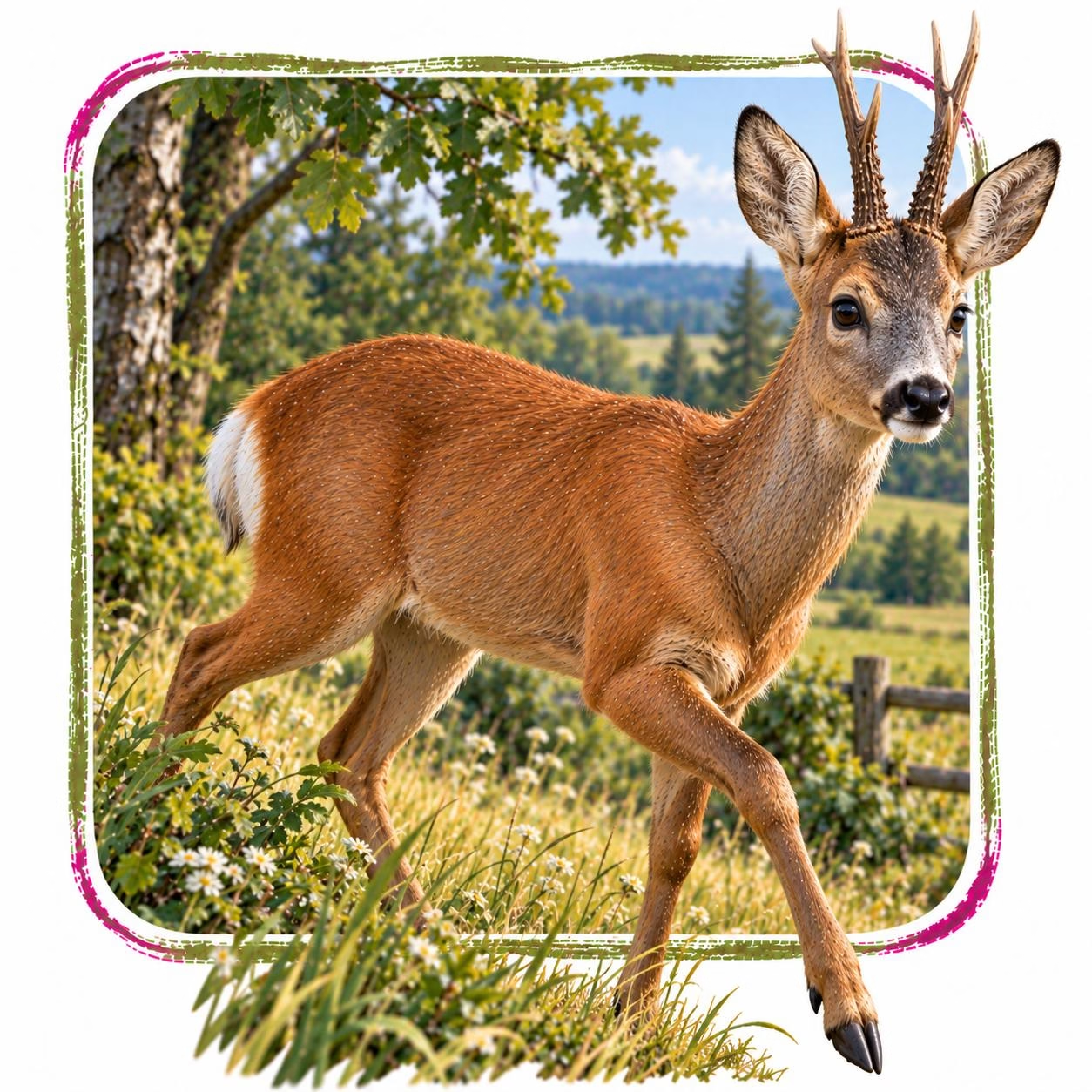
Roe Deer in its natural Broadleaf, coniferous, and mixed woodland, forest edges, hedgerows, scrub, farmland, meadows, and wooded parkland habitat