
Rook Facts for Kids
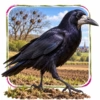
The rook, Corvus frugilegus, is a highly social member of the crow family found across much of Europe and Asia. Adults are glossy black with a pale, bare patch of skin around the base of the long bill, while young rooks keep dark facial feathers for their first months. Rooks forage together across fields and gather in treetop nesting colonies called rookeries.
Quick Rook Facts
- Scientific Name: Corvus frugilegus
- Animal Type: Bird, songbird, corvid, and crow relative
- Family: Corvidae
- Size: Roughly 44–47 centimetres long with a wingspan around 81–99 centimetres
- Known For: Pale adult face, long pointed bill, glossy plumage, shaggy leg feathers, social flocks, and noisy rookeries
- Range: Europe and a broad band across Asia
- Habitat: Farmland, pasture, grassland, river plains, steppe, villages, parks, and tall nesting trees
- Diet: Invertebrates, seeds, grain, fruit, roots, small animals, carrion, and scraps
- Young: Chicks raised in a large stick nest
- Conservation: Globally Least Concern, although European populations have declined over recent generations
What You’ll Learn
Discover 10 clever rook facts for kids about black feathers, bare-faced adults, intelligence, social colonies, and busy rookeries, with a quiz, glossary, and activity
Clear explanations make them ideal for children, families, teachers, and little fact-hunters.
10 Fun Rook Facts for Kids
1. Rooks Belong to the Crow Family
Rooks are corvids related to crows, ravens, jackdaws, magpies, and jays. They share strong bills, flexible diets, complex calls, social learning, and unusually advanced problem-solving abilities.
Kid Decode: A rook is a crow relative with a very social lifestyle.
2. Adults Have a Pale Bare Face
By adulthood, feathers disappear from the skin around the bill base, exposing a pale gray-white patch. Juveniles have a darker bill base covered with facial feathers, so they can resemble carrion crows.
Kid Decode: A young rook wears face feathers that an adult rook does not.
3. Black Feathers Shine With Color
Rook plumage may look plain black in shade, but sunlight reveals violet, blue, green, or purple iridescence. Long loose feathers around the upper legs create a shaggy, trouser-like appearance.
Kid Decode: A black rook can flash jewel colors when the light changes.
4. A Nesting Colony Is a Rookery
Many rook pairs build nests close together in the crowns of tall trees. A rookery may contain dozens or hundreds of noisy nests and can be reused, repaired, and expanded over many years.
Kid Decode: The bird gave its name to a whole neighborhood of treetop nests.
5. Stick Theft Happens Between Neighbors
Pairs construct bulky nests from sticks and line the center with roots, grass, moss, wool, or other soft material. An unguarded stick may be taken by a neighboring rook, so one partner may watch while the other gathers.
Kid Decode: At a rookery, a good stick can become disputed building material.
6. Pairs Form Long Bonds
Rooks often maintain the same mate for years. Partners strengthen their bond by calling, sitting together, preening one another, sharing food, building, incubating, and feeding chicks.
Kid Decode: A rook partnership includes teamwork, snacks, and feather care.
7. Long Bills Probe Soft Ground
Rooks walk through pastures and plowed fields, pushing their pointed bills into soil for beetle larvae, worms, and other invertebrates. They also pick seeds, grain, fruit, roots, carrion, and small prey.
Kid Decode: A rook’s bill works like forceps and a soil probe.
8. Flocks Can Help Farmland
Rooks sometimes eat newly sown grain or crops, but they also consume large numbers of insects and larvae that may damage plants. Their real effect depends on season, crop, food supply, and farming practice.
Kid Decode: The same rook can be called a crop thief and a pest catcher.
9. Winter Roosts Can Be Enormous
Outside breeding season, rooks gather to sleep in communal roosts, sometimes alongside jackdaws and other corvids. Birds exchange information, gain safety in numbers, and travel out in feeding flocks after dawn.
Kid Decode: A winter rook bedtime can involve thousands of noisy neighbors.
10. They Solve Tool Problems
In experiments, captive rooks have bent wire into hooks, selected useful tools, and solved multi-step puzzles even though wild rooks are not regular tool users. Their flexible intelligence helps them explore new solutions.
Kid Decode: A rook can invent a tool for a laboratory puzzle without being taught.
The Weirdest Rook Fact
Laboratory rooks have bent straight wire into hooks to lift food from a tube. This is surprising because wild rooks are not known for routinely making tools, suggesting that their brains can invent a solution when a new problem demands one.
Try This Rook Activity
Map a Rookery
Draw six tall trees and place a different number of stick nests in each crown. Add paired adults, feather-faced juveniles, a rook guarding sticks, and feeding flocks in pasture and a plowed field. Create a key for nests, roosts, worms, grain, and safe undisturbed trees, then total the colony without approaching real nests.
Quick Rook Quiz
- What family does the rook belong to? Answer: The crow family, Corvidae.
- How does an adult face differ from a juvenile face? Answer: The adult has pale bare skin around the bill base.
- What is a rook nesting colony called? Answer: A rookery.
- What does a rook probe soil for? Answer: Worms, beetle larvae, and other invertebrates.
- What tool have experimental rooks made? Answer: A bent-wire hook.
Mini Glossary
- Corvid: A member of the intelligent crow family Corvidae.
- Rookery: A colony where many rooks build nests close together.
- Iridescent: Showing different shimmering colors as light or angle changes.
- Communal roost: A place where many birds gather to sleep.
- Probe: To explore or search by pushing a bill into a surface.
 Lemur Facts for Kids
 Bush Baby Facts for Kids
 Gannet Facts for Kids
 Paradise Parrot Facts for Kids
More Animal Facts for Kids
Visit the full animal facts library or explore a focused animal group.
More Extinct Animal Facts for Kids
Discover dinosaurs, Ice Age giants, prehistoric sea creatures, recently extinct species, and other animals from the past.
Fact check note: Fact checked against BirdLife International’s Rook species factsheet and current IUCN assessment; Cornell Lab eBird materials; British Trust for Ornithology and RSPB guidance; Animal Diversity Web; and peer-reviewed corvid cognition research. Taxonomy, measurements, identification, juvenile plumage, range, habitat, diet, rookeries, nests, pair bonds, foraging, migration, roosting, tool experiments, trends, and global Least Concern status were cross-checked.

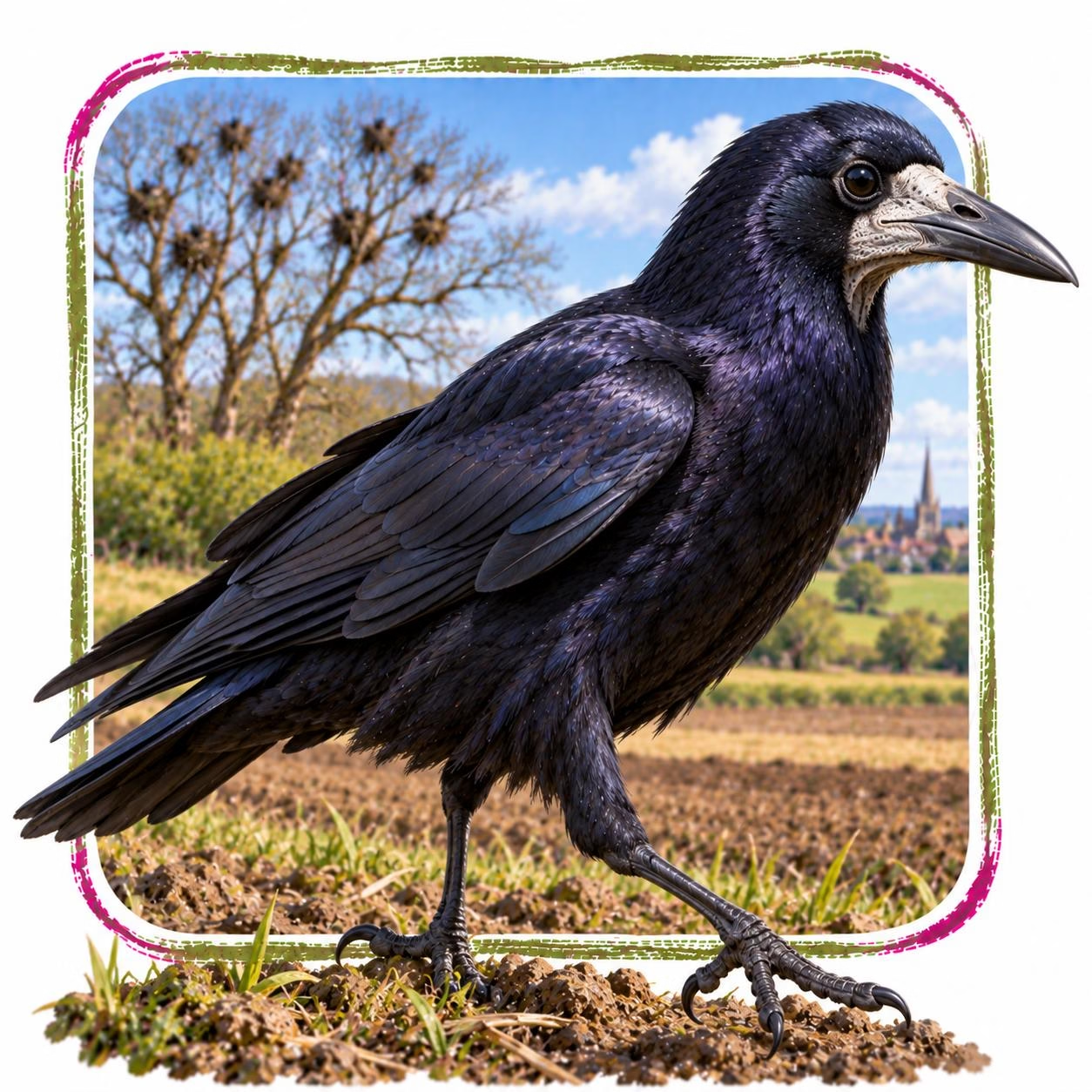
Rook in its natural Farmland, pasture, plowed fields, river plains, steppe, villages, parks, grassland, and stands of tall nesting trees habitat