
Rooster Facts for Kids
A rooster is an adult male domestic chicken, not a separate species. Domestic chickens are commonly classified as Gallus gallus domesticus and descend mainly from red junglefowl, with genetic contributions from other junglefowl. Roosters vary enormously among breeds, but many have a large comb, hanging wattles, curved tail feathers, pointed neck and saddle feathers, strong legs, and a ringing crow.
Quick Rooster Facts
- Scientific Name: Gallus gallus domesticus for the domestic chicken
- Animal Type: Bird, domestic fowl, and adult male chicken
- Family: Phasianidae
- Male Terms: Rooster or cock; a young male is a cockerel
- Female: Hen; a young female is a pullet
- Young: Chick
- Known For: Crowing, comb and wattles, display feathers, flock vigilance, food calls, and courtship
- Habitat: Farms, backyards, villages, and managed free-range or enclosed systems worldwide
- Diet: Seeds, grains, greens, fruit, insects, worms, and balanced poultry feed
- Conservation: Domestic chickens are not assessed as a wild species; breed preservation and good welfare still matter
What You’ll Learn
Explore 10 colorful rooster facts for kids about crowing, bright feathers, combs, social signals, and flock life, plus a quiz, glossary, and activity
These easy facts are made for kids, parents, teachers, and curious young learners.

10 Fun Rooster Facts for Kids
1. A Rooster Is a Male Chicken
Rooster describes sex and maturity, not a different species. An adult female is a hen, a young male is a cockerel, a young female is a pullet, and a newly hatched bird is a chick.
Kid Decode: Rooster and hen are two adult names within the same domestic bird.
2. Crowing Is Not Only for Sunrise
Roosters often crow strongly before and around dawn, guided by an internal daily clock and changing light. They also crow during the day to advertise presence, answer rivals, react to events, or maintain spacing.
Kid Decode: Sunrise is prime crowing time, but the voice works all day.
3. Rank Can Control Crowing Order
Within a stable male group, the highest-ranking rooster may crow first, followed by lower-ranking birds. Social position affects access to food, resting spots, mates, and the way birds respond to one another.
Kid Decode: The flock’s top rooster may start the morning chorus.
4. Combs and Wattles Release Heat
The fleshy comb above the head and wattles below the beak contain many blood vessels. They help release body heat and also provide visual signals whose size, color, and shape vary by breed, age, hormones, and health.
Kid Decode: A rooster carries two colorful natural cooling panels.
5. Fancy Feathers Have Special Names
Many roosters grow pointed hackle feathers around the neck, saddle feathers over the lower back, and long curved sickle feathers in the tail. Breed and genetics create enormous differences in color, length, and shape.
Kid Decode: Hackle, saddle, and sickle sound like tools but can all be rooster feathers.
6. Spurs Grow on the Legs
Many adult roosters develop hard pointed spurs on the back of each lower leg. Spurs can be used during defense or conflict and require safe handling and monitoring; some hens also grow them.
Kid Decode: A spur is attached to the leg, not hidden inside the foot.
7. Flocks Form a Pecking Order
Chickens recognize flock mates and develop a social ranking through postures, calls, pecks, and other interactions. Enough space, food stations, shelter, and gradual introductions reduce bullying and competition.
Kid Decode: Pecking order began as a scientific name for chicken rank.
8. A Food Call Is Called Tidbitting
A rooster may repeatedly pick up and drop a tasty item while giving special calls that attract hens or chicks. This tidbitting display advertises food and can also form part of courtship.
Kid Decode: He may perform a tiny snack dance without eating the prize first.
9. Courtship Includes a Wing Dance
A rooster may lower one wing and step in a circle near a hen, often combined with tidbitting and soft calls. The hen chooses whether to accept his approach, and flock interactions must be watched for aggression.
Kid Decode: One lowered wing turns a walk into a chicken courtship dance.
10. Hens Do Not Need Roosters to Lay Eggs
A hen can produce eggs without a rooster, but those eggs cannot develop into chicks. A rooster is needed to fertilize an egg, and a broody hen or incubator must then provide correct warmth and humidity.
Kid Decode: A breakfast egg needs a hen; a developing chick also needs fertilization.
The Weirdest Rooster Fact
A rooster’s internal clock can trigger dawn crowing even when experiments keep the light dim and steady. Light still fine-tunes the timing, but the bird’s own circadian rhythm helps predict morning before sunrise is visible.
Try This Rooster Activity
Decode a Rooster’s Signals
Draw a calm rooster and label the comb, wattles, hackles, saddle feathers, sickle feathers, spur, wings, and feet. Add four signal bubbles for crowing, alarm calling, tidbitting, and wing-dancing. Finish by designing a safe coop plan with shade, secure fencing, perches, dust-bathing space, water, and more than one feeding point.
Quick Rooster Quiz
- What is a rooster? Answer: An adult male domestic chicken.
- Does a rooster crow only at sunrise? Answer: No.
- How do combs and wattles help with heat? Answer: Blood flowing through them can release body heat.
- What is tidbitting? Answer: A food-calling and food-showing display.
- Does a hen need a rooster to lay an egg? Answer: No, but fertilization by a rooster is needed for a chick to develop.
Mini Glossary
- Cockerel: A young male chicken.
- Comb: The fleshy crest on top of a chicken’s head.
- Wattle: Fleshy skin hanging below the beak.
- Pecking order: The social ranking within a chicken flock.
- Circadian rhythm: An internal cycle that helps organize behavior across roughly 24 hours.

 Hermit Crab Facts for Kids
 Peacock Spider Facts for Kids
 Katydid Facts for Kids
 Therizinosaurus Facts for Kids
More Animal Facts for Kids
Visit the full animal facts library or explore a focused animal group.
More Extinct Animal Facts for Kids
Discover dinosaurs, Ice Age giants, prehistoric sea creatures, recently extinct species, and other animals from the past.
Fact check note: Fact checked against university poultry-extension guidance; Merck Veterinary Manual chicken behavior and husbandry references; peer-reviewed studies of rooster circadian crowing, rank, calls, and courtship; and authoritative domestic-chicken genetics resources. Terminology, ancestry, combs, wattles, feathers, spurs, crowing, hierarchy, tidbitting, courtship, egg fertilization, diet, housing, welfare, and safety were cross-checked.

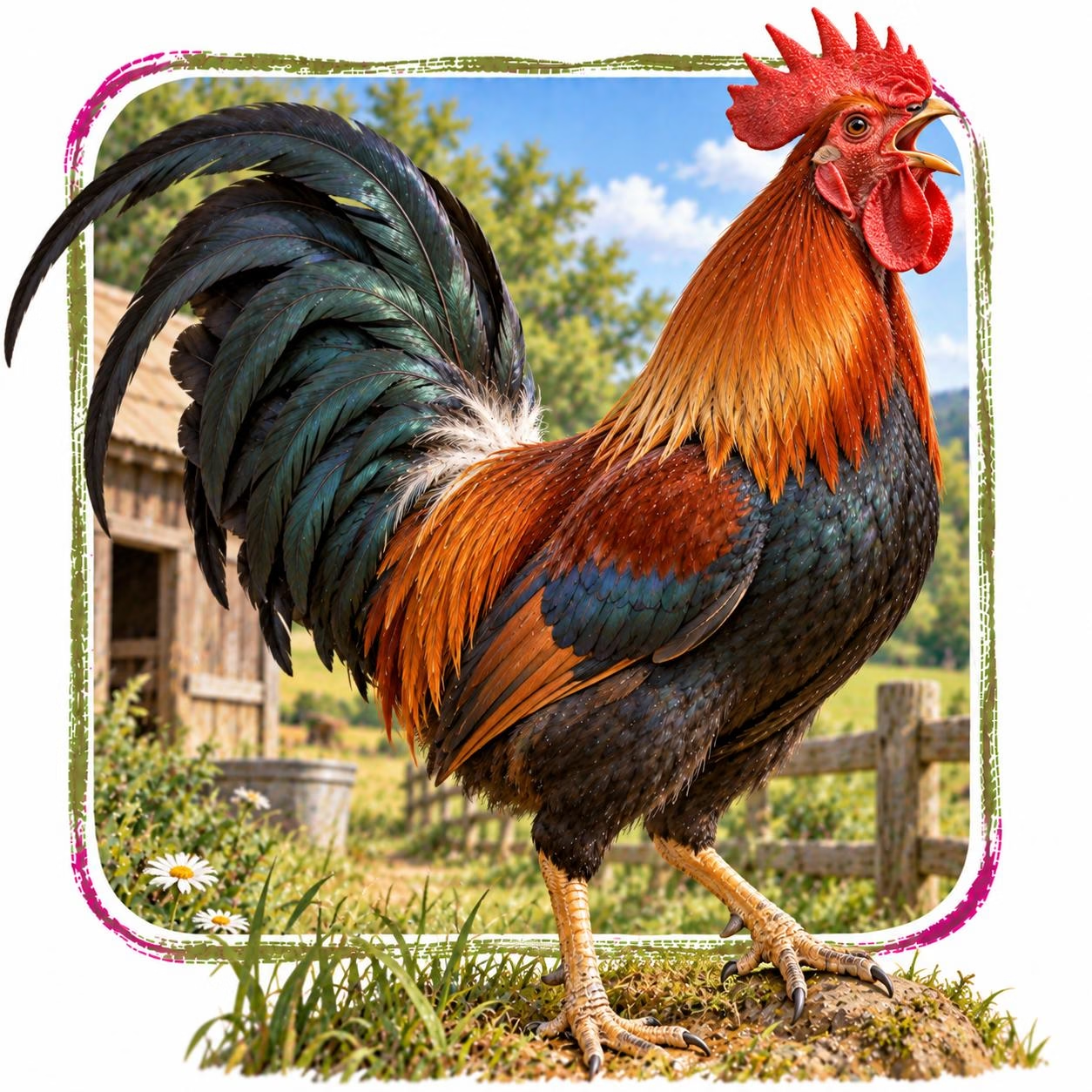
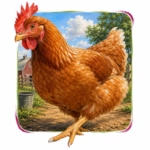
Rooster in its natural Farms, backyards, villages, free-range pasture, poultry yards, coops, and other responsibly managed domestic environments worldwide habitat