
Roseate Spoonbill Facts for Kids
Roseate spoonbills are bright pink wading birds with long legs and a flat spoon-shaped bill. They sweep that bill through shallow water to feel for tiny fish, shrimp, insects, and other wetland snacks.
Quick Roseate Spoonbill Facts
- Animal Type: Bird
- Group: Spoonbill, ibis relative, and wading bird
- Known For: Pink feathers, spoon-shaped bill, sweeping feeding style, chicks, wetland colonies, bare head, long legs, and carotenoid colors
- Habitat: Marshes, mangroves, coastal lagoons, estuaries, mudflats, wetlands, shallow ponds, islands, bays, and swampy areas
- Diet: Small fish, shrimp, crustaceans, aquatic insects, amphibians, snails, and other small animals found in shallow water
What You’ll Learn
Learn 10 mysterious tawny owl facts for kids about round faces, woodland calls, silent flight, hunting, and tree nests, plus a quiz, glossary, and activity
Simple explanations make them great for children, families, teachers, and young bird lovers.
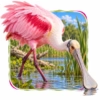
10 Fun Roseate Spoonbill Facts for Kids
1. Roseate Spoonbills Are Birds
Roseate spoonbills are birds, so they have feathers, beaks, wings, and lay eggs.
Kid Decode: A roseate spoonbill is a pink wetland bird with a spoon for a face tool.
2. They Are Wading Birds
Roseate spoonbills are wading birds with long legs for walking in shallow water.
Kid Decode: They stroll through wetlands like pink feathered detectives.
3. Baby Roseate Spoonbills Are Chicks
Baby roseate spoonbills are called chicks.
Kid Decode: A spoonbill chick starts pale and fluffy before the fancy bill grows.
4. Their Bill Is Spoon-Shaped
Adults have a long flat bill that widens at the tip like a spoon.
Kid Decode: That bill is one of the strangest utensils in the bird world.
5. Chicks Do Not Hatch With Full Spoon Bills
Roseate spoonbill chicks do not hatch with a fully spoon-shaped bill; it flattens as they grow.
Kid Decode: The spoon arrives later, like a beak upgrade.
6. They Sweep Their Bills to Feed
Roseate spoonbills swing their bills side to side through shallow water to catch food by touch.
Kid Decode: They feed by doing a wetland windshield-wiper move.
7. They Are Pink Because of Food
Pigments called carotenoids in their food help make their feathers pink.
Kid Decode: Their color comes from dinner, not paint.
8. They Nest in Colonies
Roseate spoonbills often nest in groups with other spoonbills or wading birds.
Kid Decode: A nesting colony can be a noisy pink-and-white treetop neighborhood.
9. They Like Wetlands and Mangroves
Roseate spoonbills use marshes, mangroves, lagoons, mudflats, and shallow coastal wetlands.
Kid Decode: Soft mud and shallow water are perfect spoonbill search zones.
10. They Need Clean Wetlands
Roseate spoonbills depend on healthy wetlands, safe nesting islands, clean water, and enough small aquatic prey.
Kid Decode: Protecting wetlands keeps the pink sweepers feeding.
The Weirdest Roseate Spoonbill Fact
A roseate spoonbill chick does not hatch with a spoon-shaped bill; the bill slowly flattens as the chick grows.
Try This Roseate Spoonbill Activity
Roseate Spoonbill Drawing Activity
Draw a roseate spoonbill feeding in a shallow wetland. Add pink feathers, long legs, spoon-shaped bill, side-to-side feeding arrows, shrimp, small fish, mangrove roots, chicks in a nest, wetland plants, and sunset water reflections.
Quick Roseate Spoonbill Quiz
- What animal group are roseate spoonbills in? Answer: Birds.
- What are baby roseate spoonbills called? Answer: Chicks.
- What shape is an adult spoonbill’s bill? Answer: Spoon-shaped.
- How do roseate spoonbills often feed? Answer: By sweeping the bill side to side in shallow water.
- What helps make their feathers pink? Answer: Carotenoids from food.
Mini Glossary
- Bird: An animal with feathers, a beak, and wings.
- Chick: A baby bird.
- Wading Bird: A long-legged bird that walks in shallow water to feed.
- Carotenoid: A pigment in some foods that can add yellow, orange, red, or pink color.
- Colony: A group of animals living or nesting near each other.
 Ibis Facts for Kids
 Flea Facts for Kids
 Bharal Facts for Kids
 Borophagus Facts for Kids
More Animal Facts for Kids
Visit the full animal facts library or explore a focused animal group.
More Extinct Animal Facts for Kids
Discover dinosaurs, Ice Age giants, prehistoric sea creatures, recently extinct species, and other animals from the past.
Fact check note: Fact checked with Cornell Lab Roseate Spoonbill resources, Audubon Roseate Spoonbill resources, Florida Fish and Wildlife Roseate Spoonbill resources, and trusted wading bird education references.

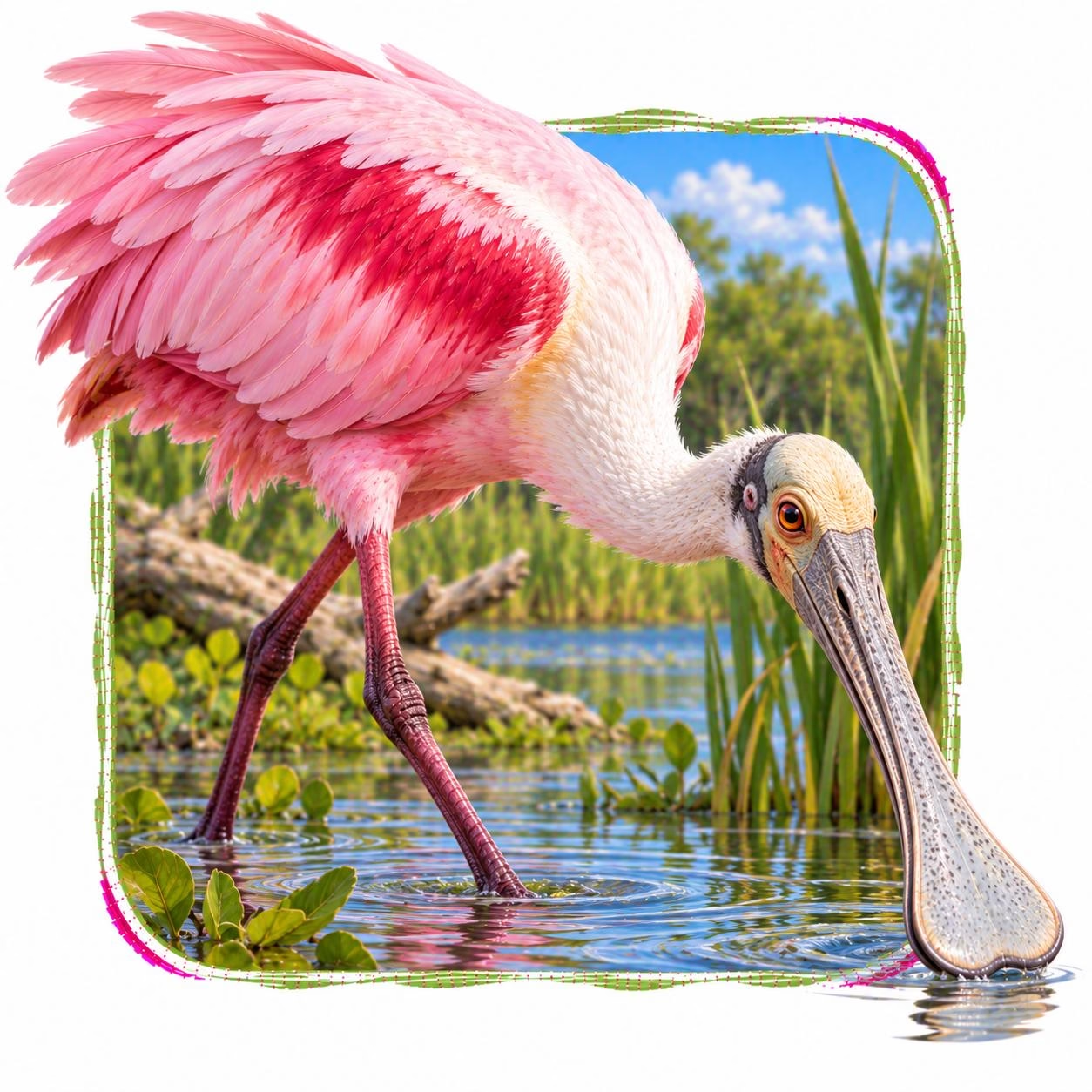
Roseate Spoonbill in its natural Wetlands habitat