
Sambar Deer Facts for Kids
The sambar deer, Rusa unicolor, is the largest deer native to southern and Southeast Asia. Its coarse brown coat, large rounded ears, short tail, and sturdy body suit life in forests, wooded grasslands, mountains, and wetlands. Adult males grow rugged antlers, while females do not, and both are excellent swimmers that often stay close to water.
Quick Sambar Deer Facts
- Scientific Name: Rusa unicolor
- Animal Type: Mammal, deer, and hoofed ruminant
- Family: Cervidae
- Size: The largest Asian deer, with major variation among regions and subspecies
- Known For: Dark coarse coat, large ears, short tail, neck mane, rugged male antlers, alarm barks, and love of water
- Native Range: South and Southeast Asia, including the Indian subcontinent, southern China, mainland Southeast Asia, Sri Lanka, Sumatra, and Borneo
- Habitat: Tropical and subtropical forest, woodland, wooded grassland, wetland edges, and mountain foothills
- Diet: Leaves, grasses, herbs, shoots, fruit, bark, twigs, and aquatic plants
- Young: Usually one calf
- Conservation: Vulnerable globally, with a decreasing overall population
What You’ll Learn
Learn 10 fascinating sambar deer facts for kids about large antlers, shaggy coats, swimming, forest habitats, and Asian wildlife, plus a quiz, glossary, and activity
These simple facts are written for kids, parents, teachers, and curious young minds.
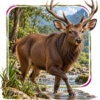
10 Fun Sambar Deer Facts for Kids
1. Sambar Are Giant Asian Deer
Sambar body size varies greatly across their wide range, but large males can stand around 1.5 metres at the shoulder and weigh several hundred kilograms. Females and island populations are often smaller.
Kid Decode: A big sambar stag can be as tall at the shoulder as many adults are at the chest.
2. Only Males Normally Grow Antlers
A stag’s antlers usually have three tines on each side: a brow tine and a fork near the top. Antlers are bone, so they are shed and regrown, unlike the permanent keratin-covered horns of cattle and antelopes.
Kid Decode: A mature sambar often carries six antler points in all.
3. A Dark Coat Hides in Forest Shade
Coarse brown, gray-brown, or nearly black hair blends into shadowy vegetation. Adult males often develop a thick mane around the neck, while large rounded ears help detect sounds in dense cover.
Kid Decode: A sambar’s rough coat can disappear into a wall of brown leaves and shade.
4. They Browse and Graze
Sambar eat an unusually wide variety of plants, browsing leaves, fruit, twigs, bark, shrubs, and aquatic vegetation while also grazing grasses and herbs. Their menu changes with season and habitat.
Kid Decode: A sambar can snack from the ground, bushes, tree branches, and shallow water.
5. Water Is Part of Daily Life
These deer commonly live near streams, marshes, lakes, or forest pools. They swim strongly, enter water to feed or escape danger, and wallow in mud that may cool the body and discourage biting insects.
Kid Decode: A muddy pool can be a sambar’s dining room, cooling bath, and hiding place.
6. They Are Most Active in Dim Light
Sambar often feed from dusk through night and around dawn, resting in dense vegetation during hotter daylight hours. Local weather, predators, food, and human activity can shift this schedule.
Kid Decode: Twilight and moonlight are busy times on a sambar trail.
7. A Loud Bark Warns of Danger
A sambar that detects a tiger, leopard, dhole, or other threat may give a deep repeated alarm bark, sometimes called a honk or dhank. Other animals and human trackers can react to the warning.
Kid Decode: One deer’s booming bark can reveal that a hidden tiger is nearby.
8. Sambar Are Important Prey
Tigers rely heavily on sambar in many forests, while leopards, dholes, and crocodiles also hunt them. By eating plants, dispersing seeds, and supporting predators, sambar help shape forest food webs.
Kid Decode: Protecting sambar can also support the great predators that depend on them.
9. Scent Leaves Invisible Messages
Sambar have large preorbital glands in front of the eyes and other scent glands on the body. Stags rub glands and antlers on vegetation, scrape soil, wallow, and sometimes stand upright to mark higher branches.
Kid Decode: A sambar message board can be a branch coated with scent instead of words.
10. Hunting and Habitat Loss Threaten Them
Sambar have declined because of hunting for meat and antlers, forest loss, fragmentation, and competition or disturbance from people and livestock. The species is Vulnerable even though introduced populations thrive in some other countries.
Kid Decode: Being common in an introduced range does not erase losses in the native forest.
The Weirdest Sambar Deer Fact
A large male sambar may rise onto his hind legs and rub his forehead glands or antlers on a branch above normal deer height. The tall scented mark can advertise his presence long after he has walked away.
Try This Sambar Deer Activity
Map a Sambar Forest Trail
Draw a forest from mountain slope to stream, marsh, grass clearing, wallow, and dense daytime cover. Add a stag, female, and calf, then mark antler rubs, hoofprints, browsed leaves, aquatic plants, mud, and an alarm-call location. Connect safe habitat with a wildlife corridor and explain how the corridor helps deer and tigers.
Quick Sambar Deer Quiz
- What is the largest deer native to Asia? Answer: The sambar deer.
- Which sex normally grows antlers? Answer: Males.
- Name two foods sambar eat. Answer: Any two of leaves, grass, fruit, bark, twigs, herbs, or aquatic plants.
- What can an alarm bark signal? Answer: A nearby predator or danger.
- What is the global conservation category? Answer: Vulnerable.
Mini Glossary
- Ruminant: A hoofed plant eater that rechews partly digested food as cud.
- Antler: A branching bone structure that deer shed and regrow.
- Wallow: A muddy or watery hollow used for rolling or soaking.
- Preorbital gland: A scent gland located in front of the eye in many hoofed mammals.
- Fragmentation: The splitting of connected habitat into smaller isolated pieces.
 Goldfish Facts for Kids
 Crocodile Facts for Kids
 Chimpanzee Facts for Kids
 Vegavis Facts for Kids
More Animal Facts for Kids
Visit the full animal facts library or explore a focused animal group.
More Extinct Animal Facts for Kids
Discover dinosaurs, Ice Age giants, prehistoric sea creatures, recently extinct species, and other animals from the past.
Fact check note: Fact checked against the current IUCN Red List assessment for Rusa unicolor; Mammal Diversity Database; the U.S. Geological Survey Mammalian Species account; World Land Trust species information; Muséum national d’Histoire naturelle references; and authoritative Asian ungulate resources. Taxonomy, size variation, sexual dimorphism, antlers, coat, range, habitat, diet, water use, wallowing, activity, alarm calls, predators, scent marking, reproduction, introduced populations, threats, Vulnerable status, and decreasing trend were cross-checked.

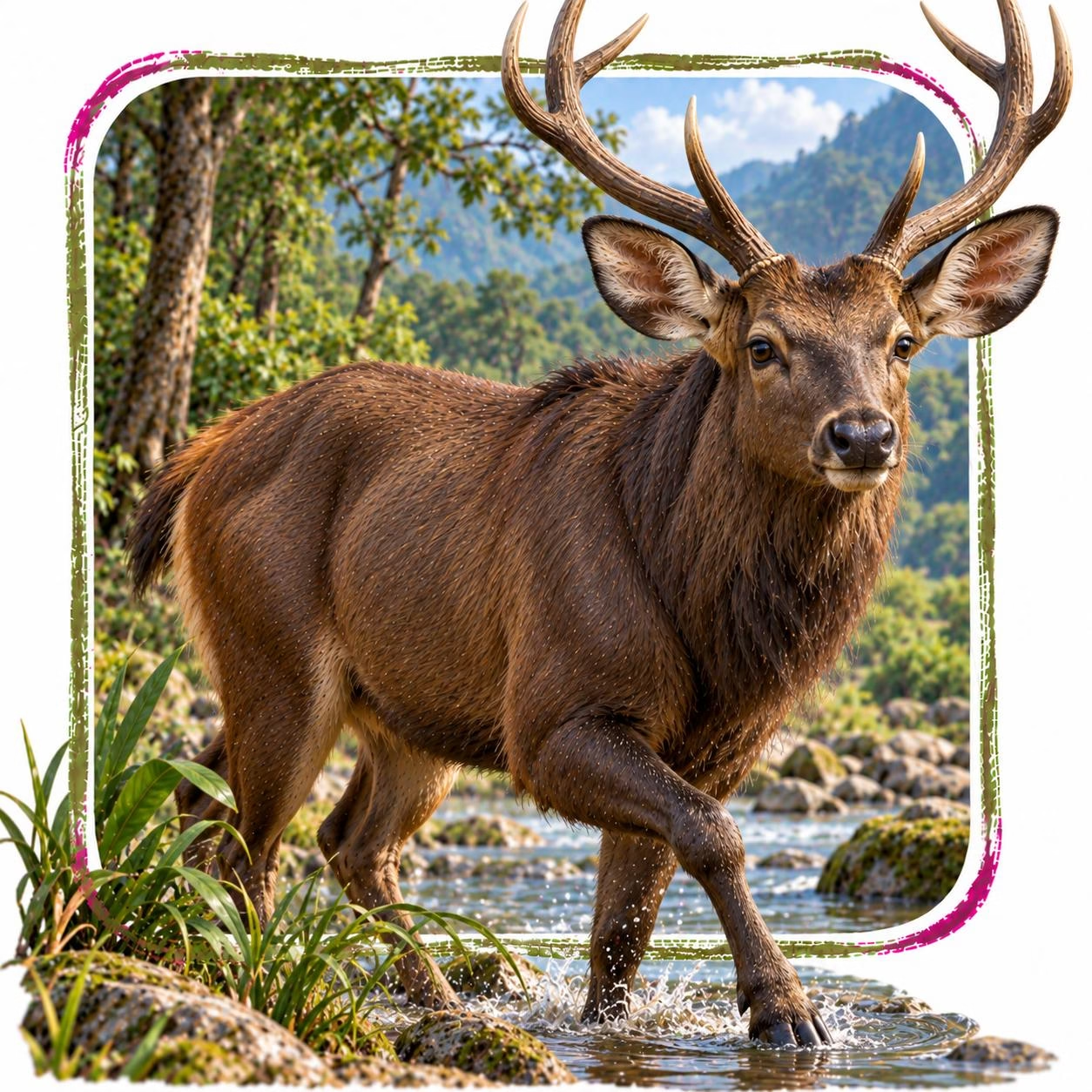
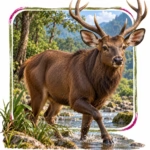
Sambar Deer in its natural Tropical and subtropical forest, woodland, wooded grassland, wetland edges, river valleys, and mountain foothills with access to water habitat