
Saola Facts for Kids
The saola, Pseudoryx nghetinhensis, is an extraordinarily rare wild cattle relative found only in the Annamite Mountains of Vietnam and Laos. Scientists announced its discovery in 1992 after unusual horns and skulls were found in local homes. No saola lives in captivity, the last confirmed camera-trap image was taken in 2013, and the exact number surviving is unknown.
Quick Saola Facts
- Scientific Name: Pseudoryx nghetinhensis
- Animal Type: Mammal, bovid, and wild cattle relative
- Family: Bovidae
- Size: About 84–96 centimetres at the shoulder and roughly 70–100 kilograms
- Known For: Two long nearly parallel horns, dark chestnut coat, bold white facial markings, and huge facial scent glands
- Native Range: Annamite Mountains along the Vietnam–Laos border
- Habitat: Wet evergreen forest, especially remote forested valleys and areas near streams
- Diet: Herbivorous browser; known foods include leaves and other soft forest plants, but the wild diet remains poorly studied
- Last Confirmed Wild Image: A camera-trap photograph from 2013
- Conservation: Critically Endangered; no captive population exists
What You’ll Learn
Discover 10 remarkable saola facts for kids about long parallel horns, forest life, rarity, shy behavior, and conservation, with a quiz, glossary, and activity
Clear explanations make them ideal for children, families, teachers, and little fact-hunters.

10 Fun Saola Facts for Kids
1. Science Met the Saola in 1992
During a forest survey in Vietnam, conservationists saw unfamiliar long horns and skulls kept by local people. The evidence revealed a large mammal unknown to science and led to the saola’s description as a new species.
Kid Decode: A major new mammal entered science near the end of the twentieth century.
2. It Is Called the Asian Unicorn
The nickname celebrates the saola’s extreme rarity and almost mythical reputation. A real saola has two horns, not one, and local communities knew the animal long before scientists formally described it.
Kid Decode: The Asian unicorn owns a pair of horns and was never a myth to local people.
3. Both Sexes Carry Parallel Horns
Male and female saolas grow long, slender, dark horns that can reach roughly 50 centimetres or more. The horns rise almost straight and parallel, inspiring a scientific name that means something like spindle-horned.
Kid Decode: From the side, two matching horns can line up and look like one.
4. It Is Not a True Antelope
The saola’s slim body and facial pattern look antelope-like, but genetic and anatomical evidence places it in a distinctive branch of the cattle family. It is the only living species in the genus Pseudoryx.
Kid Decode: An antelope-shaped mystery animal is actually a unique wild cattle relative.
5. White Marks Pattern the Face
A dark chestnut-brown coat contrasts with white stripes above the eyes, white patches on the cheeks and muzzle, and lighter markings on the legs. The exact pattern helps distinguish a saola from other forest bovids.
Kid Decode: Its face carries bright white eyebrow, cheek, and muzzle markings.
6. Its Scent Glands Are Enormous
Deep hollows in front of the eyes contain unusually large maxillary scent glands. Saolas may use their oily secretion to mark vegetation or communicate, but researchers have had very few chances to observe the behavior.
Kid Decode: A saola has some of the largest facial scent glands for its body size among mammals.
7. It Hides in Wet Mountain Forest
Confirmed records come from the Annamite range, where steep, rainy evergreen forest is cut by streams and valleys. Its full habitat use, movements, home range, and seasonal needs remain uncertain.
Kid Decode: Clouds, streams, and thick leaves help hide one of Earth’s rarest mammals.
8. Much of Its Life Is Still Unknown
Brief observations suggest a browsing diet and a quiet animal that may travel alone or in small groups, but scientists cannot safely claim a detailed daily routine. Even basic facts about breeding and lifespan remain mysteries.
Kid Decode: For the saola, “scientists do not know yet” is an important fact.
9. Wire Snares Are the Greatest Danger
Saolas are not usually the intended target, but indiscriminate wire snares set for other wildlife can catch them. Habitat loss and fragmentation add pressure to a population already thought to be extremely small.
Kid Decode: A trap set for another species can still erase a saola from the forest.
10. Rescuers Search Without Giving Up
Conservation teams remove snares, work with local communities, protect habitat, deploy camera traps, and test environmental DNA and blood meals from leeches. A planned conservation-breeding program could begin only if living saolas are safely found.
Kid Decode: A leech’s last meal may contain DNA proving that a saola passed nearby.
The Weirdest Saola Fact
A forest leech can act like a tiny wildlife detective. After feeding on a mammal, it may retain traces of that animal’s DNA, so researchers can analyze leeches gathered in saola habitat for a genetic clue that this elusive bovid is still nearby.
Try This Saola Activity
Plan a Saola Evidence Search
Draw a protected Annamite forest with streams, ridges, villages, and connected habitat. Place camera traps on animal trails, water-sampling points in streams, and leech-survey zones on the forest floor. Add teams removing wire snares and working with local residents. Create an evidence key that separates confirmed DNA or photographs from tracks, stories, and unverified clues.
Quick Saola Quiz
- When was the saola discovered by science? Answer: In 1992.
- How many horns does a saola have? Answer: Two.
- Is it a true antelope? Answer: No, it is a distinctive wild cattle relative.
- When was the last confirmed camera-trap image? Answer: In 2013.
- What is the greatest immediate threat? Answer: Indiscriminate wire snares.
Mini Glossary
- Bovid: A hoofed mammal in the cattle, sheep, goat, and antelope family.
- Endemic: Native to and found only in a particular region.
- Camera trap: A remotely triggered camera used to photograph passing wildlife.
- Environmental DNA: Genetic material that organisms leave in water, soil, air, or other surroundings.
- Indiscriminate: Affecting many kinds without selecting a particular target.

 Chickadee Facts for Kids
 Stoat Facts for Kids
 Blue-Ringed Octopus Facts for Kids
 Sinomastodon Facts for Kids
More Animal Facts for Kids
Visit the full animal facts library or explore a focused animal group.
More Extinct Animal Facts for Kids
Discover dinosaurs, Ice Age giants, prehistoric sea creatures, recently extinct species, and other animals from the past.
Fact check note: Fact checked against the current IUCN Red List assessment for Pseudoryx nghetinhensis; the IUCN-SSC Asian Wild Cattle Specialist Group saola profile; Re:wild’s Saola Rapid Rescue information; WWF saola resources; Mammal Diversity Database; and peer-reviewed reports on discovery, taxonomy, genetics, camera trapping, environmental DNA, and invertebrate-derived DNA. Discovery date, range, body size, horns, markings, scent glands, habitat, limited behavioral evidence, no captive population, last confirmed 2013 camera image, snares, Critically Endangered status, and search methods were cross-checked.

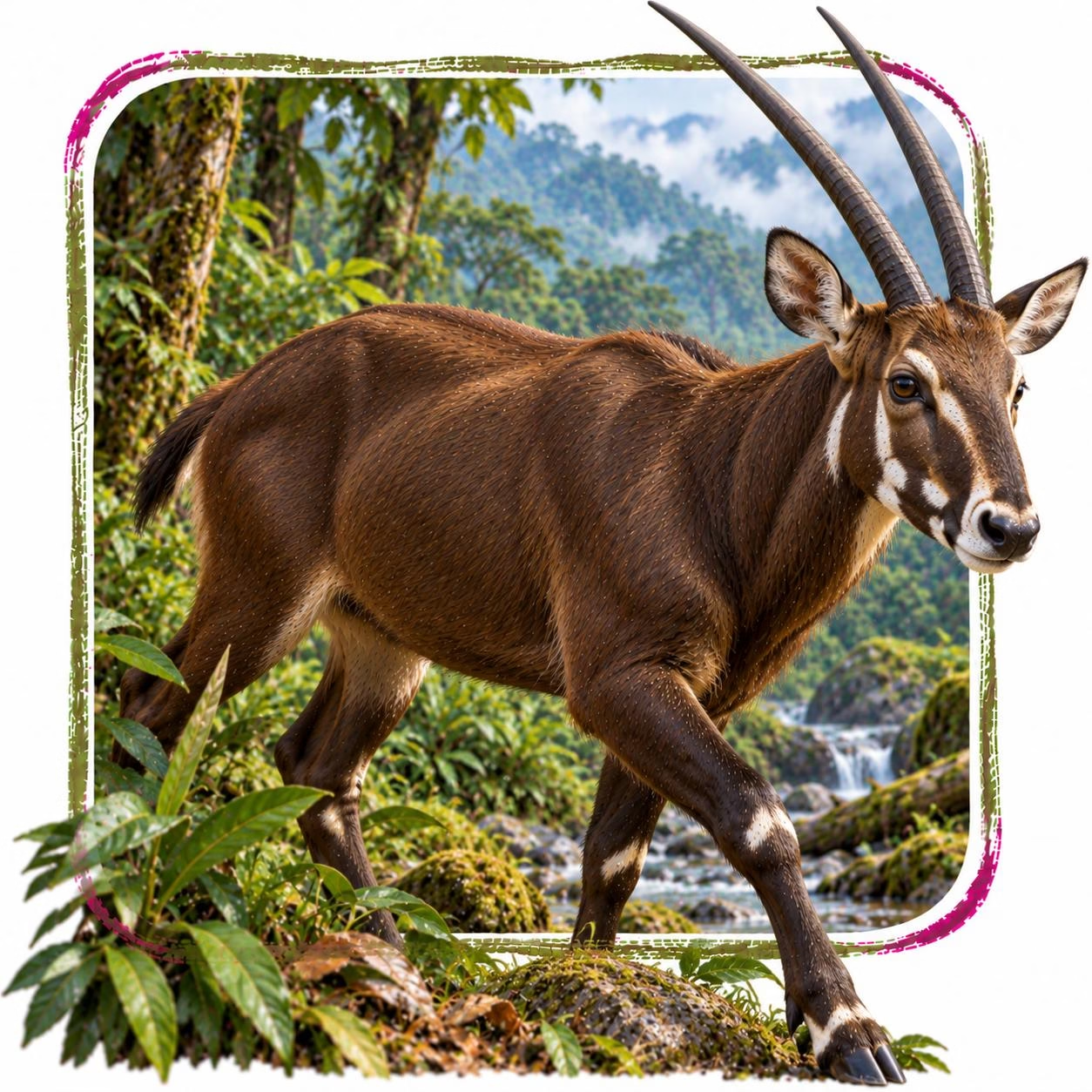
Saola in its natural Remote wet evergreen forest, forested stream valleys, and mountain slopes in the Annamite range of Vietnam and Laos habitat