
Sawshark Facts for Kids
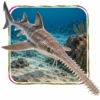
Sawsharks are slender sharks with long, saw-like snouts, a pair of dangling sensory barbels, and rows of sharp rostral teeth. Ten living species in the family Pristiophoridae inhabit parts of the Atlantic, Indian, and Pacific oceans, usually near the seafloor. They are far smaller than sawfishes and can be identified by gill slits on the sides of the head.
Quick Sawshark Facts
- Scientific Group: Order Pristiophoriformes and family Pristiophoridae
- Animal Type: Cartilaginous fish and true shark
- Living Species: Ten recognized species in two genera
- Size: Usually well under 1.5 metres, although maximum size varies among species
- Known For: A long toothed rostrum, alternating saw teeth, and one pair of sensory barbels
- Range: Scattered areas of the Atlantic, Indian, and Pacific oceans
- Habitat: Seafloor habitats on continental and island shelves and slopes, often in deeper water
- Diet: Small fish, crustaceans, squid, and other bottom animals
- Young: Live-born pups nourished mainly by yolk before birth
- Conservation: Status varies by species; several remain poorly known, and bottom fishing can cause bycatch
What You’ll Learn
Learn 10 fascinating sawshark facts for kids about toothed snouts, barbels, shark bodies, deep-water hunting, and how they differ from sawfish, with a quiz, glossary, and activity
Simple explanations make them fun for children, families, teachers, and young ocean fans.
10 Fun Sawshark Facts for Kids
1. Sawsharks Are True Sharks
A sawshark has a slender shark body, separate pectoral fins, and five or six pairs of gill slits on the sides of its head. A sawfish is a broad-headed ray whose gill openings are underneath.
Kid Decode: Side gills say shark; belly gills say sawfish ray.
2. Ten Species Are Recognized
The family contains seven Pristiophorus species and three Pliotrema species. New deepwater species have been described in recent decades, so scientific surveys continue to improve the family tree.
Kid Decode: Two sawshark species were new to science as recently as 2020.
3. Two Barbels Dangle From the Saw
A flexible barbel projects from each side of the rostrum, giving the sawshark a mustache-like appearance. The barbels sample touch and chemical clues near the seafloor and are absent from sawfishes.
Kid Decode: The easiest sawshark clue is a pair of tiny feelers halfway along the saw.
4. Large and Small Saw Teeth Alternate
The rostrum carries prominent teeth with smaller teeth between them, although the exact number and arrangement vary by species and age. Sawfish rostral teeth are generally more evenly sized and lack barbels.
Kid Decode: A sawshark’s snout has a big-small tooth rhythm along its edges.
5. Electric Senses Find Buried Meals
Ampullae of Lorenzini in the head and rostrum detect weak electrical fields created by prey. Together with the barbels, this sense helps a sawshark locate crustaceans or fish hidden in dim water and sediment.
Kid Decode: Even when its eyes cannot see dinner, the saw can sense dinner’s electricity.
6. Sideways Sweeps Stun Prey
When prey is detected, the shark can whip its rostrum from side to side to expose, strike, or disable small animals. The mouth underneath then picks up fish, shrimp, squid, or other manageable prey.
Kid Decode: The saw is a sensor and a swatter, not a piece of machinery.
7. Most Live Near Deep Seafloors
Sawsharks are bottom-associated animals of continental and island shelves and slopes. Depth differs by species: some enter relatively shallow water, while others have been collected hundreds of metres down.
Kid Decode: Many sawsharks patrol a twilight seafloor that people rarely visit.
8. Some Have Six Pairs of Gills
Species in the genus Pristiophorus have five pairs of gill slits. The three Pliotrema species are called sixgill sawsharks because they have six pairs, an unusual number among sharks outside the cow-shark group.
Kid Decode: Counting side gills can separate the two sawshark genera.
9. Mothers Give Birth to Live Pups
Embryos develop inside the mother and are nourished mainly by yolk before live birth. Their developing rostral teeth lie folded back or remain protected, reducing the chance of injuring the mother.
Kid Decode: Baby sawsharks arrive alive with their tiny saw teeth safely arranged.
10. Bottom Fishing Can Catch Them
Trawls and other deep bottom fisheries may capture sawsharks accidentally or retain them for meat. Conservation status differs among species, and scarce information makes it difficult to measure trends for the rarest deepwater forms.
Kid Decode: An animal can be difficult to protect when scientists rarely see it alive.
The Weirdest Sawshark Fact
Most sawsharks have five pairs of gill slits, but the three Pliotrema species have six. Two of those sixgill species were not formally described until 2020, showing how much remains to be discovered on deep continental slopes.
Try This Sawshark Activity
Make a Saw-Snout Identification Card
Draw a sawshark in side view and label its slender body, separate pectoral fins, side gills, paired barbels, alternating rostral teeth, mouth, and two dorsal fins. On the back, draw a sawfish with a broad ray head and belly gills. Add a ruler showing their typical size difference and a depth scale from mangrove shallows to the continental slope.
Quick Sawshark Quiz
- Is a sawshark a shark or a ray? Answer: A true shark.
- Where are its gill slits? Answer: On the sides of the head.
- What hangs from the rostrum? Answer: A pair of sensory barbels.
- What do ampullae of Lorenzini detect? Answer: Weak electrical fields.
- How many gill pairs do Pliotrema sawsharks have? Answer: Six.
Mini Glossary
- Rostrum: A projecting snout; in a sawshark it forms the toothed saw.
- Barbel: A flexible sensory feeler near a fish’s mouth or snout.
- Continental slope: The sloping seafloor between a continent’s shelf and the deep ocean.
- Ampullae of Lorenzini: Tiny organs that detect electrical fields in water.
- Bycatch: An animal caught unintentionally during fishing.
 Sturgeon Facts for Kids
 Puffin Facts for Kids
 Freshwater Eel Facts for Kids
 Woolly Rhinoceros Facts for Kids
More Animal Facts for Kids
Visit the full animal facts library or explore a focused animal group.
More Extinct Animal Facts for Kids
Discover dinosaurs, Ice Age giants, prehistoric sea creatures, recently extinct species, and other animals from the past.
Fact check note: Fact checked against the Australian Museum common sawshark profile and shark classification resources; Florida Museum of Natural History sawfish–sawshark comparisons; FishBase and current taxonomic references for family Pristiophoridae; the 2020 peer-reviewed revision of sixgill sawsharks; IUCN Red List species assessments; and peer-reviewed shark sensory and reproductive literature. Classification, ten-species count, genera, size, side gills, barbels, rostral teeth, electroreception, habitat depths, diet, hunting, live birth, sixgill anatomy, bycatch, and species-level conservation variation were cross-checked.
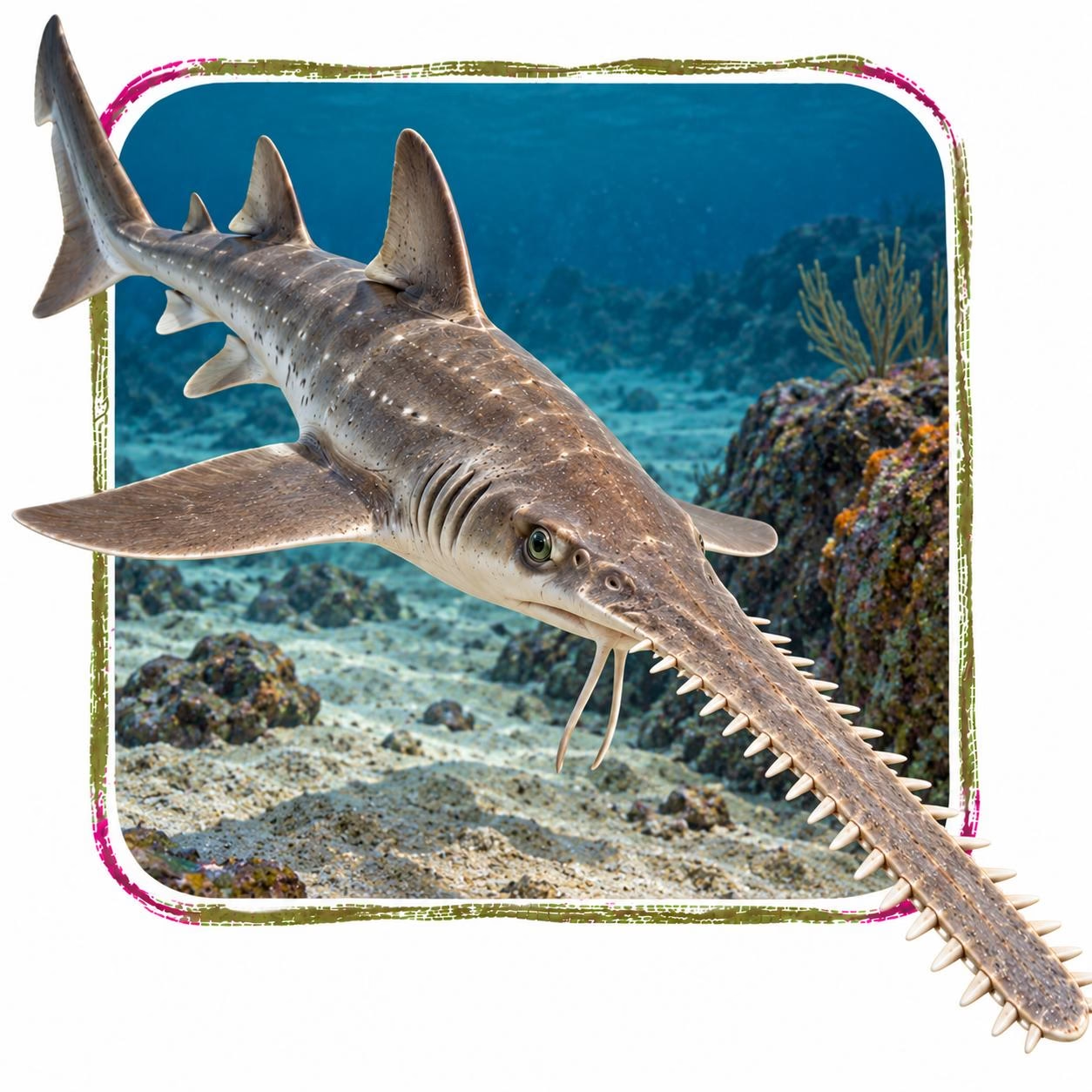
Sawshark in its natural Continental and island shelves and slopes, usually near sandy or muddy seafloors from coastal to deep water depending on species habitat