
Sea Angel Facts for Kids
Sea angels are tiny swimming sea slugs in the gastropod group Gymnosomata. Their transparent bodies and two flapping parapodia can make them look like angels with wings, but they are skilled open-ocean predators. Many hunt shelled pteropods called sea butterflies, sometimes pulling the prey from its shell with hidden grasping structures and hooks.
Quick Sea Angel Facts
- Scientific Group: Gymnosomata within class Gastropoda
- Animal Type: Mollusk, gastropod, pelagic sea slug, and pteropod
- Body: Soft, usually transparent, bilaterally symmetrical, and shell-less as an adult
- Size: Most are only millimetres or a few centimetres long; the largest approach about 8 centimetres
- Known For: Wing-like parapodia, graceful swimming, and surprising predatory feeding
- Range: Open oceans worldwide, especially cold and temperate waters
- Habitat: Pelagic waters from near the surface into the midwater and deeper zones
- Diet: Carnivorous; many specialize on shelled pteropods known as sea butterflies
- Young: Eggs hatch into larvae that temporarily carry a shell
- Conservation: Sea angel is a diverse group without one global status; warming, acidification, and changes to shelled prey may affect species differently
What You’ll Learn
Explore 10 graceful sea angel facts for kids about wing-like fins, transparent bodies, hunting, tiny size, and life as swimming sea slugs, with a quiz, glossary, and activity
Easy explanations make them great for children, families, teachers, and young marine explorers.
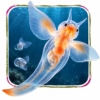
10 Fun Sea Angel Facts for Kids
1. Sea Angels Are Swimming Slugs
A sea angel is a marine gastropod related to snails and slugs, not a jellyfish, fish, or supernatural creature. Adults have no shell, which is why Gymnosomata means naked body.
Kid Decode: The ocean’s tiny angel is really a shell-less swimming snail relative.
2. Their Wings Began as a Foot
The muscular foot found in ordinary snails has evolved into two broad parapodia. Rhythmic strokes of these wing-like lobes push the animal forward and let it turn, hover, and chase prey.
Kid Decode: A snail foot became a pair of underwater wings.
3. Transparency Is Camouflage
Many sea angels are nearly see-through, with orange, pink, or red internal organs visible inside. In open water with nowhere to hide, transparency makes the body harder for predators to notice.
Kid Decode: A sea angel hides by letting the ocean show through its body.
4. Young Sea Angels Have Shells
Sea angel larvae begin life with a delicate calcium-carbonate shell. During metamorphosis they shed it and become shell-less adults, while their close relatives the sea butterflies usually keep a shell.
Kid Decode: A baby sea angel owns a shell that the adult will throw away.
5. They Hunt Sea Butterflies
Sea angels are carnivores that attack other pelagic gastropods. Clione limacina is especially specialized, feeding on sea butterflies in the genus Limacina rather than sampling every kind of plankton.
Kid Decode: The graceful angel often chases the ocean’s tiny butterfly.
6. A Hidden Feeding Head Pops Out
When prey is caught, finger-like buccal cones extend from the head and grip the shell. Hook sacs and a rasping radula help pull or scrape the soft sea butterfly into the digestive tract.
Kid Decode: An angelic face can suddenly unfold into a miniature snail-catching toolkit.
7. Predator and Prey Match Each Other
Different sea angel species have feeding structures suited to particular sea-butterfly shell shapes. This close evolutionary relationship is an example of predators and prey changing in response to one another.
Kid Decode: Each tiny hunter needs tools that fit its prey’s tiny shell.
8. Many Have Both Reproductive Systems
Many sea angels are simultaneous hermaphrodites, meaning one adult has male and female reproductive organs. Partners exchange sperm, and fertilized eggs may be released inside floating gelatinous masses.
Kid Decode: Two sea angels can both give and receive sperm during a long underwater pairing.
9. They Are Part of the Plankton Food Web
Although sea angels swim strongly, currents still carry them as zooplankton. They eat pteropods and are eaten by fishes, jellies, comb jellies, seabirds, and baleen whales.
Kid Decode: A thumb-sized hunter can become one bite in a whale-sized food web.
10. Ocean Change Can Reach Them Twice
Adult sea angels lack shells, but their larvae briefly build shells and many adults depend on shelled sea butterflies for food. Warming and acidification may therefore affect sea angels directly and by changing their prey.
Kid Decode: Losing dinner can trouble a shell-less predator even when its own adult body cannot dissolve.
The Weirdest Sea Angel Fact
A sea angel can turn its head inside out to feed. Buccal cones, hooks, and a radula extend toward a sea butterfly, grip the shell opening, and drag out the soft snail while the hunter continues fluttering in open water.
Try This Sea Angel Activity
Build a Sea Angel Life-Cycle Mobile
Draw four transparent shapes for an egg mass, shelled larva, shell-shedding juvenile, and winged adult. Connect them with arrows and add a separate shelled sea butterfly as prey. Label parapodia, visible organs, larval shell, buccal cones, hooks, and radula, then hang the pieces at different heights to represent the open-ocean water column.
Quick Sea Angel Quiz
- What kind of animal is a sea angel? Answer: A swimming marine gastropod or sea slug.
- What are its wing-like structures called? Answer: Parapodia.
- Do adult sea angels have shells? Answer: No.
- What do many sea angels hunt? Answer: Sea butterflies.
- Why can ocean acidification still matter? Answer: Larvae build shells and adults depend on shelled prey.
Mini Glossary
- Gastropod: A mollusk in the group containing snails and slugs.
- Parapodium: One of the paired wing-like swimming lobes of a pteropod.
- Pelagic: Living in the open-water part of an ocean.
- Radula: A ribbon of tiny teeth used by many mollusks to handle food.
- Metamorphosis: A major change in body form during development.
 Gray Wolf Facts for Kids
 Nautilus Facts for Kids
 Cheetah Facts for Kids
 Basilosaurus Facts for Kids
More Animal Facts for Kids
Visit the full animal facts library or explore a focused animal group.
More Extinct Animal Facts for Kids
Discover dinosaurs, Ice Age giants, prehistoric sea creatures, recently extinct species, and other animals from the past.
Fact check note: Fact checked against Monterey Bay Aquarium’s Sea Angel profile; Smithsonian Ocean’s Angels of the Sea; the Australian Antarctic Program’s Southern Ocean zooplankton research; World Register of Marine Species taxonomy; and peer-reviewed work on gymnosome swimming, feeding structures, predator–prey specialization, reproduction, larval development, vertical distribution, and pteropod responses to warming and acidification. Classification, adult shell loss, parapodia, transparency, size, range, diet, buccal cones, hooks, radula, hermaphroditism, egg masses, food-web roles, and climate sensitivities were cross-checked.
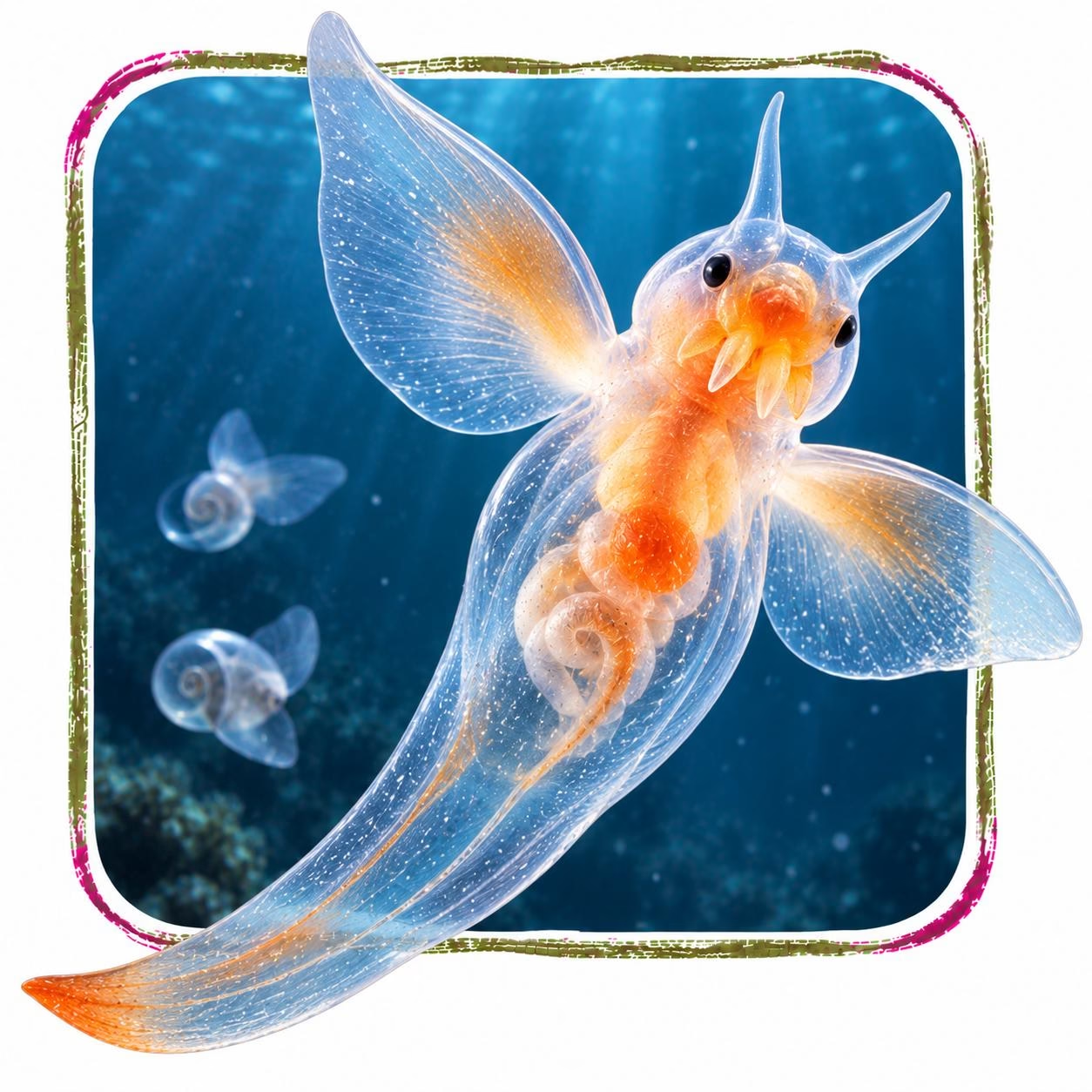
Sea Angel in its natural Open-ocean surface, midwater, and deeper pelagic zones, especially in cold and temperate seas habitat