
Sea Butterfly Facts for Kids
Sea butterflies are tiny pelagic snails commonly grouped as shelled pteropods, especially the Thecosomata. They flutter through seawater using a muscular foot divided into two wing-like parapodia. Many build thin, transparent shells and collect microscopic food with mucus webs, making them important links between plankton and larger animals such as fish and whales.
Quick Sea Butterfly Facts
- Scientific Group: Shelled pteropods, especially Thecosomata, within class Gastropoda
- Animal Type: Mollusk, marine snail, gastropod, and zooplankton
- Body: Soft snail body usually protected by a thin transparent shell
- Size: Many are only a few millimetres long, although size and shell form vary by species
- Known For: Wing-like parapodia, delicate aragonite shells, and large mucus feeding webs
- Range: Open oceans worldwide from tropical to polar waters
- Habitat: Pelagic waters from the surface through deeper layers
- Diet: Phytoplankton, tiny organisms, detritus, and suspended organic particles
- Predators: Sea angels, fish, seabirds, jellies, whales, and other plankton feeders
- Conservation: A diverse group without one status; shell condition is widely studied as an indicator of ocean acidification
What You’ll Learn
Learn 10 fascinating sea butterfly facts for kids about tiny shells, wing-like feet, ocean swimming, feeding, and their importance in marine food webs, plus a quiz, glossary, and activity
These simple facts are written for kids, parents, teachers, and curious young minds.
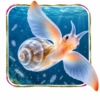
10 Fun Sea Butterfly Facts for Kids
1. They Are Snails, Not Insects
A sea butterfly is a pelagic gastropod related to snails and slugs. The name describes its fluttering motion, not a relationship with six-legged butterflies that fly through air.
Kid Decode: This butterfly has a snail body and flies through water.
2. A Foot Became Two Wings
The ordinary gastropod foot is divided into a pair of muscular parapodia. Their coordinated strokes create lift and thrust, letting the tiny animal swim instead of crawling across a rock.
Kid Decode: Two flapping halves of a snail foot power the ocean flight.
3. Shells Come in Surprising Shapes
Depending on species, the shell may be coiled like a land snail, long and cone-shaped, needle-like, rounded, or almost flat. Most are transparent or translucent and extremely thin.
Kid Decode: A plankton net can catch shells shaped like coils, cones, and tiny needles.
4. Many Shells Are Made of Aragonite
Shelled pteropods commonly build with aragonite, a form of calcium carbonate that dissolves more readily than some other shell minerals. The shell protects the soft body but must remain light enough for swimming.
Kid Decode: A sea butterfly wears a shell that is both armor and delicate glass-like luggage.
5. A Mucus Web Can Catch Dinner
Many species release a sticky mucus web far larger than the animal. The web traps phytoplankton, tiny organisms, detritus, and other particles before the sea butterfly reels it back and eats the collected food.
Kid Decode: A pea-sized snail can fish with an invisible net many times wider than its shell.
6. Some Travel Up and Down Each Day
Many pteropods join vertical migrations through the water column, often rising toward productive surface waters at night and descending during daylight. Species, predators, food, season, and life stage change the route.
Kid Decode: Its daily commute may be straight up and down through dark ocean water.
7. Sea Angels Are Specialist Hunters
Shell-less sea angels chase sea butterflies and use buccal cones, hooks, and a radula to reach the soft snail. Different sea angel feeding tools can match particular sea-butterfly shell shapes.
Kid Decode: An ocean angel can be a sea butterfly’s most specialized predator.
8. They Feed Much Larger Animals
Fish including juvenile salmon and herring eat pteropods, as do seabirds, jellies, whales, and many other predators. Their abundance can make these tiny snails a major bridge from microscopic producers to large animals.
Kid Decode: Thousands of tiny snail meals can help feed one fast-growing fish.
9. They Help Move Carbon Down
Sea butterflies package food into sinking waste, build calcium-carbonate shells, and eventually die or molt tissue that sinks. These processes transfer organic and mineral carbon from upper waters toward deeper ocean layers.
Kid Decode: A drifting snail can send tiny carbon parcels toward the seafloor.
10. Changing Chemistry Can Etch Shells
As seawater absorbs carbon dioxide, its chemistry changes and aragonite becomes harder to build and maintain. Researchers examine shell thinning, pitting, dissolution, repair, growth, and survival to track effects that vary with species and conditions.
Kid Decode: A pteropod shell can act like a tiny record of changing seawater chemistry.
The Weirdest Sea Butterfly Fact
Some sea butterflies cast a mucus feeding web many times larger than their own bodies. Floating particles stick to the nearly invisible sheet, and the tiny snail reels in the web like a fisher pulling up a net full of plankton.
Try This Sea Butterfly Activity
Test a Sea Butterfly Food Web
Cut out a tiny coiled-shell sea butterfly and attach two paper parapodia. Stretch a wide loop of yarn around it as the mucus web, then add paper dots labeled phytoplankton, detritus, and tiny animals. Draw arrows from the food to the sea butterfly and onward to a sea angel, salmon, seabird, and whale. Add a shell panel comparing smooth, pitted, and repaired surfaces.
Quick Sea Butterfly Quiz
- Is a sea butterfly an insect? Answer: No, it is a swimming marine snail.
- What are its swimming wings called? Answer: Parapodia.
- What mineral forms many shells? Answer: Aragonite.
- How can a mucus web help? Answer: It traps tiny food particles.
- Which close relative hunts sea butterflies? Answer: The sea angel.
Mini Glossary
- Pteropod: A pelagic gastropod with a wing-like swimming foot.
- Aragonite: A form of calcium carbonate used to build many marine shells.
- Detritus: Small pieces of dead organic material.
- Vertical migration: Regular movement upward and downward through the water column.
- Ocean acidification: Long-term changes in seawater chemistry caused mainly by absorbed carbon dioxide.
 Genet Facts for Kids
 Goose Facts for Kids
 Musk Deer Facts for Kids
 Arsinoitherium Facts for Kids
More Animal Facts for Kids
Visit the full animal facts library or explore a focused animal group.
More Extinct Animal Facts for Kids
Discover dinosaurs, Ice Age giants, prehistoric sea creatures, recently extinct species, and other animals from the past.
Fact check note: Fact checked against NOAA Ocean Acidification Program pteropod education and indicator resources; NOAA Pacific Marine Environmental Laboratory ocean-acidification materials; Smithsonian Ocean’s pteropod coverage; Monterey Bay Aquarium’s sea angel–sea butterfly comparison; World Register of Marine Species taxonomy; and peer-reviewed studies of pteropod swimming, shell mineralogy, mucus feeding, vertical migration, food webs, carbon export, shell dissolution, and repair. Classification, parapodia, shell diversity, aragonite, diets, mucus webs, predators, ecological importance, carbon transport, and acidification responses were cross-checked.
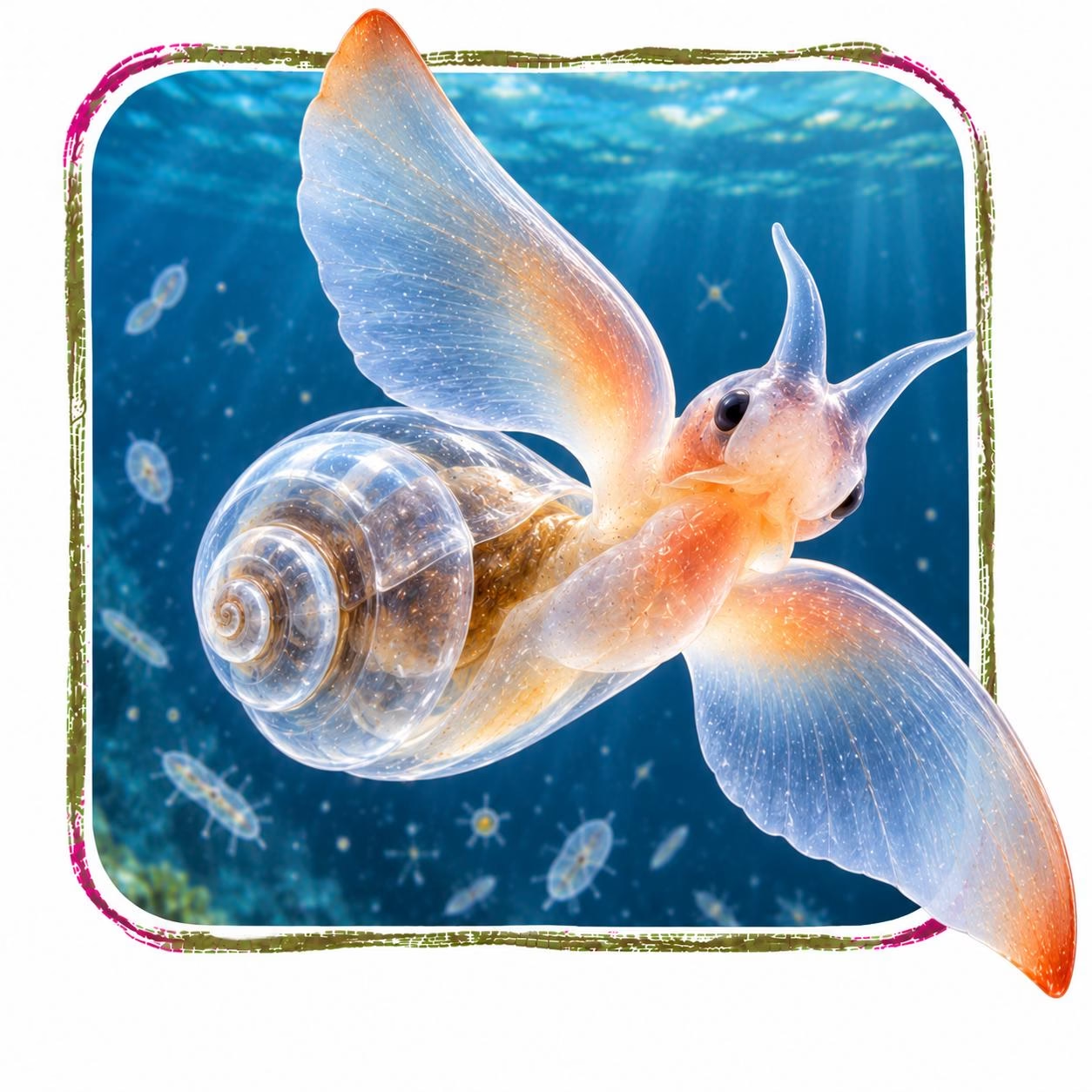
Sea Butterfly in its natural Open-ocean surface waters and deeper pelagic layers from tropical seas to polar oceans habitat