
Serow Facts for Kids
Serows are stocky, shaggy goat-antelopes in the genus Capricornis. They live in forested mountains and rocky country across parts of South, East, and Southeast Asia. Although people sometimes mistake them for deer, serows belong to the bovid family with goats, sheep, cattle, and antelopes, and both females and males usually carry short permanent horns.
Quick Serow Facts
- Scientific Group: Genus Capricornis in family Bovidae and tribe Caprini
- Animal Type: Mammal, hoofed ruminant, and goat-antelope
- Recognized Species: Four in the current Mammal Diversity Database treatment; other classifications may split the group differently
- Appearance: Stocky body, coarse coat, dark facial glands, short tail, and short backward-pointing horns
- Size: Medium-sized but highly variable; the Taiwan serow is much smaller than large mainland forms
- Range: Parts of the Himalayas, China, Japan, Taiwan, mainland Southeast Asia, and Sumatra
- Habitat: Mountain forests, rocky slopes, cliffs, scrub, and forest edges
- Diet: Herbivorous browser and grazer eating leaves, shoots, herbs, grasses, twigs, fruit, and other plants
- Social Life: Often solitary or found as pairs and small family groups
- Conservation: Status varies by species; current assessments include both Least Concern and Vulnerable serows
What You’ll Learn
Learn 10 mountain serow facts for kids about shaggy coats, short horns, climbing, forest habitats, and Asian mountains, with a quiz, glossary, and activity
Simple explanations make them great for children, families, teachers, and young animal fans.
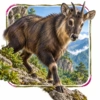
10 Fun Serow Facts for Kids
1. A Serow Is a Goat-Antelope
Serows are bovids in the same broad family as goats, sheep, cattle, and antelopes. Scientists place them in the goat-and-sheep tribe Caprini, so they are not deer even when their faces look deer-like.
Kid Decode: A serow’s nearest family crowd includes goats and sheep, not true deer.
2. Scientists Debate the Species List
The Mammal Diversity Database currently recognizes Japanese, mainland, red, and Taiwan serows. Some authorities split mainland populations such as Himalayan or Chinese serows into additional species, so books may give different totals.
Kid Decode: The answer to “How many serows?” can change when scientists compare new evidence.
3. Every Wild Serow Is Asian
Together, the species occur from the eastern Himalayas and northeastern South Asia through China and mainland Southeast Asia, plus Japan, Taiwan, and Sumatra. Each species occupies only part of that enormous combined range.
Kid Decode: The whole serow map stays in Asia, but no one species fills the entire map.
4. They Prefer Rough, Forested Country
Serows use steep wooded slopes, rocky ridges, cliffs, caves, scrub, and forest edges. Elevation differs by region, and they may shift between feeding, resting, mineral-lick, and shelter sites as conditions change.
Kid Decode: A mountainside that looks awkward to us can feel like a safe neighborhood to a serow.
5. Both Sexes Usually Grow Horns
Male and female serows carry short, conical horns with keratin sheaths over bony cores. The horns point backward and keep growing instead of branching and falling off each year like deer antlers.
Kid Decode: A serow keeps its horns, while a deer replaces its antlers.
6. Split Hooves Grip Steep Ground
Each foot ends in two main hoof toes that can spread and press against uneven rock or soft soil. Strong legs, flexible joints, and a low stocky body help serows climb and descend rugged slopes.
Kid Decode: A serow wears four built-in pairs of mountain-gripping shoes.
7. Face Glands Leave Messages
Large preorbital glands sit in front of the eyes. Serows rub their scented secretions on branches, rocks, or other landmarks, leaving chemical information that can advertise an animal’s presence and help mark a range.
Kid Decode: A dark mark beneath a serow’s eye is part of its scent-message system.
8. Many Lead Quiet, Solitary Lives
Serows are often found alone, as a male-female pair, or in a mother-and-young family. Activity patterns vary with species and disturbance, but dawn, dusk, and nighttime are important feeding periods for many populations.
Kid Decode: Instead of forming a giant herd, a serow often patrols the forest by itself.
9. They Chew Food Twice
A serow plucks leaves, shoots, herbs, grasses, fruit, and twigs, then later brings partly digested food back up as cud. Its multi-chambered stomach and microbes help break down tough plant material.
Kid Decode: A resting serow may be chewing a leafy meal for the second time.
10. One Kid Is the Usual Family Size
After a pregnancy lasting roughly seven months, a female usually gives birth to one kid, although timing differs among species and regions. The youngster stays with its mother until it can feed and travel independently.
Kid Decode: A sure-footed mountain youngster is called a kid, just like a baby goat.
The Weirdest Serow Fact
Japan designated the Japanese serow a Special Natural Monument in 1955 after heavy hunting had reduced its numbers. Protection helped some populations recover so strongly that the same animal later damaged young plantation trees in certain regions, creating an unusual conservation and forestry puzzle.
Try This Serow Activity
Map a Serow Mountain Route
Draw a steep Asian mountainside with forest, cliff ledges, a cave, stream, mineral lick, feeding patch, and scent-marked branch. Add a serow with split hooves and trace a safe route between resources. Place a deer antler and permanent serow horn in a comparison box, then shade places threatened by roads, snares, or forest clearing and add one wildlife corridor.
Quick Serow Quiz
- Is a serow a deer? Answer: No, it is a bovid goat-antelope.
- How many living species does the Mammal Diversity Database currently recognize? Answer: Four.
- Do serow horns fall off each year? Answer: No, they are permanent.
- Where are the scent glands? Answer: In front of the eyes.
- What is a baby serow called? Answer: A kid.
Mini Glossary
- Bovid: A mammal in the family containing cattle, antelopes, sheep, goats, and relatives.
- Caprini: The bovid tribe containing goats, sheep, serows, gorals, and close relatives.
- Ruminant: A hoofed plant eater that rechews cud and digests food in a chambered stomach.
- Preorbital gland: A scent-producing gland located in front of the eye.
- Keratin: The tough protein forming hair, nails, hooves, and the outer layer of horns.
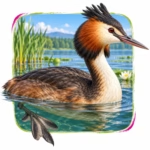 Grebe Facts for Kids
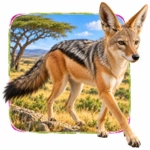 Black-Backed Jackal Facts for Kids
 Damselfly Facts for Kids
 Pliohippus Facts for Kids
More Animal Facts for Kids
Visit the full animal facts library or explore a focused animal group.
More Extinct Animal Facts for Kids
Discover dinosaurs, Ice Age giants, prehistoric sea creatures, recently extinct species, and other animals from the past.
Fact check note: Fact checked against the American Society of Mammalogists Mammal Diversity Database entries for Capricornis; IUCN Red List assessments for Japanese, mainland, red, and Taiwan serows; University of Michigan Animal Diversity Web’s Japanese serow account; Japanese conservation and cultural-property references; and peer-reviewed work on serow taxonomy, distribution, morphology, scent marking, habitat use, diet, activity, and reproduction. The current four-species treatment, alternative splits, bovid relationships, permanent horns, preorbital glands, plant diet, roughly seven-month gestation, and species-specific conservation categories were cross-checked.

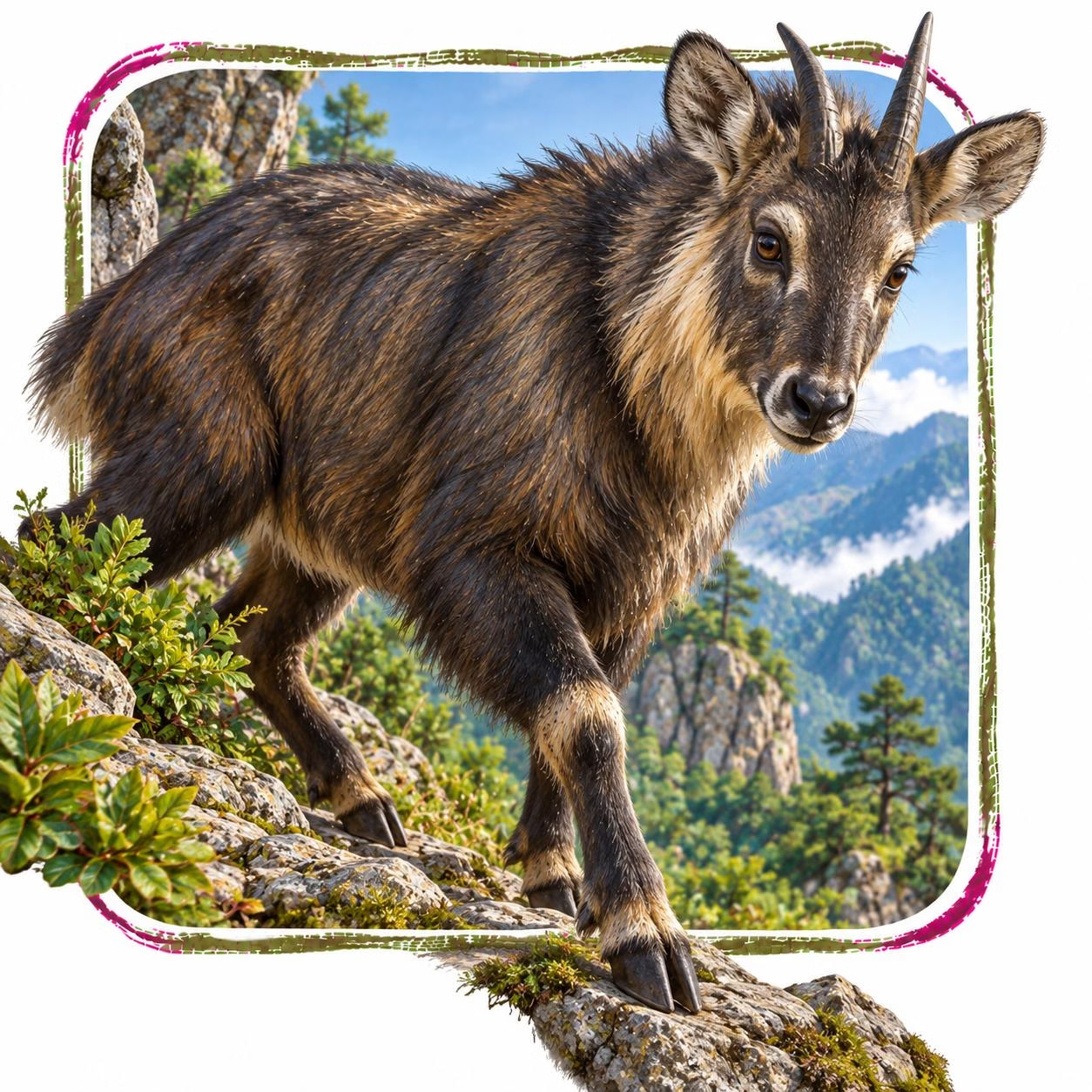
Serow in its natural Forested mountains, rocky slopes, cliffs, scrub, caves, and forest edges across parts of Asia habitat