
Sharp-Shinned Hawk Facts for Kids
The sharp-shinned hawk, Accipiter striatus, is a small woodland raptor of the Americas. Short rounded wings, a very long tail, long toes, and quick reflexes help it race between trunks and branches while chasing small birds. Northern populations migrate south for winter, when these secretive hawks sometimes appear near backyard bird feeders.
Quick Sharp-Shinned Hawk Facts
- Scientific Name: Accipiter striatus
- Animal Type: Bird, raptor, hawk, and member of family Accipitridae
- Size: Roughly 24–34 centimetres long with a wingspan of about 43–56 centimetres
- Known For: Being the smallest hawk in Canada and the United States and an agile bird hunter
- Appearance: Short rounded wings, long square-tipped tail, thin legs, small head, and long toes
- Range: North, Central, and parts of South America; northern birds migrate
- Habitat: Dense coniferous, mixed, and broadleaf forests, woodland edges, parks, and wooded suburbs
- Diet: Mostly small birds, with occasional rodents and insects
- Nest: Broad twig platform hidden beneath dense tree cover, often in a conifer
- Conservation: Globally Least Concern, although trends, threats, and taxonomy differ across its broad range
What You’ll Learn
Learn 10 speedy sharp-shinned hawk facts for kids about short wings, long tails, woodland flight, sharp talons, and hunting small birds, plus a quiz, glossary, and activity
These simple facts are written for kids, parents, teachers, and curious young minds.
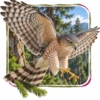
10 Fun Sharp-Shinned Hawk Facts for Kids
1. It Is a Tiny True Hawk
The sharp-shinned hawk is the smallest hawk in Canada and the United States. A male can be close to robin-sized, but its hooked bill, grasping talons, and forward-facing eyes reveal a powerful raptor.
Kid Decode: A hawk does not need to be large to be a skilled hunter.
2. Females Are Much Larger
Females average about one-third larger and heavier than males. This reversed size pattern lets the two sexes capture somewhat different prey and helps a nesting pair deliver a wider range of meals to growing young.
Kid Decode: In this hawk species, Mom is usually much bigger than Dad.
3. Its Body Is Built for Forest Racing
Short rounded wings provide bursts of acceleration, while the long tail works like a rudder and brake. These proportions help the hawk twist through branches instead of soaring over open ground for long periods.
Kid Decode: The long tail steers a sharp-shin through a woodland obstacle course.
4. Surprise Is Its Main Hunting Tool
A sharp-shinned hawk often watches from cover and then bursts from a hidden perch. It may chase prey through vegetation, skim low across the ground, or use a hedge, building, or tree trunk to hide its approach.
Kid Decode: The little hawk turns bushes and corners into places for an ambush.
5. Small Birds Dominate the Menu
Songbirds make up about 90 percent of the diet described in North American studies, especially sparrows, warblers, thrushes, and birds around robin size or smaller. Mice, voles, moths, and grasshoppers are occasional extras.
Kid Decode: A sharp-shin is a bird specialist more than a mouse specialist.
6. Long Toes Hold Moving Prey
Slender legs end in long toes and strongly curved talons. Like a cat gripping with claws, the hawk spreads and closes its feet around active prey, then carries the catch to a perch to pluck before eating.
Kid Decode: The thin-looking feet end in a surprisingly strong living bird-catching trap.
7. Many Gather Along Migration Routes
Birds breeding far north travel south in autumn, often following ridges, coastlines, and other landscape features that concentrate migrants. Thousands may pass a single hawk-watch site even though each usually travels independently.
Kid Decode: A secretive forest hawk can become part of a huge migration count.
8. Adults and Young Wear Different Colors
Adults have blue-gray backs, red-orange barring below, and red to orange eyes. Juveniles are brown above with vertical brown streaks below and yellow eyes, so age changes the field marks birdwatchers use.
Kid Decode: A young sharp-shin’s yellow eyes can become orange or red as it matures.
9. The Nest Hides Under a Canopy
Pairs choose dense forest, often placing a broad flat twig nest near a conifer trunk and well below the treetop. The female does most construction and incubates three to eight eggs for about 30–35 days.
Kid Decode: A wide platform of twigs can be almost invisible beneath thick evergreen branches.
10. Sharp-Shins Recovered After DDT
Numbers fell during the era of the pesticide DDT, which caused eggshell problems in many raptors. Populations rebounded after the chemical was banned in the United States, though collisions, habitat change, and contaminants still matter.
Kid Decode: Protecting a hawk can begin by protecting the strength of its eggshell.
The Weirdest Sharp-Shinned Hawk Fact
Parents eventually turn feeding practice into an aerial handoff. An adult approaches with prey and calls, a fledgling rises into the air, and the young hawk grabs the meal directly from its parent’s feet while both birds are flying.
Try This Sharp-Shinned Hawk Activity
Make a Forest Flight Course
Draw a top-down woodland maze with trunks, branches, hedges, and one open clearing. Trace a sharp-shinned hawk route using short-wing acceleration and long-tail turns to reach a perch without touching obstacles. Add an adult and juvenile identification box, compare a smaller male with a larger female, and mark a hidden conifer nest and an autumn migration ridge.
Quick Sharp-Shinned Hawk Quiz
- What kind of food makes up most of this hawk’s diet? Answer: Small birds.
- Which sex is larger? Answer: The female.
- How does the long tail help? Answer: It steers and brakes during fast forest flight.
- What color are a juvenile’s eyes? Answer: Yellow.
- Where is the nest usually hidden? Answer: Beneath dense forest cover, often in a conifer.
Mini Glossary
- Raptor: A bird that catches animals with strong feet and hooked talons.
- Talons: The sharp curved claws of a bird of prey.
- Canopy: The upper layer formed by tree branches and leaves.
- Fledgling: A young bird that has left the nest and is learning to live independently.
- Migration: Regular seasonal movement between different regions.
 Rhinoceros Beetle Facts for Kids
 Harvestman Facts for Kids
 Harlequin Duck Facts for Kids
 Pyrenean Ibex Facts for Kids
More Animal Facts for Kids
Visit the full animal facts library or explore a focused animal group.
More Extinct Animal Facts for Kids
Discover dinosaurs, Ice Age giants, prehistoric sea creatures, recently extinct species, and other animals from the past.
Fact check note: Fact checked against Cornell Lab of Ornithology All About Birds and Birds of the World; the Clements Checklist; BirdLife International’s Accipiter striatus assessment; Hawk Migration Association of North America resources; and peer-reviewed work on sharp-shinned hawk morphology, sexual size differences, diet, pursuit hunting, migration, nesting, development, DDT-era declines, and recovery. Scientific name, American range, smallest-hawk wording for Canada and the United States, roughly 90-percent bird diet, three-to-eight-egg clutch, 30–35-day incubation, age plumages, and aerial fledgling food passes were cross-checked.

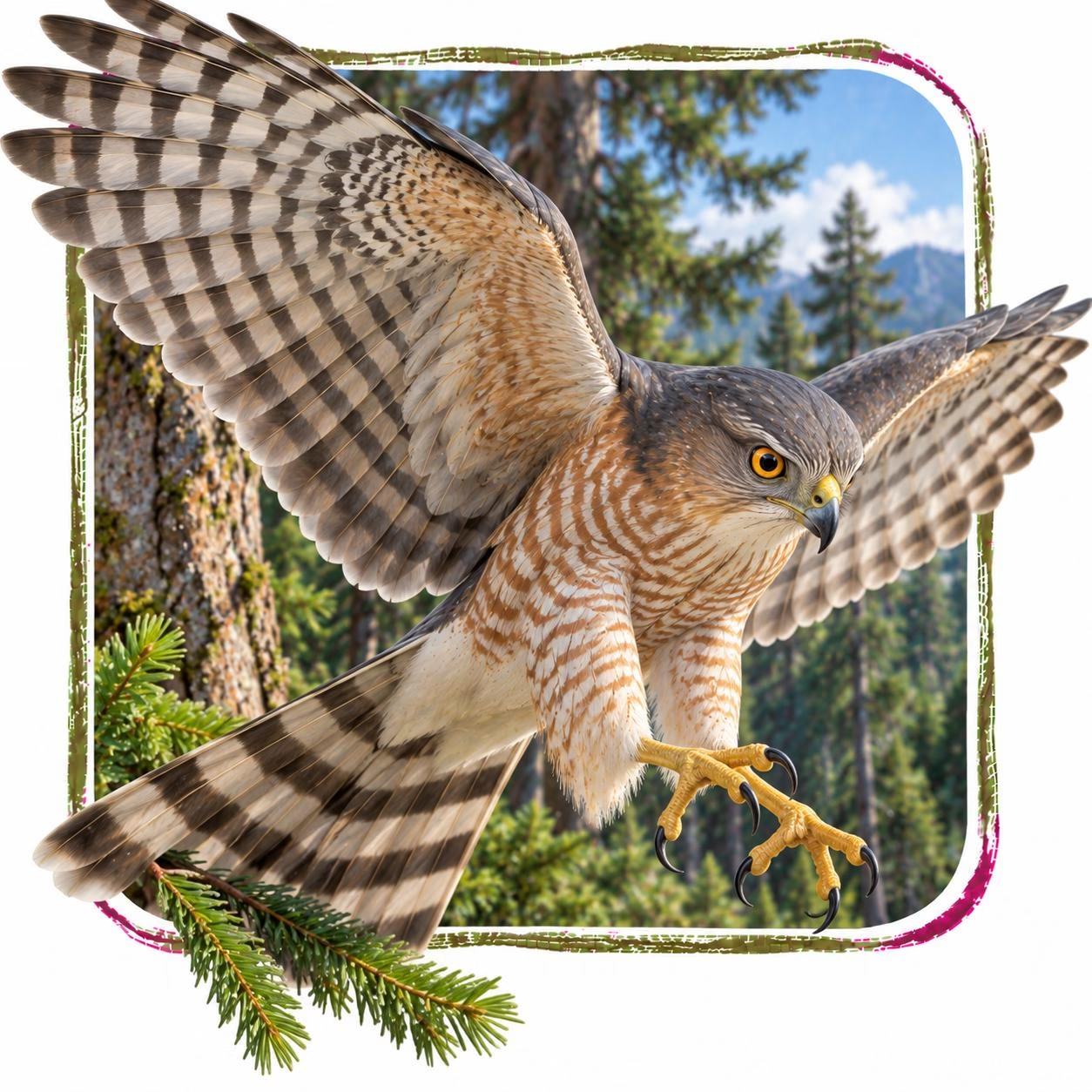
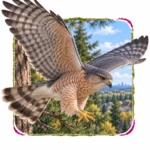
Sharp-Shinned Hawk in its natural Dense coniferous, mixed, and broadleaf forests, woodland edges, parks, migration corridors, and wooded suburbs across the Americas habitat