
Siamang Facts for Kids
Siamangs are large black gibbons that live in forests of Sumatra and the Malay Peninsula. They are famous for swinging through trees and making loud booming calls with an inflatable throat sac.
Quick Siamang Facts
- Animal Type: Mammal
- Group: Primate, ape, and gibbon
- Known For: Inflatable throat sacs, booming calls, long arms, brachiation, and family songs
- Habitat: Tropical rainforests, hill forests, lowland forests, and tree-filled habitats in Sumatra and the Malay Peninsula
- Diet: Fruit, leaves, flowers, insects, and other forest foods depending on season
What You’ll Learn
Explore 10 loud siamang facts for kids about throat sacs, songs, long arms, swinging, and rainforest families, with a quiz, glossary, and activity
These simple facts are written for kids, parents, teachers, and curious young explorers.

10 Fun Siamang Facts for Kids
1. Siamangs Are Mammals
Siamangs are mammals, which means mothers feed milk to their young.
Kid Decode: A siamang is a black treetop singer with a built-in boom box.
2. Siamangs Are Apes
Siamangs are apes in the gibbon family, not monkeys.
Kid Decode: They swing through trees without needing a tail.
3. Siamangs Are Large Gibbons
Siamangs are the largest members of the gibbon family.
Kid Decode: They are the big voices of the small ape world.
4. Siamangs Have Throat Sacs
Siamangs have inflatable throat sacs that help make their calls louder and deeper.
Kid Decode: The throat sac works like a forest sound balloon.
5. Siamangs Make Booming Calls
Siamang calls can be loud and far-carrying, helping family members communicate and mark territory.
Kid Decode: Their song can bounce through the trees like jungle thunder.
6. Siamangs Swing by Brachiation
Siamangs use long arms to swing from branch to branch.
Kid Decode: Their arms are treetop travel machines.
7. Baby Siamangs Are Infants
Baby siamangs are called infants and cling to their mothers when young.
Kid Decode: A siamang infant gets a front-row ride through the canopy.
8. Siamangs Have Webbed Toes
Siamangs have webbing between the second and third toes, which helps set them apart from other gibbons.
Kid Decode: Even their toes have a strange little signature.
9. Siamangs Eat Forest Foods
Siamangs eat fruit, leaves, flowers, insects, and other foods from the forest.
Kid Decode: Their meals come from the leafy sky pantry.
10. Siamangs Need Protected Forests
Siamangs depend on healthy forests, tall trees, and safe canopy paths.
Kid Decode: Protecting forests keeps the booming singers alive.
The Weirdest Siamang Fact
A siamang can inflate a throat sac to make calls that boom through the forest.
Try This Siamang Activity
Siamang Drawing Activity
Draw a siamang calling from a rainforest branch. Add black fur, long arms, an inflated throat sac, an infant, webbed toe detail, vines, fruit, sound waves, tall trees, and misty forest leaves.
Quick Siamang Quiz
- What animal group are siamangs in? Answer: Mammals.
- Are siamangs monkeys or apes? Answer: Apes.
- What helps siamangs make loud calls? Answer: A throat sac.
- What are baby siamangs called? Answer: Infants.
- What movement do siamangs use to swing through trees? Answer: Brachiation.
Mini Glossary
- Mammal: An animal that feeds milk to its young.
- Primate: A mammal group that includes lemurs, monkeys, apes, and humans.
- Ape: A primate without a tail.
- Brachiation: Moving through trees by swinging from the arms.
- Throat Sac: An inflatable pouch in the throat area that helps make louder calls.
 Orangutan Facts for Kids
 Fruit Fly Facts for Kids
 Bison Facts for Kids
 Spinosaurus Facts for Kids
More Animal Facts for Kids
Visit the full animal facts library or explore a focused animal group.
More Extinct Animal Facts for Kids
Discover dinosaurs, Ice Age giants, prehistoric sea creatures, recently extinct species, and other animals from the past.
Fact check note: Fact checked with Britannica siamang resources, Britannica gibbon resources, Britannica brachiation resources, and trusted primate education references.

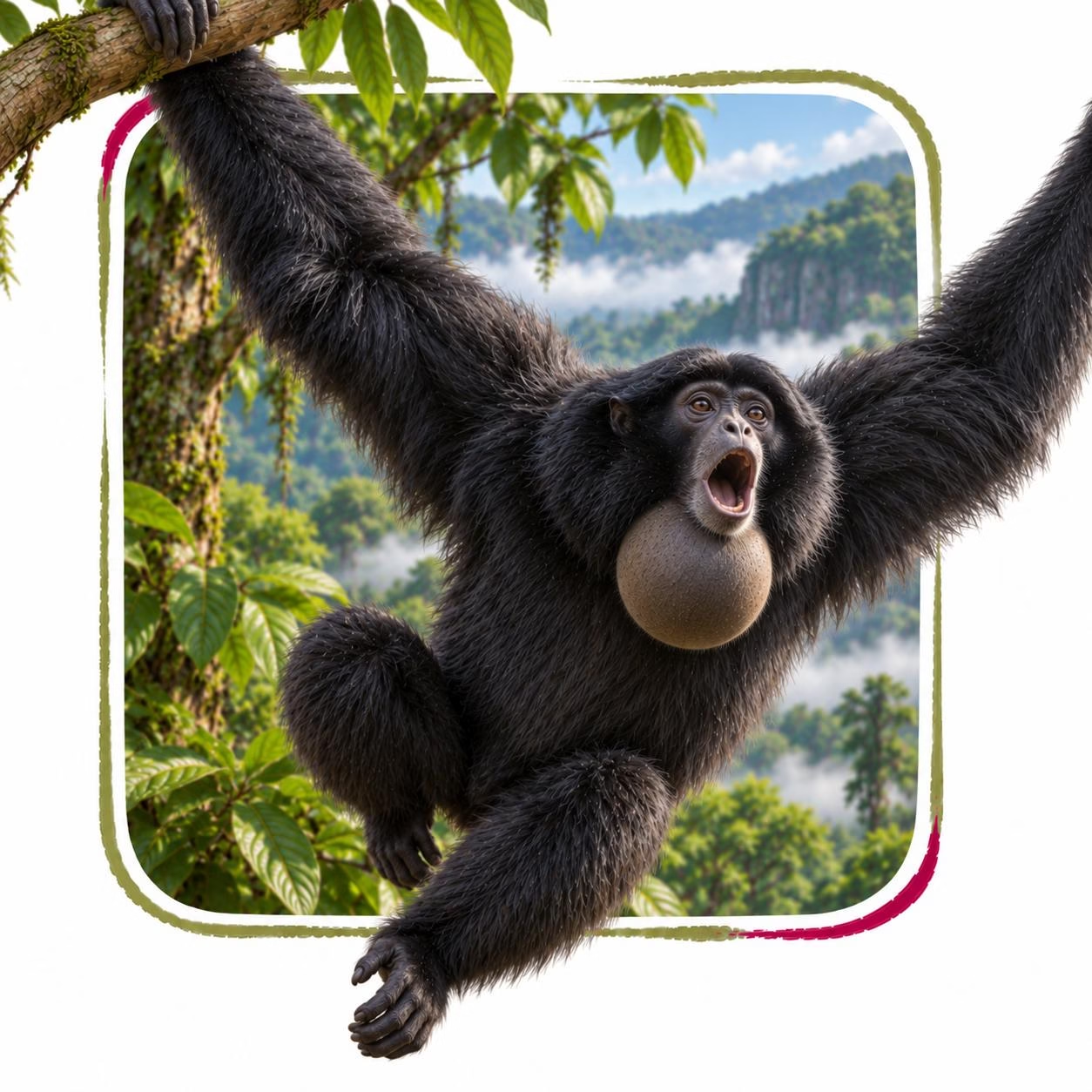
Siamang in its natural Rainforests habitat