
Siberian Tiger Facts for Kids
The Siberian tiger is better called the Amur tiger because its surviving wild population lives mainly around the Amur-Ussuri region of the Russian Far East and northeastern China, not across central Siberia. It is a cold-adapted mainland tiger with a large body, thick winter coat, broad paws, and pale orange camouflage for snowy temperate forests.
Quick Siberian Tiger Facts
- Scientific Name: Panthera tigris; traditionally Panthera tigris altaica and included in Panthera tigris tigris under a widely used two-subspecies system
- Other Name: Amur tiger
- Animal Type: Mammal, big cat, and apex predator
- Size: One of the largest living cats; males are much heavier than females and large males can exceed 200 kilograms
- Appearance: Pale orange coat, widely spaced dark stripes, white underside, thick winter fur, and broad paws
- Range: Mainly the Russian Far East, with a growing cross-border population in northeastern China
- Habitat: Temperate broadleaf, mixed, and coniferous forests with snowy winters
- Diet: Deer and wild boar, plus other mammals and occasional smaller prey
- Young: Litters commonly contain two to four cubs raised by the mother
- Conservation: Tigers are globally Endangered; the Amur population has recovered from a twentieth-century low but remains vulnerable to poaching, prey loss, roads, disease, and habitat fragmentation
What You’ll Learn
Discover 10 powerful Siberian tiger facts for kids about thick fur, striped coats, hunting, snowy forests, and life in northeast Asia, with a quiz, glossary, and activity
Clear explanations make them ideal for children, families, teachers, and little fact-hunters.

10 Fun Siberian Tiger Facts for Kids
1. Amur Is the More Accurate Name
Siberian tiger is a familiar name, but most wild animals live in Primorye and Khabarovsk in the Russian Far East and across the border in northeastern China. Scientists and conservationists often call this population the Amur tiger.
Kid Decode: A so-called Siberian tiger usually lives closer to the Pacific coast than to central Siberia.
2. Its Subspecies Name Depends on the System
Traditional classification calls it Panthera tigris altaica. A widely used modern arrangement groups all mainland tigers as Panthera tigris tigris, but specialists continue reviewing tiger subspecies because genetic samples and interpretations differ.
Kid Decode: The same Amur tiger may receive two subspecies labels in different modern books.
3. Winter Fur Is Longer and Denser
Compared with tigers from warmer regions, Amur tigers develop a longer, denser winter coat and carry protective body fat. The pale orange fur and widely spaced stripes blend with brown trunks, shadows, dry leaves, and snow.
Kid Decode: A snowy forest can hide orange fur when dark stripes break up the body outline.
4. Broad Paws Cross Snow
Large furry paws spread the tiger’s weight over soft ground and provide traction on snow and ice. Powerful legs let it climb slopes, cross deep drifts, leap obstacles, and travel long distances while patrolling.
Kid Decode: An Amur tiger’s paws work a little like built-in snowshoes.
5. One Tiger Needs Enormous Space
Prey is scattered through cold northern forests, so Amur tigers occupy some of the largest tiger home ranges. Males may roam across hundreds of square kilometres, overlapping the smaller ranges of several females.
Kid Decode: A single male may patrol a forest area larger than many cities.
6. Smells and Scratches Are Signposts
Mostly solitary adults spray urine, rub scent, leave droppings, and rake trees or ground with their claws. These signals announce identity, sex, breeding condition, and recent presence without requiring a face-to-face meeting.
Kid Decode: A scratched tree can function like a striped cat’s neighborhood message board.
7. Hoofed Mammals Supply Most Food
Wild boar, sika deer, roe deer, and red-deer relatives are major prey, with diet changing by location and availability. Protecting abundant prey populations is essential because a forest without enough food cannot support many tigers.
Kid Decode: Saving deer and wild boar habitat also helps save the tiger that hunts them.
8. It Hunts by Stalking and Ambush
The tiger approaches quietly under forest cover, then rushes over a short distance and uses its forelimbs, claws, jaws, and body weight to overpower prey. Most attempts fail, so patience and surprise are crucial.
Kid Decode: A huge tiger succeeds by staying hidden until the final explosive sprint.
9. Mothers Raise Cubs Alone
After a pregnancy of about three and a half months, a female usually shelters two to four cubs in a secluded den. She supplies milk, meat, protection, and hunting lessons until the young become independent after roughly 18–24 months.
Kid Decode: An Amur tiger mother teaches every cub how to survive a snowy forest.
10. Recovery Does Not Mean Safe
Only about 20–40 Amur tigers may have remained in the wild during the 1940s. Hunting bans, protected areas, anti-poaching work, and cross-border conservation helped numbers rise to several hundred, but isolation and continuing threats keep the population at risk.
Kid Decode: A rare big cat can recover when people protect both the hunter and its forest food web.
The Weirdest Siberian Tiger Fact
A tiger’s stripe pattern is visible on its skin as well as its fur, and no two individuals have exactly the same arrangement. Camera-trap researchers use markings on both flanks like natural barcodes to recognize Amur tigers without catching them.
Try This Siberian Tiger Activity
Plan an Amur Tiger Corridor
Draw two protected forests divided by a road and settlement. Add a safe wildlife crossing and forest corridor linking them. Place deer, wild boar, water, den cover, scratch trees, and camera traps along a tiger’s route. Give the tiger broad paws, thick pale winter fur, and a unique stripe pattern, then label how prey protection, anti-poaching patrols, and connected habitat support recovery.
Quick Siberian Tiger Quiz
- What is the more accurate name for a Siberian tiger? Answer: Amur tiger.
- Where do most wild Amur tigers live? Answer: The Russian Far East and northeastern China.
- How do broad paws help? Answer: They spread weight and grip snow.
- What are two important prey animals? Answer: Deer and wild boar.
- Who raises the cubs? Answer: The mother.
Mini Glossary
- Amur: A major river and northeast Asian region shared by Russia and China.
- Subspecies: A named population within a species with inherited differences or geographic separation.
- Home range: The area an animal regularly travels while finding food, shelter, and mates.
- Apex predator: A hunter near the top of its food web.
- Fragmentation: The breaking of continuous habitat into smaller disconnected pieces.

 Moon Jelly Facts for Kids
 Hispaniolan Solenodon Facts for Kids
 Meerkat Facts for Kids
 Cave Bear Facts for Kids
More Animal Facts for Kids
Visit the full animal facts library or explore a focused animal group.
More Extinct Animal Facts for Kids
Discover dinosaurs, Ice Age giants, prehistoric sea creatures, recently extinct species, and other animals from the past.
Fact check note: Fact checked against the IUCN SSC Cat Specialist Group tiger account and taxonomy discussion; IUCN Red List tiger assessment; WWF Amur-Heilong and continental tiger resources; Wildlife Conservation Society Russia and China Amur tiger programs; Northeast China Tiger and Leopard National Park reporting; and peer-reviewed research on Amur tiger distribution, morphology, home ranges, prey, communication, reproduction, genetics, camera-trap identification, population recovery, disease, and habitat connectivity. Names, geographic range, competing subspecies systems, cold adaptations, prey dependence, cub development, 1940s bottleneck, several-hundred-animal recovery, and ongoing Endangered status were cross-checked.

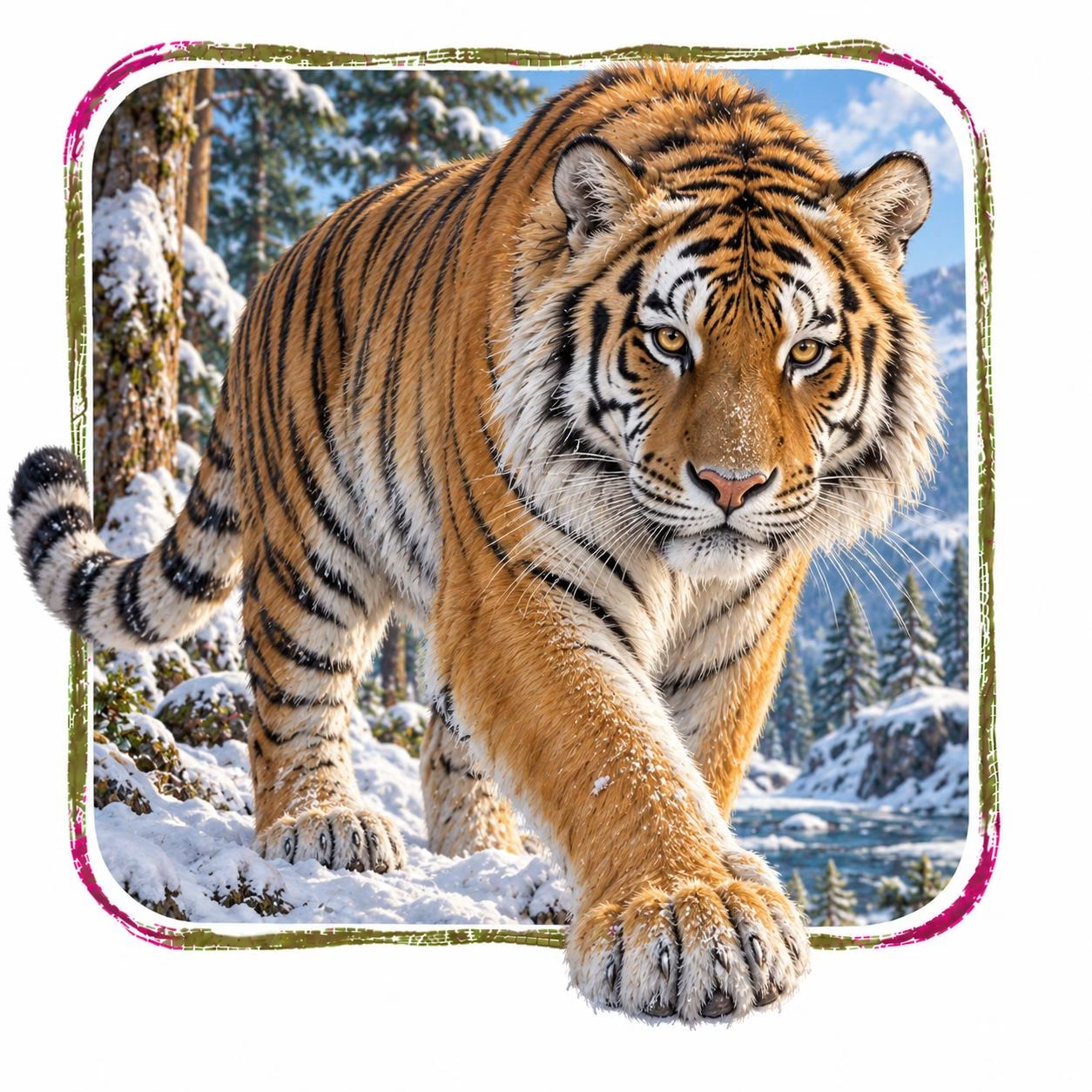
Siberian Tiger in its natural Temperate broadleaf, mixed, and coniferous forests, snowy mountains, river valleys, and connected woodlands in the Russian Far East and northeastern China habitat