
Sloth Bear Facts for Kids
The sloth bear, Melursus ursinus, is a shaggy insect-eating bear of South Asia. It is not a sloth and usually travels on the ground, although it can climb. Powerful curved claws tear open termite mounds, while closing nostrils, missing upper front teeth, a mobile snout, and long lips turn its mouth into a noisy insect vacuum.
Quick Sloth Bear Facts
- Scientific Name: Melursus ursinus
- Animal Type: Mammal and bear in family Ursidae
- Size: Adults vary widely, roughly 55–145 kilograms, with males usually larger
- Appearance: Shaggy black coat, pale muzzle, long curved claws, and cream V- or Y-shaped chest mark
- Range: Mainly India, Sri Lanka, and southern Nepal
- Habitat: Dry and moist forests, scrub, rocky hills, savannas, and tall grasslands
- Diet: Omnivorous, especially termites, ants, fruit, flowers, honey, grubs, and other seasonal food
- Activity: Often nocturnal or crepuscular, especially where people are active by day
- Young: Usually one or two cubs; they ride on the mother’s back after leaving the den
- Conservation: Vulnerable, with habitat loss, conflict, poaching, road deaths, and declining wild food as major threats
What You’ll Learn
Discover 10 shaggy sloth bear facts for kids about long claws, insect-eating, noisy feeding, flexible lips, and South Asian forests, plus a quiz, glossary, and activity
These facts are explained simply for kids, parents, teachers, and curious little fact-finders.
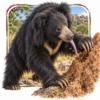
10 Fun Sloth Bear Facts for Kids
1. It Is a Bear, Not a Sloth
Early European naturalists saw the long claws, shaggy coat, climbing ability, and unusual teeth and initially compared the animal with a sloth. Modern anatomy and genetics clearly place it among the true bears.
Kid Decode: The sloth bear received a confusing name before scientists understood its bear family.
2. Shaggy Fur Suits a Warm Climate
Long dusty-black hair creates a rough mane around the neck and shoulders, but the coat lacks the dense insulating underfur of cold-climate bears. Loose shag may also shield the skin from biting insects and cub claws.
Kid Decode: This tropical bear wears long hair without a heavy winter sweater underneath.
3. Huge Claws Open Insect Fortresses
Long curved front claws and inward-turned feet are powerful digging tools. A bear rips apart hard termite mounds, breaks rotting logs, reaches buried grubs, uncovers roots, and digs shelter into earth or rock.
Kid Decode: A termite mound that feels like concrete can become dinner under sloth-bear claws.
4. Its Mouth Works Like a Vacuum
Adults lack the two middle upper incisors, leaving a front gap. They can close their nostrils against dust, extend flexible lips, and suck termites through that gap after blowing loose soil away.
Kid Decode: Missing front teeth help turn the snout into a living insect vacuum cleaner.
5. Termite Meals Are Extremely Noisy
Snorts, blows, digging, and powerful sucking can make a feeding sloth bear surprisingly loud. The sounds are a side effect of excavating a colony and drawing insects from tunnels rather than quiet chewing.
Kid Decode: You may hear the bear’s dinner machine before you see the bear.
6. Fruit Changes the Seasonal Menu
Termites and ants are major foods, but ripe mangoes, figs, ebony fruit, flowers, honey, grubs, and other items can become important. Feeding on fruit also allows seeds to travel through the forest in droppings.
Kid Decode: A termite specialist can become a messy fruit eater when monsoon trees ripen.
7. Night Activity Can Avoid People
Sloth bears may forage by day in protected or quiet areas, but many become active after sunset or around dawn and dusk where human disturbance is high. They do not spend winter hibernating like some northern bears.
Kid Decode: The same bear may keep different hours in a quiet forest and a busy farming area.
8. Cubs Begin Life in a Den
A mother usually gives birth to one or two tiny blind cubs in a cave or dug den. They emerge after roughly two to three months and may remain with her for two to three years while learning foods and safe routes.
Kid Decode: A sloth bear childhood lasts long enough for serious termite-hunting lessons.
9. A Surprised Bear Defends Fiercely
Sloth bears share crowded landscapes with people and have poor sight and hearing compared with their strong sense of smell. A close surprise encounter can trigger defensive charges, so communities use awareness, lights, clear paths, and safe behavior to reduce conflict.
Kid Decode: Giving a wild sloth bear distance protects both people and the bear.
10. The Species Is Vulnerable
Forest and scrub conversion, roads, mines, poaching, accidental killing, disappearing food, and conflict have fragmented populations. Rescue work greatly reduced the dancing-bear trade, but long-term survival still depends on habitat, enforcement, and coexistence.
Kid Decode: Ending one cruel trade was a victory, but wild sloth bears still need connected safe habitat.
The Weirdest Sloth Bear Fact
Sloth bears are the only bears that routinely use the mother’s back as their cubs’ main transport. One or two youngsters cling to a saddle of extra shaggy hair while she walks, forages, or runs from danger, sometimes piling on top of each other.
Try This Sloth Bear Activity
Engineer a Sloth Bear Termite Tool
Draw a sloth bear beside a cutaway termite mound. Trace how curved claws break the wall, nostrils close, lips extend, the missing-incisor gap opens a tunnel, and suction pulls insects into the mouth. Add a seasonal fruit tree, a den with cubs, a cub riding on the mother’s back, and a safe forest corridor connecting habitat without crossing a busy road.
Quick Sloth Bear Quiz
- Is a sloth bear a kind of sloth? Answer: No, it is a true bear.
- What food does it specialize in? Answer: Termites and ants.
- Why can its nostrils close? Answer: To keep out dust and insects.
- Does it hibernate through winter? Answer: No.
- Where do cubs ride? Answer: On their mother’s back.
Mini Glossary
- Myrmecophagous: Specialized for eating ants or termites.
- Incisor: A front tooth used for cutting or biting.
- Crepuscular: Most active around dawn and dusk.
- Extirpated: Gone from one region but still surviving elsewhere.
- Human-wildlife conflict: Harmful encounters caused when people and wild animals share space or resources.
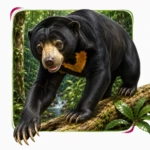
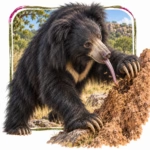

 Mayfly Facts for Kids
 Coelacanth Facts for Kids
 Honey Badger Facts for Kids
 Megatherium Facts for Kids
More Animal Facts for Kids
Visit the full animal facts library or explore a focused animal group.
More Extinct Animal Facts for Kids
Discover dinosaurs, Ice Age giants, prehistoric sea creatures, recently extinct species, and other animals from the past.
Fact check note: Fact checked against Smithsonian’s National Zoo sloth bear profile; IUCN Red List assessment for Melursus ursinus; IUCN SSC Bear Specialist Group resources; Wildlife SOS research on the dancing-bear trade and coexistence; San Diego Zoo and Association of Zoos and Aquariums husbandry references; and peer-reviewed studies of sloth bear anatomy, diet, activity, habitat, reproduction, maternal carrying, population threats, and human-bear conflict. Range, Vulnerable status, missing upper incisors, closable nostrils, long claws, seasonal diet, lack of hibernation, one-to-two-cub norm, back carrying, and conservation wording were cross-checked.

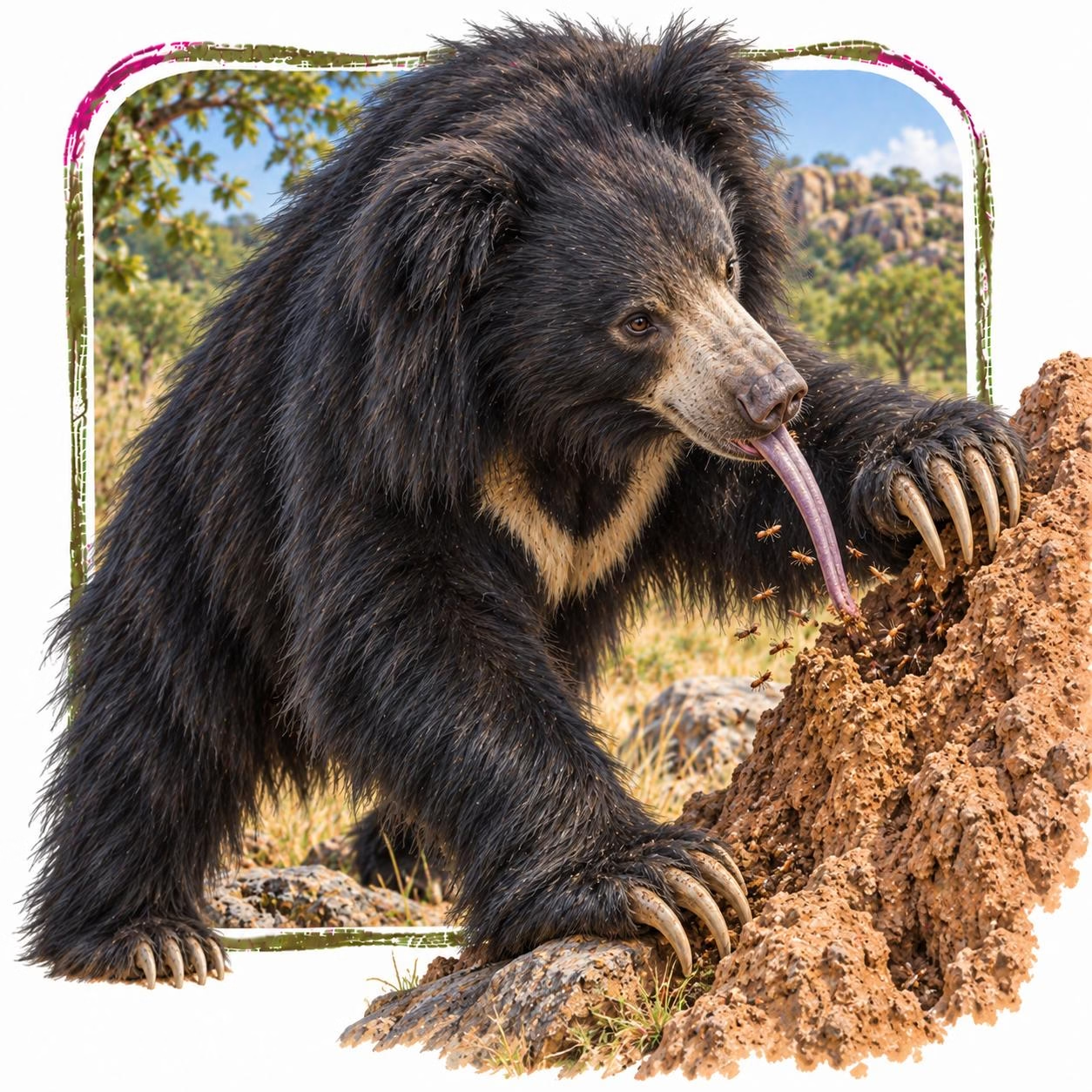
Sloth Bear in its natural Dry and moist forests, scrublands, rocky hills, savannas, and tall grasslands in India, Sri Lanka, and southern Nepal habitat