
Spotted Hyena Facts for Kids
The spotted hyena is Africa’s largest living hyena and one of its most successful large carnivores. It is a skilled hunter as well as a scavenger, with bone-crushing jaws, excellent endurance, and a complex social system led by females. Clan members recognize ranks, relatives, voices, and scent messages while cooperating or competing across large savannas and woodlands.
Quick Spotted Hyena Facts
- Scientific Name: Crocuta crocuta
- Animal Type: Mammal, vertebrate, carnivore, and feliform
- Family: Hyaenidae
- Size: About 95–165 centimetres long and commonly 40–80 kilograms, with females averaging larger than males
- Known For: Spotted coat, sloping back, powerful jaws, whooping calls, female leadership, and large clans
- Range: Much of sub-Saharan Africa in suitable open and mixed habitats
- Habitat: Savannas, grasslands, shrublands, open woodlands, semideserts, swamps, and mountains, but generally not dense rainforest
- Diet: Carnivorous; wildebeest, antelope, zebra, smaller mammals, birds, reptiles, fish, insects, eggs, carrion, skin, and bones
- Young: Usually one or two cubs born with dark fur, open eyes, and erupted teeth
- Conservation: Globally Least Concern but decreasing, with threats from persecution, poisoning, snares, roads, habitat loss, and declining wild prey
What You’ll Learn
Learn 10 powerful spotted hyena facts for kids about strong jaws, clans, laughter-like calls, hunting, scavenging, and African habitats, with a quiz, glossary, and activity
Simple explanations make them fun for children, families, teachers, and young wildlife fans.
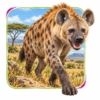
10 Fun Spotted Hyena Facts for Kids
1. Hyenas Are Not Dogs
The spotted hyena’s sloping back and rounded ears may suggest a dog, but hyenas belong to the cat-like branch of Carnivora called Feliformia. Their closer living relatives include mongooses and civets rather than wolves or dogs.
Kid Decode: The dog-shaped hunter sits on the cat-like side of the carnivore family tree.
2. A Clan Can Contain Dozens
Spotted hyenas live in female-led clans that may contain several dozen individuals and sometimes approach 100. Members split into smaller parties and reunite, a flexible arrangement called a fission-fusion society.
Kid Decode: The whole clan rarely queues for breakfast at the same time.
3. Females Rank Above Adult Males
Females are usually larger, more assertive, and socially dominant. Cubs learn their mother’s rank, daughters generally remain in the birth clan, and young males eventually leave to join another clan at its lowest social ranks.
Kid Decode: A high-ranking mother gives her cubs an important head start in clan life.
4. They Hunt More Than Cartoons Suggest
Spotted hyenas obtain much of their food by hunting, although the balance varies by place and season. Individuals chase smaller prey, while coordinated groups can isolate wildebeest, zebra, or antelope using stamina and teamwork.
Kid Decode: The famous scavenger is also an endurance hunter with a team strategy.
5. Jaws and Teeth Process Bones
Broad premolars, powerful jaw muscles, and a reinforced skull crack limb bones that many predators leave behind. Strong stomach acids digest much of the bone, while calcium-rich fragments make the droppings unusually pale.
Kid Decode: A hyena can turn another animal’s leftovers into dinner and chalky white scat.
6. The Laugh Is Only One Call
A high giggle often appears during excitement, frustration, submission, or competition and is not human-style laughter. Long-distance whoops, groans, grunts, squeals, yells, and lowing calls carry other information about identity and situation.
Kid Decode: The clan communicates with a whole soundboard, not one spooky laugh.
7. Scent Posts Carry Clan News
Hyenas rub secretions from an anal scent pouch onto grass stalks in a behavior called pasting. The odor identifies individuals and clans, while shared latrines and scent-marked borders help advertise territory.
Kid Decode: One grass stem can become a smelly clan noticeboard.
8. Cubs Arrive Ready to Compete
Newborn cubs have open eyes, dark coats, and already-erupted canine and incisor teeth. They nurse on exceptionally rich milk for many months, and their spots gradually appear as the blackish baby fur is replaced.
Kid Decode: A spotted hyena starts life dark and grows into its spots.
9. A Loping Body Saves Energy
Long front legs, a deep chest, and slightly shorter hind legs create the sloping back. This build supports an efficient ground-covering lope, helping hyenas patrol territories and pursue prey over long distances.
Kid Decode: The unusual downhill outline belongs to a champion distance traveler.
10. They Recycle Nutrients and Control Prey
By hunting vulnerable animals and consuming carrion, hide, tendons, and bones, spotted hyenas return nutrients to ecosystems and reduce edible waste. Lions, wild dogs, leopards, vultures, and hyenas all steal food from one another when opportunities appear.
Kid Decode: Africa’s cleanup expert is also a hunter, competitor, and food-web engineer.
The Weirdest Spotted Hyena Fact
Female spotted hyenas have unusual external reproductive anatomy: an elongated clitoris called a pseudopenis and fused outer tissues that resemble a male’s. A female urinates, mates, and gives birth through the same narrow structure. The arrangement makes the sexes difficult to distinguish and makes a first birth especially challenging.
Try This Spotted Hyena Activity
Map a Hyena Clan’s Savanna
Draw a territory with a communal den, grass scent posts, latrine, water hole, resting sites, hunting route, and neighboring lion range. Add a clan family tree showing a dominant female, daughters who remain, and a male who disperses. Label the rounded ears, spotted coat, deep chest, sloping back, long forelegs, bone-crushing premolars, whoop sound waves, pale scat, and dark newborn cub.
Quick Spotted Hyena Quiz
- What is the spotted hyena’s scientific name? Answer: Crocuta crocuta.
- Are hyenas closer to dogs or the cat-like carnivore branch? Answer: The cat-like branch.
- Who leads the clan hierarchy? Answer: Females.
- What is rubbing scent onto grass called? Answer: Pasting.
- Why can hyena droppings look pale? Answer: They contain calcium from digested bones.
Mini Glossary
- Feliform: A member of the cat-like branch of the carnivore order.
- Clan: A spotted hyena’s social community.
- Fission-fusion: A society whose members repeatedly split into smaller groups and reunite.
- Pasting: Rubbing scent-pouch secretions onto vegetation.
- Pseudopenis: The elongated external reproductive structure of a female spotted hyena.
 Bighorn Sheep Facts for Kids
 Skunk Facts for Kids
 Firefly Facts for Kids
 Epicyon Facts for Kids
More Animal Facts for Kids
Visit the full animal facts library or explore a focused animal group.
More Extinct Animal Facts for Kids
Discover dinosaurs, Ice Age giants, prehistoric sea creatures, recently extinct species, and other animals from the past.
Fact check note: Fact checked against San Diego Zoo spotted hyena species account; IUCN Red List and Hyaena Specialist Group materials; University of Michigan Animal Diversity Web; Mammalian Species review of Crocuta crocuta; Smithsonian and Michigan State University hyena research; and peer-reviewed work on feliform relationships, fission-fusion clans, female dominance, hunting and scavenging, bone digestion, vocal repertoires, scent pasting, cub development, locomotion, pseudopenis anatomy, and ecosystem roles. Hunting-versus-scavenging language was kept flexible across habitats.

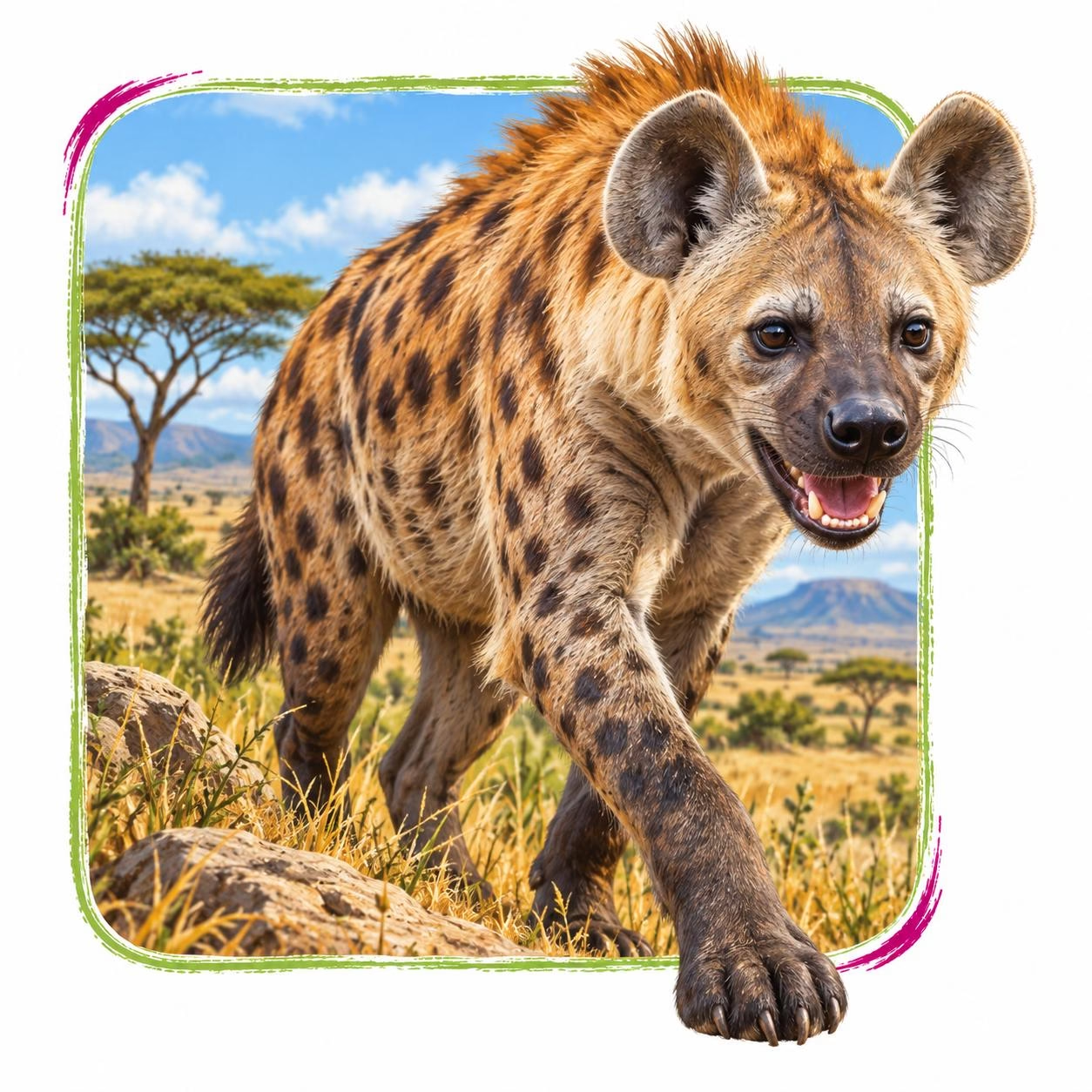
Spotted Hyena in its natural Savannas, grasslands, shrublands, open woodlands, semideserts, swamps, and mountains across much of sub-Saharan Africa habitat