
Starfish Facts for Kids
Starfish are better called sea stars because they are not fish. They are marine invertebrates related to sea urchins and sand dollars, with arms, tube feet, spiny skin, and amazing ways to move, eat, and regrow body parts.
Quick Starfish Facts
- Animal Type: Marine invertebrate
- Group: Echinoderm
- Known For: Star-shaped bodies, tube feet, arms, and regeneration
- Habitat: Tide pools, rocky shores, coral reefs, seagrass beds, sandy sea floors, kelp forests, and ocean bottoms worldwide depending on species
- Diet: Clams, mussels, oysters, snails, tiny animals, detritus, coral, algae, and other ocean foods depending on species
What You’ll Learn
Discover 10 amazing starfish facts for kids about tube feet, arms, regeneration, feeding, and life on the seafloor, plus a quiz, glossary, and starfish activity
These facts are written simply for kids, parents, teachers, and curious little fact-finders.
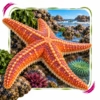
10 Fun Starfish Facts for Kids
1. Starfish Are Sea Stars
Starfish are not fish, so many scientists call them sea stars. They do not have gills, fins, or scales like fish.
Kid Decode: A sea star is a star-shaped ocean crawler, not a swimming fish.
2. Sea Stars Are Echinoderms
Sea stars belong to the echinoderm group, along with sea urchins, sand dollars, and sea cucumbers.
Kid Decode: They are part of the ocean’s spiky-skinned family.
3. Sea Stars Have Tube Feet
Sea stars use many tiny tube feet under their arms to grip, move, breathe, and sense their surroundings.
Kid Decode: Their feet are little suction-button sneakers.
4. Many Have Five Arms
Many sea stars have five arms, but some species have more than five.
Kid Decode: The ocean has sea stars with bonus arms.
5. Sea Stars Can Regrow Arms
Some sea stars can regrow lost arms, and a few can even regrow much of the body if enough of the center remains.
Kid Decode: That is ocean repair magic with science inside.
6. Baby Sea Stars Start as Larvae
Sea stars begin life as tiny floating larvae before changing into young sea stars.
Kid Decode: A sea star larva is a drifting speck with a future star shape.
7. Sea Stars Eat Shellfish
Many sea stars eat clams, mussels, oysters, snails, and other small ocean animals.
Kid Decode: Their lunch can be a tiny seafood treasure chest.
8. Some Push Out Their Stomachs
Some sea stars can push part of the stomach outside the body to digest prey.
Kid Decode: The stomach goes on a weird little food mission.
9. Sea Stars Do Not Have Brains Like Ours
Sea stars do not have one big brain like people. They use a nerve ring and nerves in their arms to respond to the world.
Kid Decode: Their body works like a tiny ocean control network.
10. Sea Stars Need Healthy Oceans
Sea stars depend on clean water, balanced food webs, and safe ocean habitats.
Kid Decode: Healthy oceans keep the star-shaped crawlers shining.
The Weirdest Starfish Fact
Some sea stars can push their stomach outside the body to digest food, which is one of the strangest dinner tricks in the ocean.
Try This Starfish Activity
Starfish Drawing Activity
Draw a sea star crawling across a tide pool rock. Add five arms, tiny tube feet, spiny skin, shells, seaweed, bubbles, a floating larva, and one regrowing arm.
Quick Starfish Quiz
- Are starfish really fish? Answer: No, they are sea stars.
- What animal group are sea stars in? Answer: Echinoderms.
- What helps sea stars move and grip? Answer: Tube feet.
- What are baby sea stars at first? Answer: Larvae.
- Can some sea stars regrow lost arms? Answer: Yes.
Mini Glossary
- Invertebrate: An animal without a backbone.
- Echinoderm: A marine animal group that includes sea stars, sea urchins, and sand dollars.
- Tube Feet: Tiny soft feet that help some sea animals move, grip, and sense.
- Larva: A young animal stage that looks different from the adult.
- Regeneration: The ability to regrow or repair a lost body part.
 Gaur Facts for Kids
 Kea Facts for Kids
 Tortoise Facts for Kids
 Scutellosaurus Facts for Kids
More Animal Facts for Kids
Visit the full animal facts library or explore a focused animal group.
More Extinct Animal Facts for Kids
Discover dinosaurs, Ice Age giants, prehistoric sea creatures, recently extinct species, and other animals from the past.
Fact check note: Fact checked with Britannica sea star resources, Britannica tube foot resources, and trusted marine biology education references.

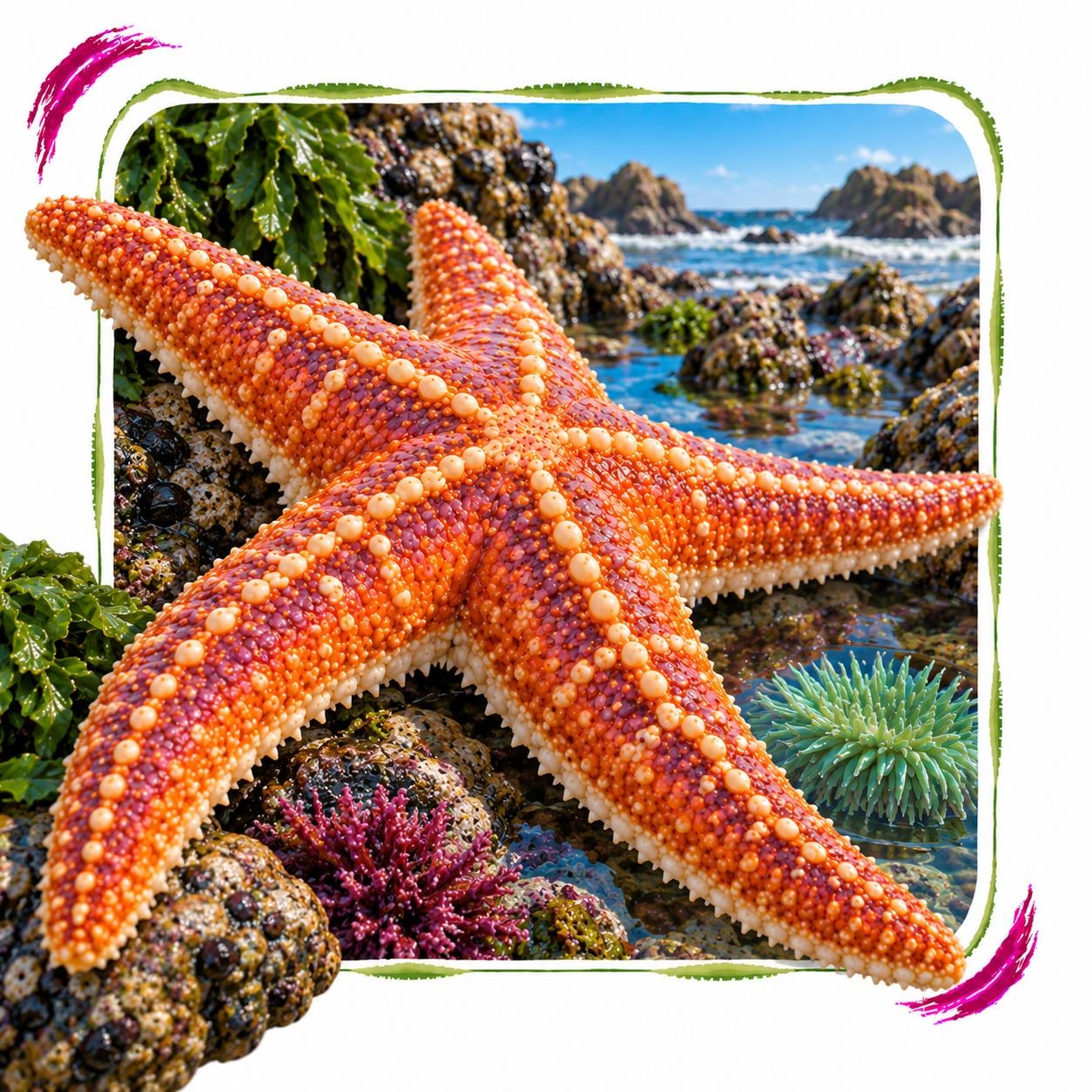
Starfish in its natural Tide Pools habitat