
Sturgeon Facts for Kids
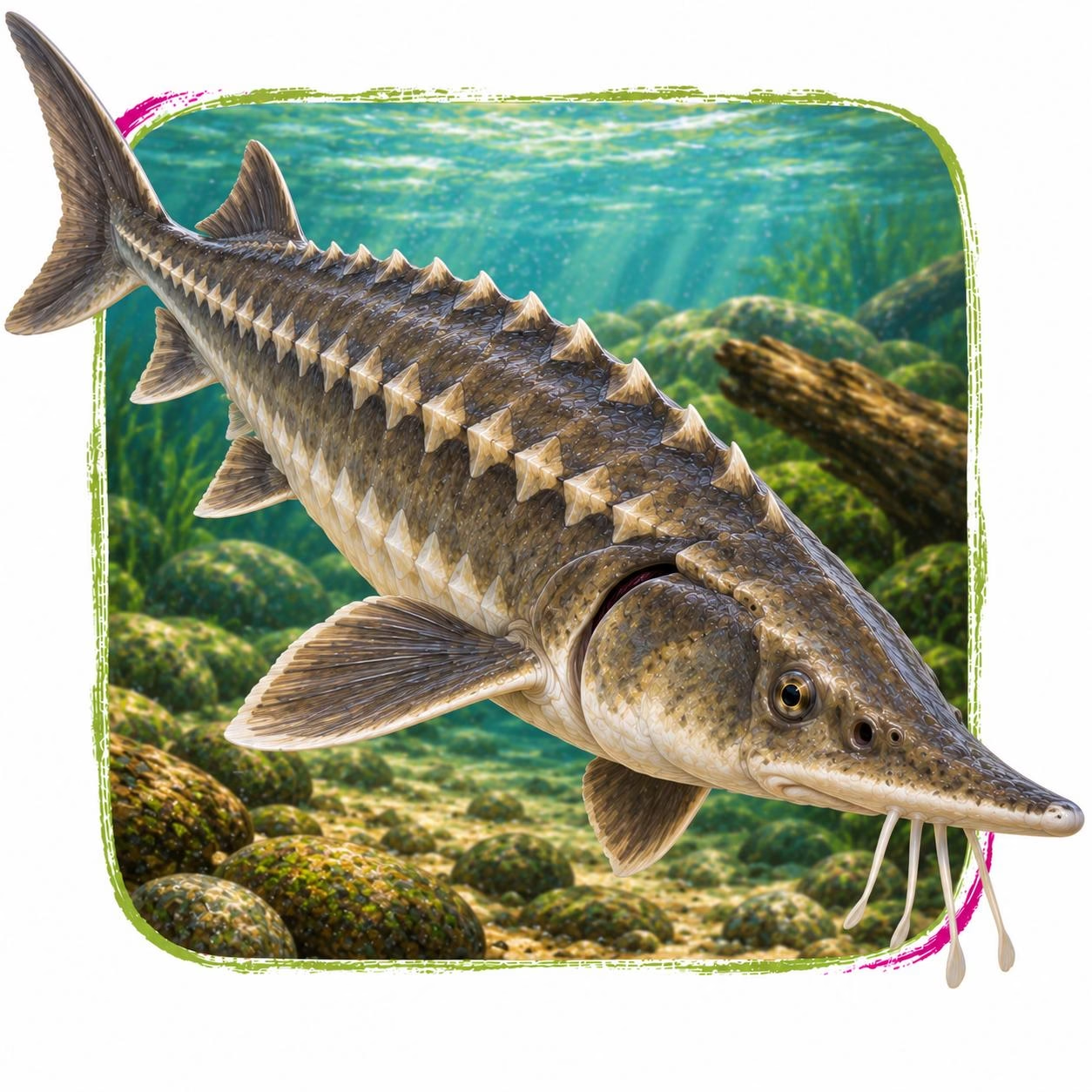
Sturgeons are large ancient-looking fish with long bodies, bony armor plates called scutes, and four sensitive barbels under the snout. Many live in rivers, lakes, estuaries, or coastal waters, and some swim upstream to spawn.
Quick Sturgeon Facts
- Animal Type: Fish
- Group: Sturgeon and Acipenseridae family
- Known For: Bony scutes, four barbels, long bodies, toothless mouths, caviar, and ancient fish features
- Habitat: Large rivers, lakes, estuaries, coastal waters, river deltas, and freshwater or brackish habitats in North America, Europe, and Asia depending on species
- Diet: Worms, mollusks, crustaceans, insect larvae, small fish, shellfish, and other bottom-dwelling foods depending on species
What You’ll Learn
Explore 10 ancient sturgeon facts for kids about armored bodies, long lives, river migration, barbels, and giant size, with a quiz, glossary, and activity
These facts are made simple for kids, parents, teachers, and curious young learners.
10 Fun Sturgeon Facts for Kids
1. Sturgeons Are Fish
Sturgeons are fish with gills, fins, and long bodies made for water.
Kid Decode: A sturgeon is an armored river giant from an ancient fish story.
2. Sturgeons Have Scutes
Sturgeons have rows of bony plates called scutes along the body.
Kid Decode: Their scutes work like old-fashioned fish armor.
3. Sturgeons Have Four Barbels
Sturgeons have four sensitive barbels under the snout to help find food.
Kid Decode: Those barbels are bottom-searching whisker tools.
4. Sturgeons Have Toothless Mouths
Many sturgeons have toothless mouths on the underside of the head.
Kid Decode: Their mouth is built for vacuuming snacks from the bottom.
5. Baby Sturgeons Are Fry
Baby sturgeons are called fry after they hatch and begin growing.
Kid Decode: A sturgeon fry is a tiny future river dinosaur.
6. Sturgeons Feed Near the Bottom
Sturgeons often search river or lake bottoms for worms, shellfish, and other food.
Kid Decode: They are underwater floor inspectors with barbels.
7. Some Sturgeons Make Long Journeys
Some sturgeon species move between sea or estuary waters and rivers to spawn.
Kid Decode: Their life map can include both salty edges and freshwater roads.
8. Sturgeon Eggs Are Called Roe
Sturgeon eggs are called roe, and salted sturgeon roe is known as caviar.
Kid Decode: Those eggs are famous, but the fish matters more than fancy food.
9. Many Sturgeons Grow Slowly
Sturgeons can take a long time to mature, which makes their populations easy to harm.
Kid Decode: Slow-growing giants need patience and protection.
10. Sturgeons Need Protection
Many sturgeon species are threatened by overfishing, dams, pollution, and habitat loss.
Kid Decode: Protecting rivers helps the armored ancient fish survive.
The Weirdest Sturgeon Fact
A sturgeon has armor-like scutes, four food-sensing barbels, and a toothless mouth that can suck up bottom food.
Try This Sturgeon Activity
Sturgeon Drawing Activity
Draw a sturgeon swimming over a river bottom. Add rows of scutes, four barbels, long snout, toothless mouth, tiny fry, shellfish, worms, river stones, plants, and an upstream spawning arrow.
Quick Sturgeon Quiz
- What animal group are sturgeons in? Answer: Fish.
- What are sturgeon armor plates called? Answer: Scutes.
- How many barbels do sturgeons have under the snout? Answer: Four.
- What are baby sturgeons called? Answer: Fry.
- What is salted sturgeon roe called? Answer: Caviar.
Mini Glossary
- Fish: A water-living animal that usually has gills and fins.
- Fry: A young fish after it hatches.
- Scute: A bony plate that helps protect some animals.
- Barbel: A whisker-like feeler near the mouth of some fish.
- Roe: Fish eggs.
 Coyote Facts for Kids
 Loon Facts for Kids
 Waterbuck Facts for Kids
 Caulkicephalus Facts for Kids
More Animal Facts for Kids
Visit the full animal facts library or explore a focused animal group.
More Extinct Animal Facts for Kids
Discover dinosaurs, Ice Age giants, prehistoric sea creatures, recently extinct species, and other animals from the past.
Fact check note: Fact checked with Britannica sturgeon resources, Britannica Kids sturgeon resources, NOAA sturgeon scutes resources, and trusted freshwater fish education references.

Sturgeon in its natural Rivers habitat