
Sunbird Facts for Kids
A flash of violet, green, red, or gold beside a flower might be a sunbird. These small songbirds live across Africa, Asia, and parts of Oceania. They sip nectar, catch insects, move pollen between flowers, and show how unrelated animals can evolve similar solutions to the same challenge.
Quick Sunbird Facts
- Scientific family: Nectariniidae
- Animal group: Birds; perching birds or passerines
- Diversity: About 150 species, including spiderhunters
- Size: Most are about 9–22 cm long
- Range: Africa, the Middle East, southern Asia, Southeast Asia, New Guinea, and northern Australia
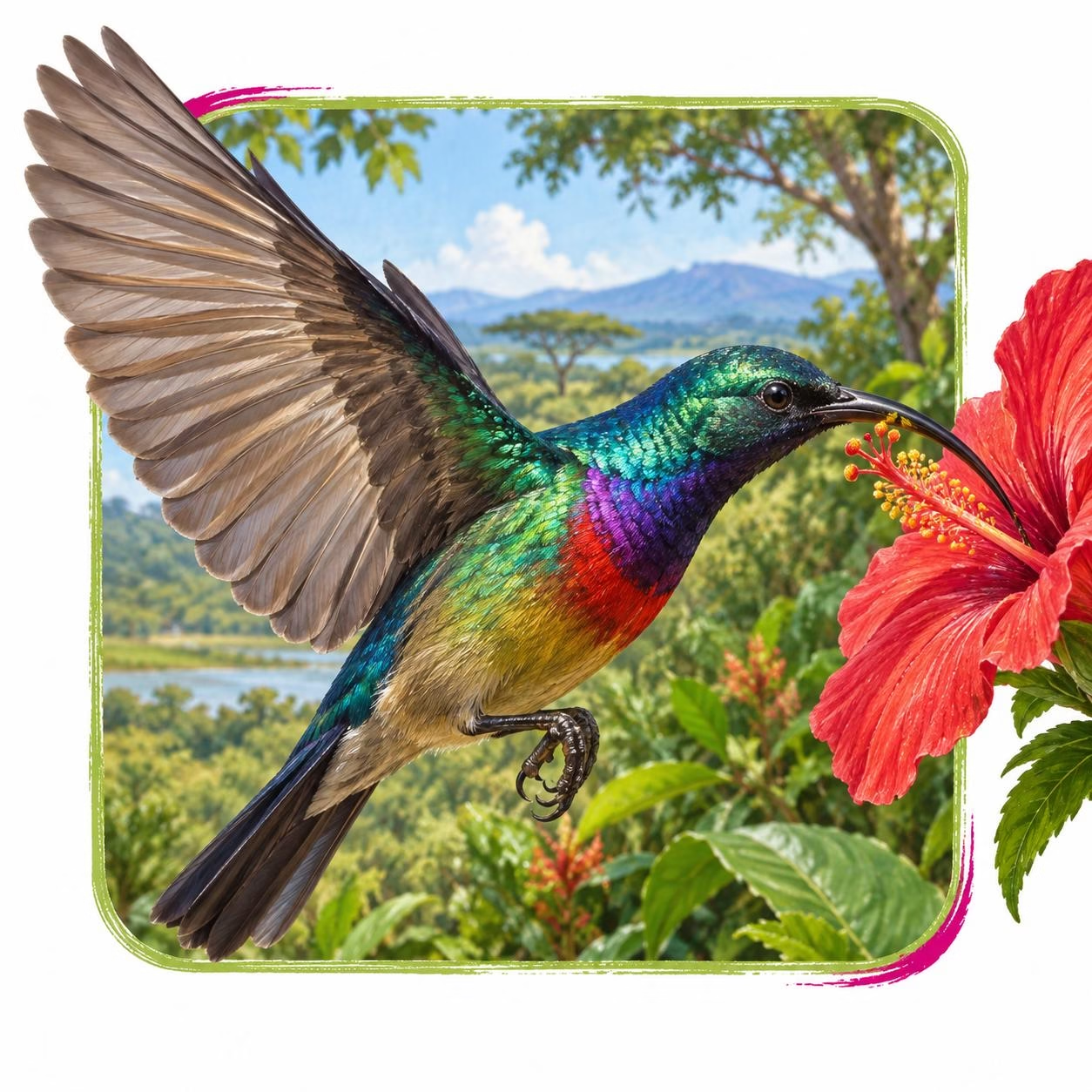
- Habitat: Forest, woodland, scrub, savanna, mangroves, farms, and gardens
- Diet: Nectar plus insects and spiders; some also eat fruit
- Special tools: Curved bill and extendable, brush-tipped tongue
- Nest: Often a hanging pouch with a side entrance
- Important job: Pollinating flowers
What You’ll Learn
Discover 10 dazzling sunbird facts for kids about curved bills, nectar-feeding tongues, metallic feathers, pollination, and Old World habitats, plus a quiz, glossary, and activity
Clear explanations make them fun for children, families, teachers, and little fact-hunters.
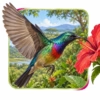
10 Fun Sunbird Facts for Kids
1. 1. Sunbird Is a Family Name
The sunbird family, Nectariniidae, contains roughly 150 species. It includes the colorful birds usually called sunbirds and the generally larger, plainer spiderhunters.
Kid Decode: A spiderhunter is a kind of sunbird relative, not a spider and not a bird of prey.
2. 2. They Are Not Hummingbirds
Sunbirds and hummingbirds both visit flowers, but they evolved on different branches of the bird family tree. Sunbirds are Old World songbirds; hummingbirds are found only in the Americas.
Kid Decode: Their similar bills and nectar diets are an example of convergent evolution.
3. 3. Most Perch While Drinking
A sunbird usually lands on a twig or flower stalk and reaches into a blossom. Some can hover for a moment, but they do not depend on nonstop hovering as hummingbirds often do.
Kid Decode: Perching uses less energy than beating the wings in one spot.
4. 4. The Tongue Is a Nectar Tool
A long tongue slides past the curved bill and deep into a flower. Its tubular, split, brush-like tip helps collect thin nectar quickly.
Kid Decode: The tongue can flick in and out several times during one short flower visit.
5. 5. Chicks Need Bug Protein
Adults may love sugary nectar, but they also hunt ants, beetles, caterpillars, spiders, and other tiny animals. Growing chicks especially need the protein found in this prey.
Kid Decode: A parent can arrive at the nest with a beakful of insects instead of a sip of nectar.
6. 6. Shimmer Comes from Feather Structure
Many males have feathers that flash different colors as the light or viewing angle changes. Microscopic feather structures bend and reflect light to make this iridescence.
Kid Decode: The same throat can look black in shade and glowing purple in sunlight.
7. 7. Males and Females May Look Different
In many species, males wear bold breeding colors while females are olive, brown, or yellowish. Duller plumage can help a nesting female blend into leaves and twigs.
Kid Decode: A colorful male and a plain female may still be the same species.
8. 8. They Carry Pollen
When a sunbird pushes its head into a flower, pollen can dust its forehead, bill, or throat. At the next blossom, some pollen rubs off and may help the plant make seeds.
Kid Decode: Certain African and Asian flowers are shaped especially well for visits from sunbirds.
9. 9. Some Take a Nectar Shortcut
If a flower is too long to reach through the opening, a sunbird may pierce its base and drink without touching the pollen. Scientists call this nectar robbing.
Kid Decode: The bird gets the sweet reward, but that particular flower visit may not provide pollination.
10. 10. Nests Can Hang Like Purses
In many species, the female weaves grass, bark, fibers, leaves, spider silk, and other materials into a dangling pouch. A little side doorway leads to the eggs inside.
Kid Decode: Bits of lichen, bark, or even paper can help disguise the outside of the nest.
The Weirdest Sunbird Fact
Some sunbirds can save energy on cold nights by entering torpor. Their body temperature and metabolism drop for a while, almost like a tiny overnight power-saving mode, and rise again when the bird becomes active.
Try This Sunbird Activity
Build a Sunbird-Friendly Flower Model
Roll paper into three flower tubes of different lengths and colors. Use a bent drinking straw as a model sunbird bill and a fuzzy pipe cleaner as its tongue. Which flowers are easiest to reach while “perched”? Add chalk dust as pollen and observe where it touches the model bird.
Quick Sunbird Quiz
- Where do wild sunbirds naturally live? Across Africa, Asia, and parts of Oceania.
- Are sunbirds hummingbirds? No. They belong to a different bird family.
- What does a brush-tipped tongue collect? Nectar.
- Why do adults catch insects? For protein, especially for growing chicks.
- How can sunbirds help flowers? By carrying pollen between blossoms.
Mini Glossary
- Nectar
- A sugary liquid made by flowers.
- Passerine
- A perching bird in the large order that includes songbirds.
- Iridescence
- Shimmering color that changes with light and viewing angle.
- Pollination
- The movement of pollen that allows flowering plants to make seeds.
- Torpor
- A short energy-saving state with lower body temperature and metabolism.
 White-Handed Gibbon Facts for Kids
 Firefly Facts for Kids
 Starling Facts for Kids
 Hatzegopteryx Facts for Kids
More Animal Facts for Kids
Visit the full animal facts library or explore a focused animal group.
More Extinct Animal Facts for Kids
Discover dinosaurs, Ice Age giants, prehistoric sea creatures, recently extinct species, and other animals from the past.
Fact check note: Sources checked: IOC World Bird List family index for Nectariniidae; BirdLife International species accounts; San Diego Zoo Wildlife Alliance sunbird overview; peer-reviewed studies of sunbird nectar feeding, pollination, iridescence, and torpor. Species totals change with taxonomic updates, so “about 150” is intentionally approximate.
Sunbird in its natural Forest, woodland, scrub, savanna, mangroves, farms, parks, and gardens habitat