
Tawny Frogmouth Facts for Kids
A tawny frogmouth may be sitting in plain sight and still be almost impossible to spot. By day, this Australian bird stretches tall and blends into a branch; by night, it opens an astonishingly wide mouth to catch prey. It may resemble an owl, but it belongs to a different bird family with its own special skills.
Quick Tawny Frogmouth Facts
- Scientific name: Podargus strigoides
- Animal group: Bird; frogmouth family
- Size: About 35–53 cm long
- Range: Mainland Australia, Tasmania, and some nearby islands
- Habitat: Woodland, open forest, scrub, farms, parks, and gardens
- Diet: Mostly insects and other small animals
- Activity: Nocturnal
- Clutch: Usually 2–3 eggs
- Special skill: Bark-like camouflage
- Conservation status: Least Concern globally
What You’ll Learn
Explore 10 remarkable tawny frogmouth facts for kids about huge mouths, nighttime hunting, branch-like camouflage, chicks, and Australian habitats, with a quiz, glossary, and activity
These easy facts are made for kids, parents, teachers, and curious young learners.

10 Fun Tawny Frogmouth Facts for Kids
1. 1. It Is Not an Owl
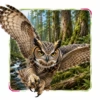
Tawny frogmouths have large eyes and hunt at night, but they belong to the frogmouth family, Podargidae. Their feet are much weaker than an owl’s powerful prey-grabbing talons.
Kid Decode: The owl-like look is a case of unrelated birds evolving useful features for nighttime life.
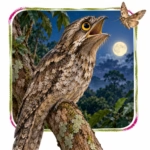
2. 2. Its Mouth Looks Frog-Like
The flattened bill opens into a remarkably broad gape, which inspired the name frogmouth. Stiff bristles around the bill may help protect the face and sense nearby objects.
Kid Decode: A closed bill looks small, but the open mouth can seem almost as wide as the bird’s head.
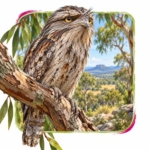
3. 3. Feathers Copy Tree Bark
Gray, brown, black, and rufous streaks break up the bird’s outline against bark. Different color forms help frogmouths match the trees in different parts of Australia.
Kid Decode: Mottled means covered with irregular patches or streaks of color.
4. 4. It Pretends to Be a Branch
When danger is near, a frogmouth may freeze, close its eyes to slits, stretch its neck, and point its bill upward. This “stump posture” makes its body resemble a snapped branch.
Kid Decode: Sometimes the best way to hide is to stay completely still.
5. 5. Night Is Hunting Time
After dusk, the bird waits on a low perch and drops onto insects or other prey on the ground. It can also catch flying moths and beetles in its wide mouth.
Kid Decode: Tawny frogmouths often save energy by waiting for food to come close instead of chasing it far.
6. 6. The Bill Does the Grabbing
Because its feet are not strong weapons like owl feet, a tawny frogmouth generally captures prey with its broad bill. Its menu can include insects, spiders, worms, frogs, reptiles, and small mammals.
Kid Decode: A large moth or beetle is a much more usual meal than a mouse.
7. 7. The Call Is a Deep “Oom”
A repeated low “oom-oom-oom” carries through the night. Tawny frogmouths can also hiss, clack their bills, buzz, or make softer calls between mates and family members.
Kid Decode: The booming call can be mistaken for a distant machine or drum.
8. 8. Pairs Share Their Roost
Tawny frogmouths often form long-term pairs. During the day, a pair may rest close together on the same branch, relying on their matching camouflage.
Kid Decode: A whole frogmouth family can line up and look like several broken pieces of wood.
9. 9. Both Parents Incubate
The nest is a loose platform of sticks placed on a horizontal branch. The male commonly sits on the eggs during the day, while both parents take turns at night and later feed the chicks.
Kid Decode: The nest may look flimsy, but the parents carefully guard their two or three eggs.
10. 10. It Can Use Torpor
In cool weather, a tawny frogmouth may lower its body temperature and metabolic rate for part of the night. This torpor reduces the energy needed when prey is scarce.
Kid Decode: Torpor is shorter than hibernation and may last only a few hours.
The Weirdest Tawny Frogmouth Fact
The branch disguise is a family act. When a parent gives an alarm signal, chicks can flatten themselves, freeze, and shut their bright mouths while the adult points its bill skyward. A nest full of birds can suddenly look like nothing more than bark, knots, and broken twigs.
Try This Tawny Frogmouth Activity
Test the Branch Disguise
Cut three paper frogmouth shapes and color each with a different bark pattern. Place them against photos or drawings of gum-tree trunks. Ask a friend to time how long each takes to find. Record which streaks and colors make the best camouflage and explain why.
Quick Tawny Frogmouth Quiz
- Is a tawny frogmouth an owl? No. It belongs to the frogmouth family.
- What does its daytime pose imitate? A broken branch or tree stump.
- When does it hunt? Mostly at night.
- What sound is it famous for? A deep repeated “oom.”
- How many eggs are usually in a clutch? Two or three.
Mini Glossary
- Gape
- The open mouth and the width of its opening.
- Camouflage
- Colors, patterns, or behavior that help an animal blend into its surroundings.
- Nocturnal
- Mostly active at night.
- Incubate
- To keep eggs warm so the young can develop.
- Torpor
- A temporary energy-saving state with lower body temperature and metabolism.
 Indri Facts for Kids
 Katydid Facts for Kids
 Rhea Facts for Kids
 Orthoceras Facts for Kids
More Animal Facts for Kids
Visit the full animal facts library or explore a focused animal group.
More Extinct Animal Facts for Kids
Discover dinosaurs, Ice Age giants, prehistoric sea creatures, recently extinct species, and other animals from the past.
Fact check note: Sources checked: Australian Museum tawny frogmouth species account; BirdLife Australia species information; NSW environment and education resources; Bush Heritage Australia species profile; peer-reviewed research on tawny frogmouth torpor. Measurements and breeding timing vary across the species’ wide Australian range.

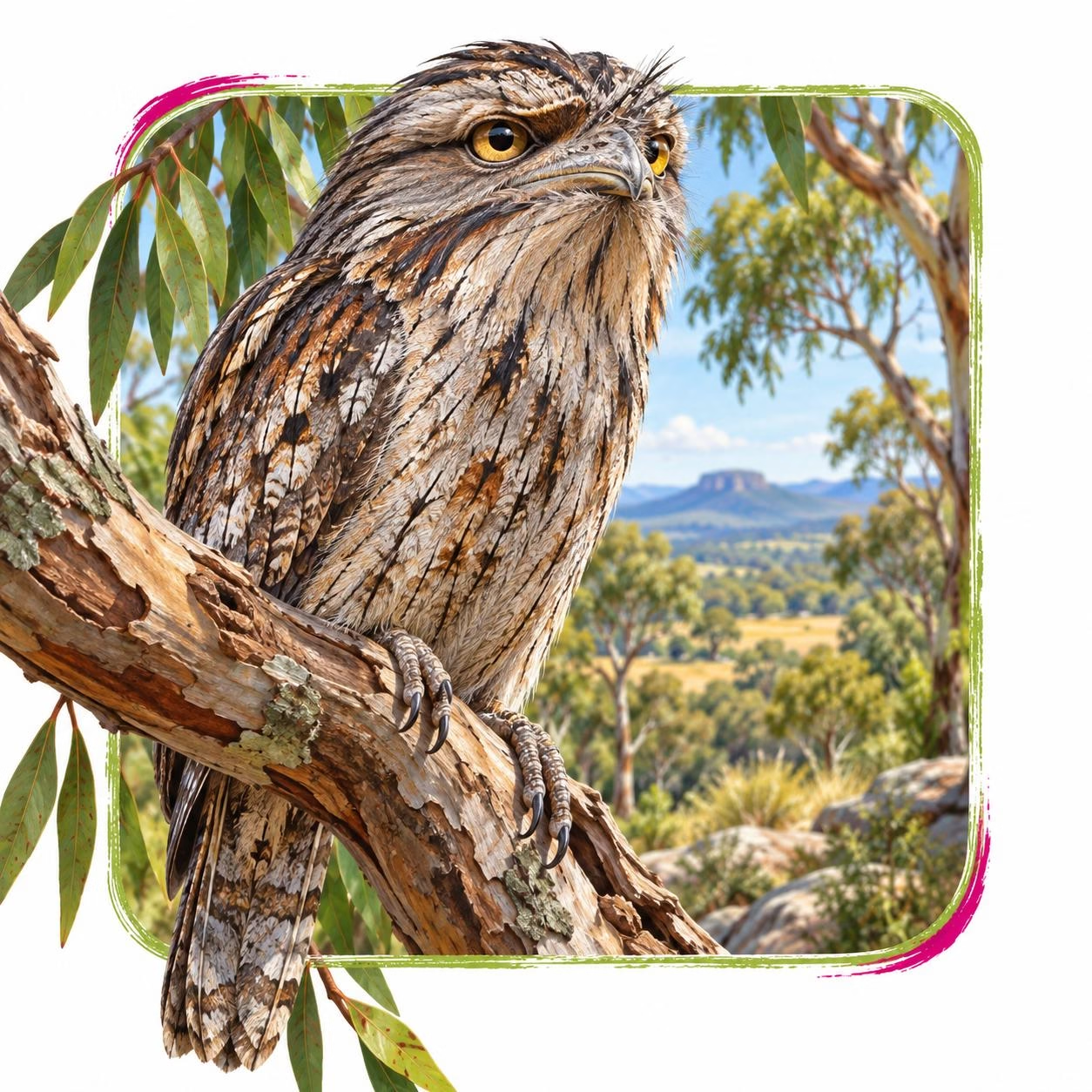
Tawny Frogmouth in its natural Open forest, woodland, scrub, farmland, parks, suburban gardens, and roadside trees habitat