
Tenrec Facts for Kids
Tenrecs are a family of small mammals found naturally in Madagascar. Millions of years of evolution produced an amazing collection of shapes: some are furry, some are spiny, some burrow, and one swims. Although several look like hedgehogs or shrews, tenrecs belong to a different branch of the mammal family tree.
Quick Tenrec Facts
- Scientific family: Tenrecidae
- Animal group: Mammals; afrotherians
- Diversity: About 36 species
- Natural range: Madagascar
- Habitat: Rainforest, dry forest, scrub, grassland, farms, wetlands, and gardens
- Size: Varies from tiny shrew-like species to rabbit-sized tenrecs
- Diet: Mostly invertebrates; some also eat fruit, seeds, or small vertebrates
- Activity: Many are nocturnal
- Young: Called pups
- Conservation status: Varies by species
What You’ll Learn
Learn 10 unusual tenrec facts for kids about spines, whiskers, digging, swimming, and the amazing variety of tenrecs in Madagascar, plus a quiz, glossary, and activity
Simple explanations make them great for children, families, teachers, and young animal fans.
10 Fun Tenrec Facts for Kids
1. 1. Tenrecs Come in Many Shapes
Some tenrecs resemble hedgehogs, while others look like shrews, mice, moles, or small otters. They are close relatives despite their very different bodies and lifestyles.
Kid Decode: A tenrec family photograph would look like several unrelated animals posing together.
2. 2. Madagascar Is Their Natural Home
Living tenrecs evolved in isolation on Madagascar, an island famous for animals found nowhere else. People later introduced a few species to nearby Indian Ocean islands.
Kid Decode: Madagascar gave tenrecs millions of years to fill many different habitat jobs.
3. 3. They Are Not Hedgehogs
Spiny tenrecs and hedgehogs developed similar defenses independently. Tenrecs are afrotherians and share deeper ancestry with animals such as golden moles, elephants, and aardvarks.
Kid Decode: Looking alike does not always mean two animals are close cousins.
4. 4. Some Wear Sharp Spines
Hedgehog tenrecs and streaked tenrecs have modified hairs that form protective spines or quills. When threatened, a spiny tenrec can raise them and make itself painful to bite.
Kid Decode: A tenrec’s quills are special hairs, not detachable darts.
5. 5. One Tenrec Is Built to Swim
The web-footed tenrec has a streamlined body, webbed feet, stiff whiskers, and a flattened tail for life beside fast forest streams. It hunts aquatic insects and other small water animals.
Kid Decode: It is the only strongly aquatic member of the modern tenrec family.
6. 6. Most Hunt After Dark
Many tenrecs hide in burrows, logs, leaf litter, or tree holes during daylight and forage at night. Sensitive whiskers, smell, and hearing help them locate prey in darkness.
Kid Decode: A rustling leaf may reveal an insect dinner to a hungry tenrec.
7. 7. Their Menu Is Flexible
Earthworms, termites, beetles, grubs, and other invertebrates are important foods. Depending on the species, tenrecs may also eat fruit, seeds, frogs, or other tiny vertebrates.
Kid Decode: Tenrec teeth and snouts differ depending on what each species searches for.
8. 8. Some Save Energy with Torpor
When weather is cool or food is scarce, certain tenrecs enter torpor and lower their temperature and metabolism. Greater hedgehog tenrecs can remain inactive for months during the dry season.
Kid Decode: Torpor works like an energy-saving setting for a small mammal.
9. 9. A Mother Can Have a Huge Family
The tailless tenrec, also called the common tenrec, can produce more than 30 pups in an exceptional litter—among the largest litters known in mammals. Most tenrec species have far fewer.
Kid Decode: One mother may need an extraordinary number of nipples to feed her crowded litter.
10. 10. Tenrecs Help Their Habitats
By eating insects and turning soil while digging, tenrecs affect forest and farm ecosystems. They also become food for native predators such as fossas, snakes, and birds of prey.
Kid Decode: A small tenrec can be both a nighttime pest controller and part of the food web.
The Weirdest Tenrec Fact
Streaked tenrecs can “talk” by rubbing special quills together. The friction produces high-pitched chirps in a process called stridulation—the same basic sound-making trick used by crickets. Young tenrecs can follow these secret quill signals while moving through thick vegetation.
Try This Tenrec Activity
Invent a Tenrec for a Habitat
Choose a Madagascar habitat such as rainforest, dry forest, stream, or underground burrow. Draw a tenrec adapted to live there. Add fur or spines, suitable feet, a useful snout, camouflage, and the right food. Label how each feature helps your tenrec survive.
Quick Tenrec Quiz
- Where are tenrecs naturally found? Madagascar.
- Are tenrecs true hedgehogs? No. They belong to a different mammal group.
- What are tenrec spines made from? Modified hairs.
- Why do some tenrecs use torpor? To save energy.
- How do streaked tenrecs make chirping sounds? By rubbing special quills together.
Mini Glossary
- Afrotherian
- A mammal from an ancient evolutionary branch that first diversified in Africa.
- Invertebrate
- An animal without a backbone.
- Stridulation
- Making sound by rubbing body parts together.
- Torpor
- A temporary energy-saving state with lower temperature and metabolism.
- Endemic
- Naturally found in one particular place and nowhere else.
 Blobfish Facts for Kids
 Red Panda Facts for Kids
 Egret Facts for Kids
 Dakosaurus Facts for Kids
More Animal Facts for Kids
Visit the full animal facts library or explore a focused animal group.
More Extinct Animal Facts for Kids
Discover dinosaurs, Ice Age giants, prehistoric sea creatures, recently extinct species, and other animals from the past.
Fact check note: Sources checked: Natural History Museum, London overview of tenrec diversity; Smithsonian’s National Zoo tenrec species profiles; San Diego Zoo Wildlife Alliance tenrec overview; peer-reviewed studies of streaked-tenrec stridulation, torpor, and reproduction. Family-level traits vary, and species counts may change with taxonomy.

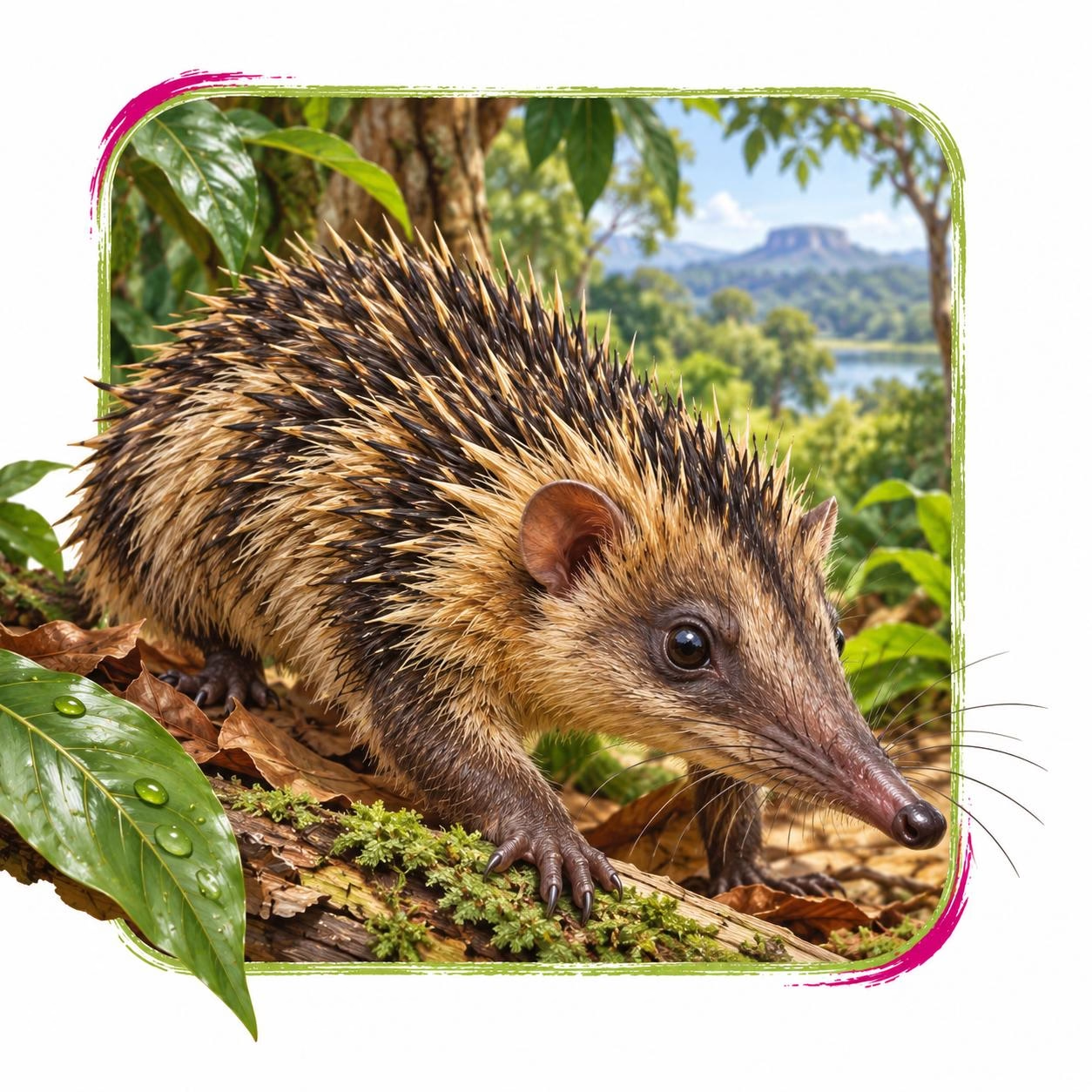
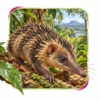
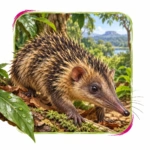
Tenrec in its natural Rainforest, dry forest, scrub, grassland, farmland, wetlands, streams, burrows, and gardens habitat