
Tern Facts for Kids
Terns are graceful seabirds with narrow wings, forked tails, and sharp bills. Many terns fly over oceans, lakes, rivers, and coasts, then plunge toward the water to catch small fish and other prey.
Quick Tern Facts
- Animal Type: Bird
- Group: Seabird and tern family
- Known For: Plunge diving, forked tails, pointed wings, colonies, migration, and fish catching
- Habitat: Oceans, coasts, beaches, islands, estuaries, lakes, rivers, marshes, and open water habitats depending on species
- Diet: Small fish, crustaceans, insects, squid, shrimp, and other small aquatic animals depending on species
What You’ll Learn
Discover 10 speedy tern facts for kids about sharp wings, plunge-diving, migration, fish, and coastal colonies, with a quiz, glossary, and activity
These simple facts are made for kids, parents, teachers, and curious little fact-finders.

10 Fun Tern Facts for Kids
1. Terns Are Birds
Terns are birds with feathers, wings, beaks, and eggs.
Kid Decode: A tern is a sharp-winged sea flyer with a fish-finding mission.
2. Terns Are Seabirds
Many terns spend much of their lives around coasts, islands, and open water.
Kid Decode: They are ocean travelers with wings shaped for long blue roads.
3. Baby Terns Are Chicks
Baby terns are called chicks and hatch from eggs in simple nests or scrapes.
Kid Decode: A tern chick starts life as a fluffy beach pebble with legs.
4. Terns Catch Fish by Diving
Many terns hover or fly over water, then plunge down to catch fish near the surface.
Kid Decode: Their fishing style is sky arrow meets splash.
5. Terns Have Pointed Wings
Terns have long pointed wings that help them fly smoothly and quickly.
Kid Decode: Those wings are built for drawing curves over waves.
6. Many Terns Have Forked Tails
Many terns have forked tails that help with steering in flight.
Kid Decode: The tail looks like a tiny flight-control fork.
7. Terns Nest in Colonies
Many terns nest together in groups called colonies, often on beaches or islands.
Kid Decode: A tern colony can sound like a very busy seaside classroom.
8. Some Terns Migrate Far
Some terns travel long distances between breeding and wintering areas.
Kid Decode: For a tern, the world map can become one giant flight path.
9. Terns Lay Eggs on the Ground
Many terns nest on the ground, using sand, shells, gravel, or simple scrapes.
Kid Decode: Their nest may be simple, but the parents guard it fiercely.
10. Terns Need Safe Shores
Terns need clean water, healthy fish, safe nesting beaches, and protection from disturbance.
Kid Decode: Protecting shorelines keeps the sea flyers returning.
The Weirdest Tern Fact
Some terns travel enormous distances during migration, turning a small bird into a world-class sky voyager.
Try This Tern Activity
Tern Drawing Activity
Draw a tern plunge-diving over the sea. Add pointed wings, forked tail, sharp bill, chicks on a sandy beach, fish, waves, shells, colony friends, clouds, and splash lines.
Quick Tern Quiz
- What animal group are terns in? Answer: Birds.
- What are baby terns called? Answer: Chicks.
- How do many terns catch fish? Answer: By plunge diving.
- Where do many terns nest? Answer: On beaches, islands, or open ground in colonies.
- What tail shape do many terns have? Answer: Forked tails.
Mini Glossary
- Bird: An animal with feathers, wings, and a beak.
- Seabird: A bird that lives around oceans, coasts, or open water.
- Chick: A baby bird.
- Colony: A group of animals nesting or living close together.
- Migration: Seasonal or regular movement from one place to another.


 Lamb Facts for Kids
 Penguin Facts for Kids
 Leopard Gecko Facts for Kids
 Nodosaurus Facts for Kids
More Animal Facts for Kids
Visit the full animal facts library or explore a focused animal group.
More Extinct Animal Facts for Kids
Discover dinosaurs, Ice Age giants, prehistoric sea creatures, recently extinct species, and other animals from the past.
Fact check note: Fact checked with Britannica tern resources, shorebird and seabird resources, and trusted bird education references.

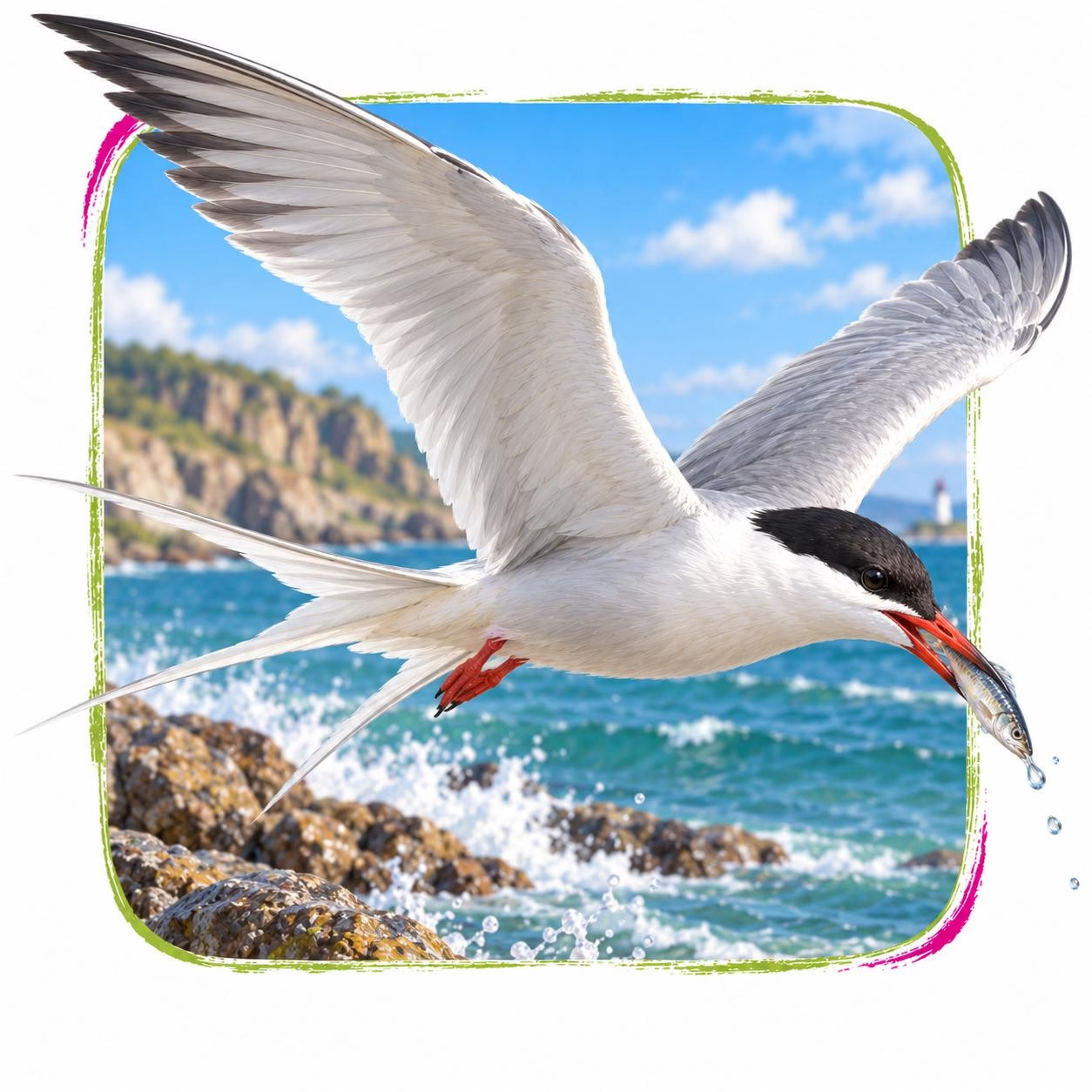
Tern in its natural Coasts habitat