
Tortoise Facts for Kids
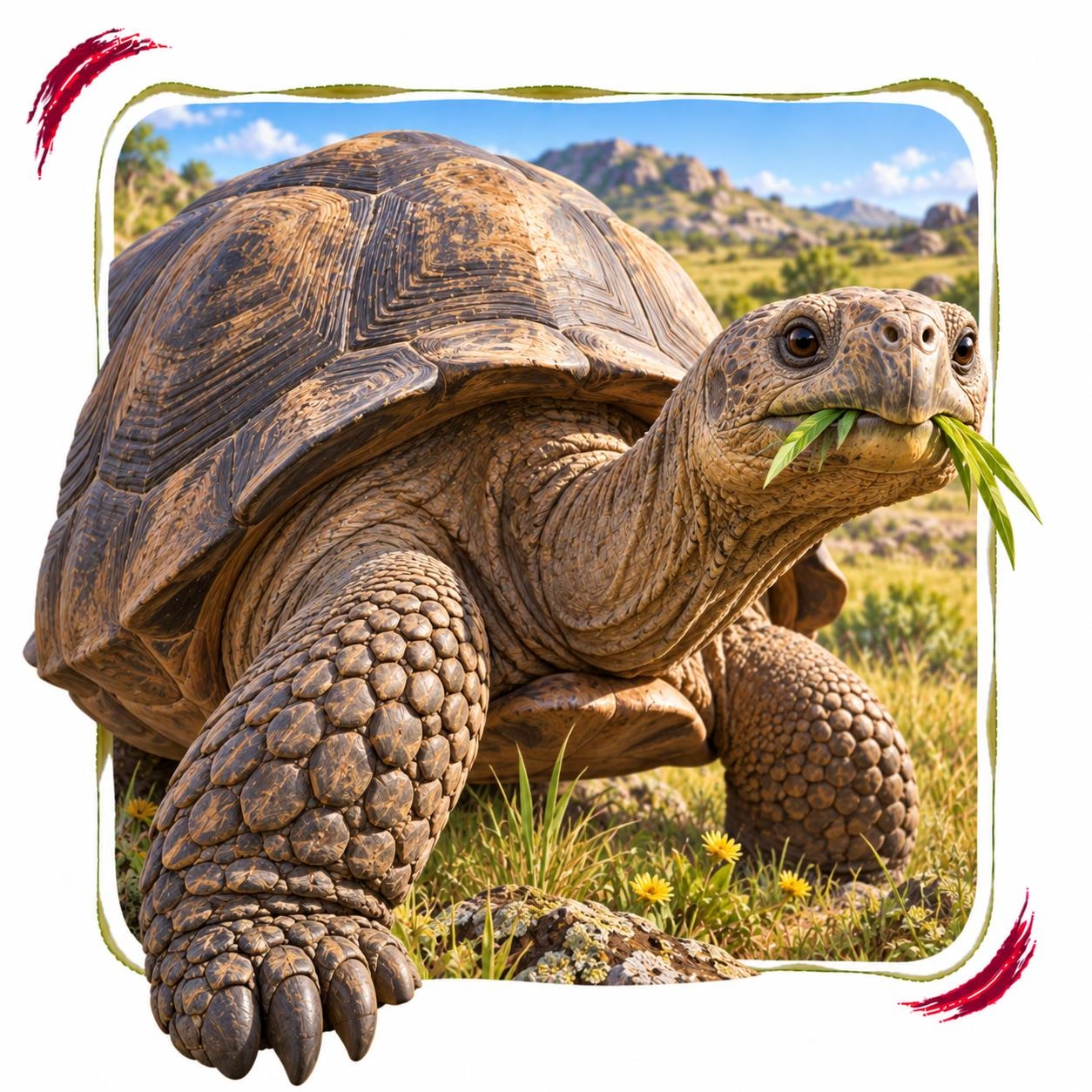
Tortoises are land-living turtles with sturdy legs, strong shells, and slow steady movement. They belong to the turtle order, but most tortoises spend their lives on land instead of swimming in water.
Quick Tortoise Facts
- Animal Type: Reptile
- Group: Turtle and tortoise
- Known For: Land life, domed shells, slow movement, and long lives
- Habitat: Deserts, grasslands, forests, scrublands, islands, rocky areas, and dry habitats depending on species
- Diet: Grasses, leaves, flowers, fruit, cactus pads, herbs, and other plant foods depending on species
What You’ll Learn
Discover 10 fascinating tortoise facts for kids about shells, slow movement, strong legs, plant diets, and long lives, with a quiz, glossary, and tortoise activity
Clear explanations make them ideal for children, families, teachers, and little fact-hunters.
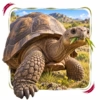
10 Fun Tortoise Facts for Kids
1. Tortoises Are Reptiles
Tortoises are reptiles with scales, claws, eggs, and body temperatures that change with their surroundings.
Kid Decode: A tortoise is a slow little land tank with scales.
2. Tortoises Are Turtles
All tortoises are turtles, but not all turtles are tortoises. Tortoises are the land-loving members of the turtle group.
Kid Decode: They are turtles with hiking boots instead of swim fins.
3. Tortoises Have Strong Shells
A tortoise shell has a top part called the carapace and a bottom part called the plastron.
Kid Decode: The shell is a bony backpack and shield in one.
4. Tortoises Walk on Land
Tortoises usually have sturdy legs and rounder feet for walking on land rather than webbed feet for swimming.
Kid Decode: Their feet are built for slow land journeys.
5. Baby Tortoises Are Hatchlings
Baby tortoises are called hatchlings after they come out of eggs.
Kid Decode: A hatchling tortoise is a tiny shell explorer.
6. Many Tortoises Eat Plants
Most tortoises eat grasses, leaves, flowers, fruit, and other plant foods, though diets vary by species.
Kid Decode: Their lunch is often a crunchy garden salad.
7. Some Tortoises Dig Burrows
Some tortoise species dig burrows or use shelters to escape heat, cold, or predators.
Kid Decode: A burrow is a tortoise hideout with dirt walls.
8. Tortoises Can Live Long Lives
Many tortoises are slow-growing animals, and some species can live for many decades.
Kid Decode: The tortoise life clock ticks very slowly.
9. Tortoises Use Shells for Protection
When scared, many tortoises can pull parts of the body into the shell for protection.
Kid Decode: The shell is their portable safety room.
10. Tortoises Need Protection
Tortoises can be threatened by habitat loss, roads, pet trade pressure, and introduced predators depending on the species.
Kid Decode: Protecting wild land keeps the shell walkers safe.
The Weirdest Tortoise Fact
A tortoise shell is part of its skeleton, so it is not a removable house like a backpack.
Try This Tortoise Activity
Tortoise Drawing Activity
Draw a tortoise walking across a sunny desert path. Add a domed shell, sturdy legs, hatchling, cactus, grasses, flowers, burrow entrance, and slow footprint trail.
Quick Tortoise Quiz
- What animal group are tortoises in? Answer: Reptiles.
- Are tortoises turtles? Answer: Yes.
- What are baby tortoises called? Answer: Hatchlings.
- What do many tortoises eat? Answer: Plants such as grasses, leaves, flowers, and fruit.
- What is the top shell called? Answer: The carapace.
Mini Glossary
- Reptile: A cold-blooded animal group that includes turtles, lizards, snakes, crocodiles, and tuataras.
- Hatchling: A baby animal that has just hatched from an egg.
- Carapace: The top part of a turtle or tortoise shell.
- Plastron: The bottom part of a turtle or tortoise shell.
- Herbivore: An animal that eats mostly plants.
 Robin Facts for Kids
 Leatherback Sea Turtle Facts for Kids
 Termite Facts for Kids
 Torosaurus Facts for Kids
More Animal Facts for Kids
Visit the full animal facts library or explore a focused animal group.
More Extinct Animal Facts for Kids
Discover dinosaurs, Ice Age giants, prehistoric sea creatures, recently extinct species, and other animals from the past.
Fact check note: Fact checked with Britannica turtle resources, Britannica tortoise comparison resources, and trusted reptile education references.

Tortoise in its natural Grasslands habitat