
Tuatara Facts for Kids
Tuataras are rare lizard-like reptiles from New Zealand, but they are not lizards. They are the only living members of an ancient reptile group and have spiky crests, a beak-like mouth, slow growth, and a hidden third eye on top of the head.
Quick Tuatara Facts
- Animal Type: Reptile
- Group: Rhynchocephalian and tuatara
- Known For: Ancient lineage, New Zealand islands, and a parietal eye
- Habitat: Coastal islands, burrows, scrublands, grasslands, forests, rocky areas, and protected sanctuaries in New Zealand
- Diet: Insects, beetles, spiders, worms, snails, lizards, eggs, chicks, and other small animals
What You’ll Learn
Explore 10 ancient tuatara facts for kids about spiny backs, unusual teeth, long lives, nighttime habits, and New Zealand, with a quiz, glossary, and activity
These facts are explained simply for kids, parents, teachers, and curious young minds.
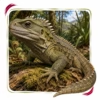
10 Fun Tuatara Facts for Kids
1. Tuataras Are Reptiles
Tuataras are reptiles with scales, claws, eggs, and cool body temperatures that change with their surroundings.
Kid Decode: A tuatara is a reptile with ancient island secrets.
2. Tuataras Are Not Lizards
Tuataras look like lizards, but they belong to a different reptile order called Rhynchocephalia.
Kid Decode: They are lizard look-alikes from a much older family tree.
3. Tuataras Live in New Zealand
Wild tuataras are found naturally only in New Zealand, especially on protected offshore islands and some sanctuaries.
Kid Decode: New Zealand is their special reptile kingdom.
4. Tuataras Have a Third Eye
Young tuataras have a parietal eye on top of the head. It is covered as they grow and helps sense light, not pictures.
Kid Decode: The third eye is more light meter than superhero camera.
5. Tuataras Have Spiny Crests
A row of soft-looking spines runs along the back, especially noticeable in males.
Kid Decode: The crest gives them tiny dinosaur-dragon style.
6. Baby Tuataras Are Hatchlings
Baby tuataras are called hatchlings. They come from eggs and grow very slowly.
Kid Decode: A tuatara hatchling is a tiny ancient-reptile starter kit.
7. Tuataras Grow Slowly
Tuataras take many years to mature and can live for a very long time compared with many reptiles.
Kid Decode: Their life clock ticks like a sleepy island drum.
8. Tuataras Use Burrows
Tuataras often live in burrows and may share island areas with seabirds, though they need safe places to hide.
Kid Decode: A burrow is their cool underground bedroom.
9. Tuataras Eat Small Animals
Tuataras eat insects, worms, spiders, beetles, snails, eggs, and sometimes small animals.
Kid Decode: Their menu is crunchy bug snacks with island extras.
10. Tuataras Need Protection
Tuataras were harmed by introduced predators such as rats, so protected islands and conservation work are important.
Kid Decode: Protecting islands keeps the ancient reptiles safe.
The Weirdest Tuatara Fact
Tuataras have a hidden third eye and are the last living members of an ancient reptile group that once had many relatives.
Try This Tuatara Activity
Tuatara Drawing Activity
Draw a tuatara sitting near a New Zealand island burrow. Add spiky crests, scaly skin, a beak-like mouth, eggs, insects, rocks, native plants, and a hidden third-eye symbol.
Quick Tuatara Quiz
- Where do tuataras live naturally? Answer: New Zealand.
- Are tuataras lizards? Answer: No.
- What is the eye on top of the head called? Answer: A parietal eye.
- What are baby tuataras called? Answer: Hatchlings.
- What do tuataras eat? Answer: Insects, worms, eggs, and other small animals.
Mini Glossary
- Reptile: A cold-blooded animal group that includes lizards, snakes, turtles, crocodiles, and tuataras.
- Hatchling: A baby animal that has just hatched from an egg.
- Parietal Eye: A light-sensing third-eye structure on top of the head.
- Burrow: An underground animal shelter.
- Endemic: Found naturally in one place and nowhere else.
 Warbler Facts for Kids
 Ringed Seal Facts for Kids
 Tenrec Facts for Kids
 Elasmotherium Facts for Kids
More Animal Facts for Kids
Visit the full animal facts library or explore a focused animal group.
More Extinct Animal Facts for Kids
Discover dinosaurs, Ice Age giants, prehistoric sea creatures, recently extinct species, and other animals from the past.
Fact check note: Fact checked with Britannica tuatara resources, Britannica Kids tuatara resources, and trusted New Zealand reptile conservation references.

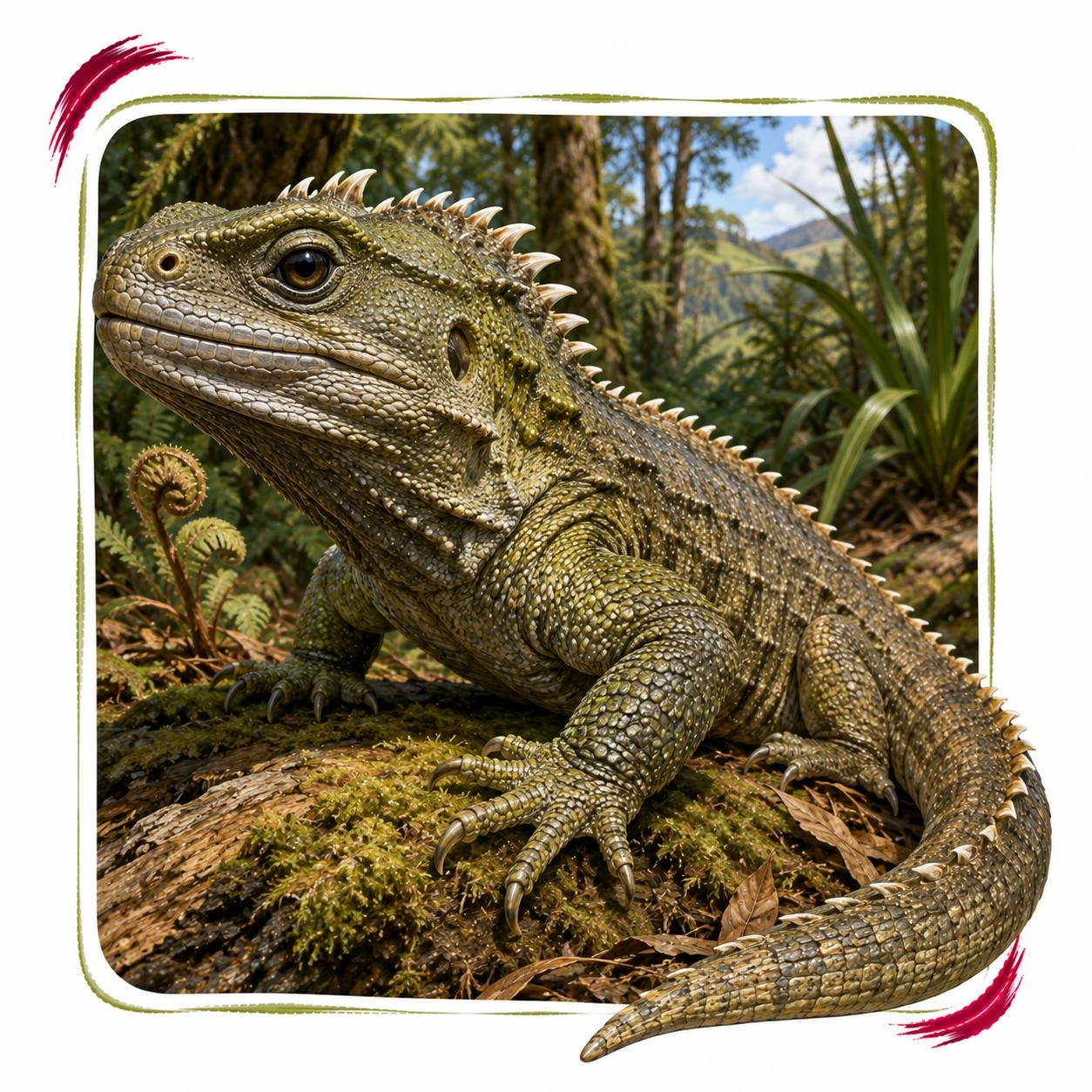
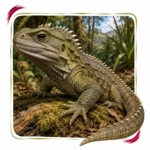
Tuatara in its natural Forests habitat