
Viceroy Butterfly Facts for Kids
At first glance, a viceroy butterfly can look almost exactly like a monarch. Look carefully and you may spot a black line crossing each hindwing. Scientists once taught that an edible viceroy merely copied a bad-tasting monarch, but experiments showed that viceroys have their own chemical defenses too.
Quick Viceroy Butterfly Facts
- Scientific name: Limenitis archippus
- Animal group: Insect; brush-footed butterfly family
- Wingspan: Usually about 5.3–8.1 cm
- Range: Southern Canada through much of the United States into Mexico
- Habitat: Wet meadows, marsh edges, stream banks, woodland openings, and gardens
- Caterpillar food: Willow, poplar, cottonwood, and related plants
- Adult food: Flower nectar and minerals from damp or decaying material
- Life cycle: Egg, caterpillar, chrysalis, adult
- Special defense: Warning colors and an unpleasant taste
- Conservation status: Not globally assessed by the IUCN
What You’ll Learn
Explore 10 colorful viceroy butterfly facts for kids about orange-and-black wings, caterpillars, mimicry, warning patterns, and North American habitats, with a quiz, glossary, and activity
These easy facts are made for kids, parents, teachers, and curious young learners.
10 Fun Viceroy Butterfly Facts for Kids
1. 1. A Black Line Reveals the Viceroy
Viceroys and monarchs share orange wings with black veins and white-spotted borders. A dark curved line crossing each viceroy hindwing is the easiest field mark separating the two.
Kid Decode: Remember: the viceroy wears an extra black “seat belt” across each back wing.
2. 2. Both Lookalikes Have Defenses
Viceroys were once described as harmless copies of toxic monarchs. Feeding experiments showed that viceroys can also taste unpleasant to bird predators, making the pair an example of defensive co-mimicry.
Kid Decode: One warning pattern is easier for a bird to remember when both butterflies back up the message.
3. 3. Their Color Changes Across the Range
Northern viceroys usually resemble monarchs. In parts of the southern United States, darker viceroys more closely resemble queen butterflies, which share their region.
Kid Decode: The best local disguise depends on which defended butterfly neighbors are nearby.
4. 4. Caterpillars Look Like Bird Droppings
A young viceroy caterpillar is mottled brown, cream, green, and white, with knobby projections. Its lumpy shape resembles a small bird dropping rather than a juicy insect.
Kid Decode: To a hungry bird, the caterpillar’s costume says “nothing tasty here.”
5. 5. Willow Leaves Supply More Than Food
Viceroy caterpillars feed on willows, poplars, cottonwoods, and other plants in the willow family. Chemicals from these leaves help make the caterpillars and adults less appealing to predators.
Kid Decode: The caterpillar turns its leafy lunch into part of its chemical shield.
6. 6. Each Egg Sits Near a Leaf Tip
A female usually places a tiny pale green egg on the end of a host-plant leaf. When the caterpillar hatches, fresh food is waiting immediately beneath it.
Kid Decode: A viceroy egg is textured and round, like a microscopic green bead.
7. 7. A Leaf Becomes a Winter Sleeping Bag
Late-season caterpillars cut and roll part of a leaf, fasten it with silk, and hide inside. This shelter, called a hibernaculum, stays attached to the twig through winter.
Kid Decode: The caterpillar carries out tiny construction work before taking a months-long rest.
8. 8. The Chrysalis Adds Another Disguise
The hanging chrysalis is mottled and oddly shaped, with a bulging section that can resemble dried plant matter or a bird dropping. Camouflage helps protect the motionless pupa.
Kid Decode: Even between caterpillar and butterfly, the viceroy keeps wearing a disguise.
9. 9. Adults Patrol Sunny Wetlands
Males often perch or glide through sunny openings near willows and water while watching for females. Their flight is usually quick, with alternating flaps and smooth glides.
Kid Decode: A stream edge with willow trees is both a nursery and a meeting place.
10. 10. Adults Sip More Than Flower Nectar
Viceroys visit flowers, but they may also collect moisture, salts, and nutrients from damp soil, sap, dung, carrion, or rotting fruit. These resources can be scarce in nectar.
Kid Decode: A muddy puddle can offer minerals that a sweet flower does not.
The Weirdest Viceroy Butterfly Fact
Before winter, a tiny caterpillar trims a leaf into a flap, rolls it into a tube, stitches it with silk, and anchors the leaf stalk so the shelter will not fall. It then waits inside this leaf sleeping bag until spring growth begins.
Try This Viceroy Butterfly Activity
Spot the Viceroy Wing Line
Draw matching outlines of a monarch and viceroy. Color both orange, black, and white, then add the viceroy’s black hindwing line. Under the drawings, create a four-stage strip showing an egg, bird-dropping caterpillar, winter leaf shelter, and chrysalis.
Quick Viceroy Butterfly Quiz
- What line helps identify a viceroy? A black curved line across each hindwing.
- Is a viceroy simply a tasty monarch copy? No. Viceroys also have chemical defenses.
- What does the caterpillar resemble? A bird dropping.
- Which trees are important host plants? Willows, poplars, cottonwoods, and relatives.
- What is a hibernaculum? The caterpillar’s rolled-leaf winter shelter.
Mini Glossary
- Mimicry
- A resemblance that helps an organism survive.
- Host plant
- A plant on which a butterfly lays eggs and its caterpillars feed.
- Hibernaculum
- A protective shelter used during winter or dormancy.
- Chrysalis
- The pupa stage in which a butterfly transforms.
- Distasteful
- Having a flavor or chemicals that make predators avoid eating it.

 Water Strider Facts for Kids
 Whale Shark Facts for Kids
 Yellow-Eyed Penguin Facts for Kids
 Dimorphodon Facts for Kids
More Animal Facts for Kids
Visit the full animal facts library or explore a focused animal group.
More Extinct Animal Facts for Kids
Discover dinosaurs, Ice Age giants, prehistoric sea creatures, recently extinct species, and other animals from the past.
Fact check note: University and natural-history references for Limenitis archippus life history; New Jersey Audubon explanation of monarch–viceroy Müllerian mimicry; peer-reviewed palatability experiments; North American butterfly atlases and conservation records for range, host plants, and overwintering behavior.

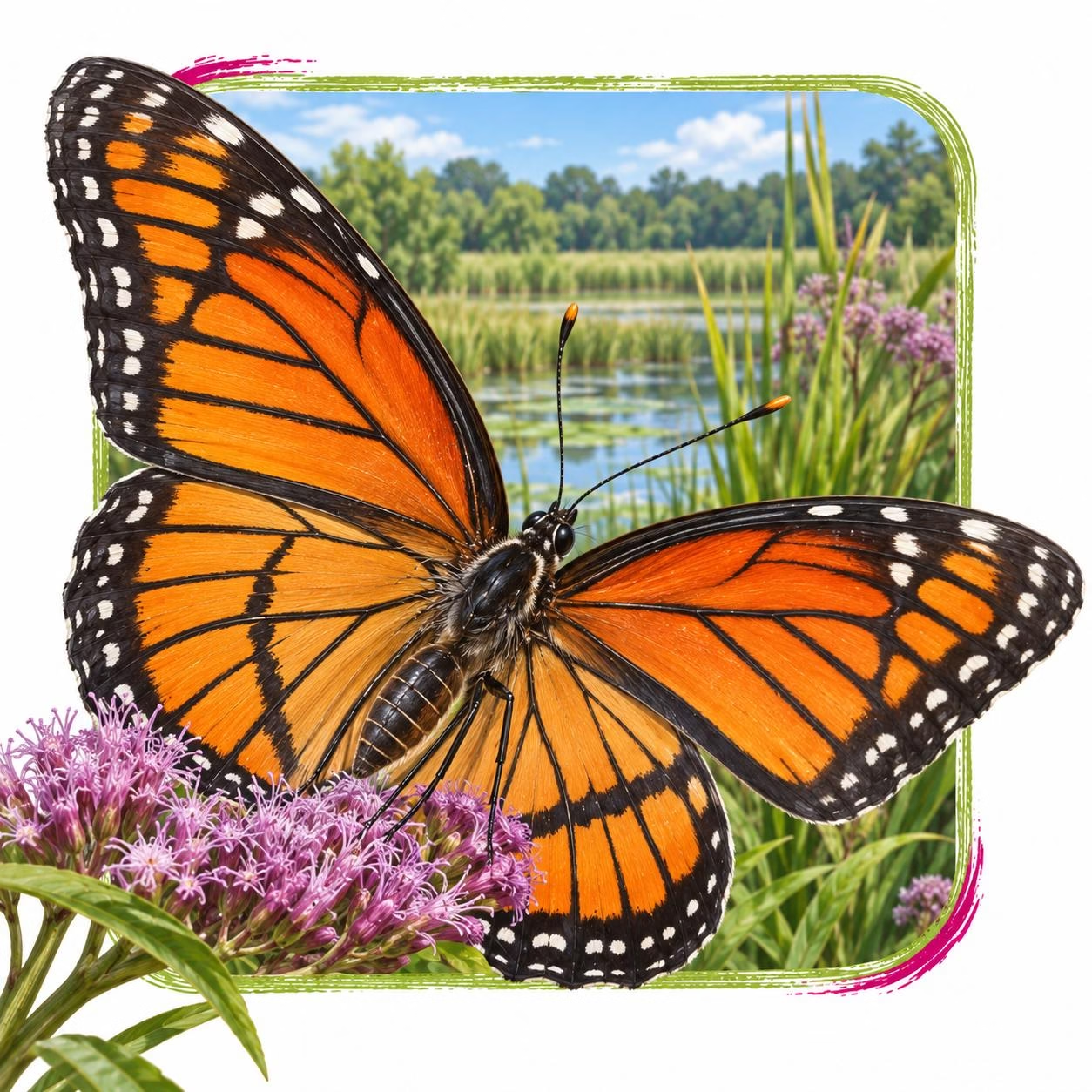
Viceroy Butterfly in its natural Wet meadows, marsh edges, stream banks, lakeshores, willow thickets, woodland openings, and gardens habitat