
Water Buffalo Facts for Kids
For thousands of years, people have raised water buffalo for milk, farm work, transport, meat, and manure. These huge bovids are especially at home in hot, wet landscapes where broad feet cross soft ground and a muddy wallow provides relief from heat and insects. Domestic water buffalo are different from both African buffalo and the rare wild water buffalo.
Quick Water Buffalo Facts
- Scientific name: Bubalus bubalis for domestic water buffalo
- Animal group: Mammal; bovid family
- Main types: River buffalo and swamp buffalo
- Origin: South and Southeast Asia
- Modern range: Raised across Asia and in parts of Europe, Africa, Australia, and the Americas
- Habitat: Farms, rice paddies, river valleys, marshes, and grasslands
- Diet: Herbivore—grass, reeds, sedges, hay, and farm fodder
- Young: Usually one calf after about 10–11 months
- Special features: Broad splayed hooves, large horns, and strong swimming ability
- Status: Domestic; the separate wild water buffalo is Endangered
What You’ll Learn
Discover 10 powerful water buffalo facts for kids about broad hooves, curved horns, swimming, milk, farm work, and life alongside people, with a quiz, glossary, and activity
These facts are explained simply for kids, parents, teachers, and curious little fact-finders.

10 Fun Water Buffalo Facts for Kids
1. 1. Most Water Buffalo Are Domestic
The familiar farm animal is Bubalus bubalis, domesticated from Asian wild ancestors thousands of years ago. The remaining wild water buffalo, Bubalus arnee, is a separate Endangered species.
Kid Decode: A domestic herd may be common even while its wild relative needs urgent protection.
2. 2. River and Swamp Buffalo Differ
River buffalo are often selected for milk and usually prefer deeper water. Stockier swamp buffalo are famous for farm work in wet rice fields and often coat themselves in mud.
Kid Decode: The two types have different histories but can still produce hybrid offspring.
3. 3. Broad Hooves Spread Their Weight
Large, splayed hooves and flexible joints help water buffalo move across mud where narrower cattle hooves may sink. This makes them valuable in flooded or soft agricultural fields.
Kid Decode: Each foot works a little like a natural mud shoe.
4. 4. Wallowing Prevents Overheating
Water buffalo have relatively few effective sweat glands and dark skin that absorbs heat. Resting in water or mud cools the body and coats the skin against biting insects and strong sunlight.
Kid Decode: A mud-covered buffalo is using shade, sunscreen, and air-conditioning at once.
5. 5. Horn Shapes Vary
Both males and females usually carry horns, but size and curve differ among breeds and types. Swamp-buffalo horns often sweep outward in a broad crescent, while river-buffalo horns may curl backward.
Kid Decode: Some water-buffalo horns spread wider than a person is tall.
6. 6. They Are Ruminants
Like cattle, water buffalo swallow grass and later bring it back up as cud to chew again. Microbes in their multi-compartment stomach help break down tough plant fibers.
Kid Decode: Chewing cud lets a buffalo get more energy from coarse reeds and grasses.
7. 7. They Became Living Tractors
Strength, patience, and sure footing made water buffalo important for plowing rice paddies, pulling carts, threshing grain, and turning irrigation equipment. Machines have replaced some jobs, but buffalo remain vital on many small farms.
Kid Decode: A buffalo can work in a soggy field where a wheeled tractor may become stuck.
8. 8. Their Milk Makes Famous Foods
River buffalo produce rich milk with more fat and protein than typical cow milk. People use it for yogurt, butter, ghee, paneer, and traditional mozzarella di bufala.
Kid Decode: The classic Italian buffalo mozzarella traces its creamy texture to water-buffalo milk.
9. 9. They Form Social Herds
Water buffalo rest, graze, travel, and wallow together. Calves follow their mothers closely, and herd members use calls, scent, posture, and physical contact to communicate.
Kid Decode: A shared wallow can become the buffalo version of a neighborhood swimming pool.
10. 10. Mothers Invest in One Calf
Pregnancy usually lasts about 10–11 months and most births produce one calf. The mother licks the newborn, nurses it with rich milk, and protects it within the herd.
Kid Decode: A calf may stand and begin searching for milk soon after birth.
The Weirdest Water Buffalo Fact
River buffalo usually have 50 chromosomes, while swamp buffalo usually have 48. When the two types interbreed, their offspring commonly have 49—and many of these hybrids are fertile. It is an unusual genetic bridge between two domesticated buffalo lineages.
Try This Water Buffalo Activity
Design a Buffalo-Friendly Rice Farm
Draw a wet rice farm with a buffalo path, shaded rest area, clean drinking water, safe wallow, dry sleeping ground, food, and space for a mother and calf. Label how each feature supports health while preventing the buffalo from damaging natural wetlands.
Quick Water Buffalo Quiz
- What are the two main domestic water-buffalo types? River buffalo and swamp buffalo.
- How do broad hooves help? They spread weight on soft mud.
- Why do buffalo wallow? To cool down and protect their skin.
- What famous cheese uses buffalo milk? Mozzarella di bufala.
- Is the domestic water buffalo the same species as the wild water buffalo? No. They have different scientific names and conservation situations.
Mini Glossary
- Bovid
- A hoofed mammal in the cattle, goat, sheep, and antelope family.
- Domesticated
- Changed through many generations of living and breeding under human care.
- Ruminant
- A plant eater that regurgitates and rechews cud.
- Wallow
- A muddy or watery place where an animal rolls or rests.
- Chromosome
- A package of DNA inside a cell.




 Ostrich Facts for Kids
 Dhole Facts for Kids
 Matamata Turtle Facts for Kids
 Tropeognathus Facts for Kids
More Animal Facts for Kids
Visit the full animal facts library or explore a focused animal group.
More Extinct Animal Facts for Kids
Discover dinosaurs, Ice Age giants, prehistoric sea creatures, recently extinct species, and other animals from the past.
Fact check note: FAO publication Buffalo Production and Research; Animal Diversity Web account for Bubalus bubalis; International Commission on Zoological Nomenclature distinction between domestic B. bubalis and wild B. arnee; peer-reviewed research on domestication, river and swamp lineages, chromosome counts, milk, and draft adaptations.

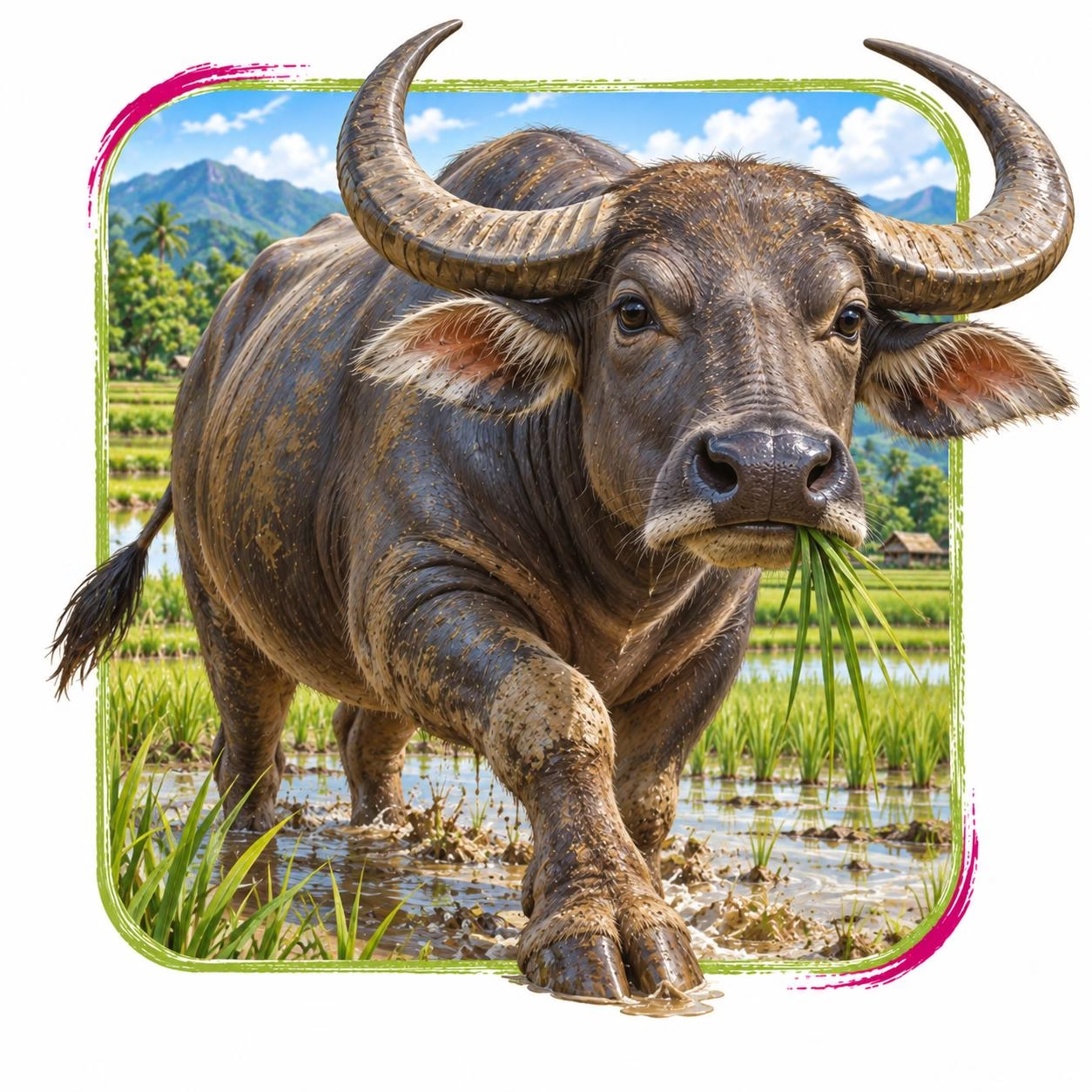
Water Buffalo in its natural Farms, rice paddies, river valleys, marshes, wet grasslands, and managed pasture habitat