
Wild Boar Facts for Kids
The Wild Boar, Sus scrofa, is a sturdy wild pig native across much of Europe and Asia and parts of North Africa. Humans have introduced wild boar, domestic pigs, feral pigs, and mixtures of them to many other regions, so the words wild boar and feral pig should not automatically be treated as identical. Wild boar use muscular snouts to root through soil, eat an extremely varied omnivorous diet, cool themselves in mud, and communicate with grunts, squeals, scent, and body posture. Females and young often live in groups called sounders, while mature males are usually more solitary outside the breeding season. The species is globally listed as Least Concern, although introduced populations can damage crops, habitats, and native wildlife.
Quick Wild Boar Facts
- Animal Type: Mammal
- Scientific Name: Sus scrofa
- Known For: Coarse bristles, powerful rooting snout, canine tusks, female-led sounders, striped piglets, wallowing, adaptability, and an extremely flexible diet
- Habitat: Forests, woodlands, scrub, grasslands, wetlands, farmland, mountains, semi-deserts, and human-modified landscapes with food, water, and cover
- Diet: Roots, tubers, acorns, seeds, fruit, fungi, crops, grasses, invertebrates, eggs, carrion, and small animals depending on opportunity
What You’ll Learn
Discover 10 fascinating wild boar facts for kids about tusks, strong snouts, woodland habitats, digging, and social groups, with a quiz, glossary, and activity
These facts are explained simply for kids, parents, teachers, and curious little fact-finders.
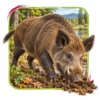
10 Fun Wild Boar Facts for Kids
1. Wild Boar Are True Wild Pigs
Wild boar belong to the pig family Suidae and the genus Sus. Their native range covers a broad part of Eurasia and extends into North Africa, while people have helped wild-living pigs spread much farther.
Kid Decode: The original bristly pig became a globe-trotting neighbor with plenty of human help.
2. A Wild Boar Is Not Always a Feral Pig
A wild boar is a wild form of Sus scrofa, whereas a feral pig descends from domestic pigs living without human care. In many introduced populations, wild boar and feral pigs have interbred, producing animals with mixed ancestry.
Kid Decode: Two pigs can look wild while carrying very different family histories.
3. The Snout Is a Powerful Digging Tool
Strong neck muscles and a tough, sensitive snout help wild boar push aside leaves and turn over soil while searching for roots, bulbs, fungi, worms, and hidden food. Rooting can create feeding patches that alter soil and vegetation.
Kid Decode: The nose works as shovel, food detector, and soil plow all at once.
4. Tusks Are Enlarged Canine Teeth
The upper and lower canine teeth grow into tusks, especially in adult males. Lower tusks can become long and sharp, while contact with the upper canines helps maintain cutting edges used in display, defense, and fights between rivals.
Kid Decode: A boar carries four growing tooth-tools beside its jaws.
5. Wild Boar Are Flexible Omnivores
Plant foods usually make up much of the diet, but wild boar also eat insects, worms, eggs, carrion, and small vertebrates when available. The menu changes with season, habitat, weather, farming, and local food supplies.
Kid Decode: The forest menu can jump from acorns to earthworms in one muddy meal.
6. Females Form Groups Called Sounders
A sounder commonly contains related adult females, juveniles, and piglets. Mature males generally spend more time alone or in loose male company outside the breeding season, although social patterns vary with age and conditions.
Kid Decode: The piglet nursery travels inside a grunting family team.
7. Piglets Begin With Camouflage Stripes
Young wild boar usually have pale lengthwise stripes on a brown coat. The pattern breaks up their outline among grass, leaves, and shadows, then fades as they grow into the darker juvenile and adult coat.
Kid Decode: Baby boar arrive wearing forest-shadow pajamas.
8. A Sow Builds a Birth Nest
Before giving birth, a female may leave the sounder and make a sheltered nest from vegetation. Litter size and breeding timing vary greatly with age, nutrition, climate, latitude, and population density, so one number or season does not fit the entire range.
Kid Decode: The mother builds a leafy cradle before the striped piglets appear.
9. Smell and Hearing Guide Their Lives
Wild boar have a highly developed sense of smell and useful hearing for finding food, recognizing other pigs, and detecting danger. Their eyesight is less important than the chemical and sound world around the snout and ears.
Kid Decode: The boar reads the forest mainly with its nose and ears.
10. Mud Wallowing Is Practical Skin Care
Because pigs have limited ability to cool themselves by sweating, wild boar wallow in mud or shallow water to lose heat. A coating of mud may also help with biting insects, and animals often rub against trees after wallowing.
Kid Decode: A mud bath becomes air conditioner, bug shield, and back-scratching preparation.
The Weirdest Wild Boar Fact
A male wild boar’s lower tusks repeatedly rub against the upper canines as the jaws move, helping preserve sharp cutting edges on teeth that continue growing.
Try This Wild Boar Activity
Wild Boar Woodland Activity
Draw a wild boar sounder moving through an oak woodland. Add a large sow, striped piglets, a separate adult male, coarse bristles, small eyes, upright ears, cloven hooves, a strong rooting snout turning over leaf litter, canine tusks in a close-up bubble, acorns, roots, fungi, worms, a leafy birth nest, scent and grunt symbols, a mud wallow, a rubbing tree, and a map separating the native range from introduced and feral-pig populations.
Quick Wild Boar Quiz
- What is the Wild Boar’s scientific name? Answer: Sus scrofa.
- What is a family group of female wild boar and young called? Answer: A sounder.
- What are tusks? Answer: Enlarged canine teeth.
- Why do young piglets have pale stripes? Answer: The stripes help camouflage them among vegetation and shadows.
- What is the Wild Boar’s global IUCN category? Answer: Least Concern.
Mini Glossary
- Suid: A member of the pig family Suidae.
- Sounder: A social group usually made up of related female pigs and their young.
- Feral: Descended from domesticated animals but living without ordinary human care.
- Rooting: Turning over soil or leaf litter with the snout while searching for food.
- Wallow: A muddy or watery place where an animal rolls or rests to cool and coat its skin.
 Cooper's Hawk Facts for Kids
 Turkey Facts for Kids
 Heron Facts for Kids
 Eryops Facts for Kids
More Animal Facts for Kids
Visit the full animal facts library or explore a focused animal group.
More Extinct Animal Facts for Kids
Discover dinosaurs, Ice Age giants, prehistoric sea creatures, recently extinct species, and other animals from the past.
Fact check note: Fact checked with the American Society of Mammalogists Mammal Diversity Database version 2.4 entry for Sus scrofa, the IUCN Red List and IUCN SSC Wild Pig Specialist Group Eurasian Wild Boar account, Animal Diversity Web’s Sus scrofa account, People’s Trust for Endangered Species Wild Boar profile, USDA APHIS feral-swine identification guidance, and peer-reviewed research on wild-pig ecological impacts and wild-boar–domestic-pig hybridisation.

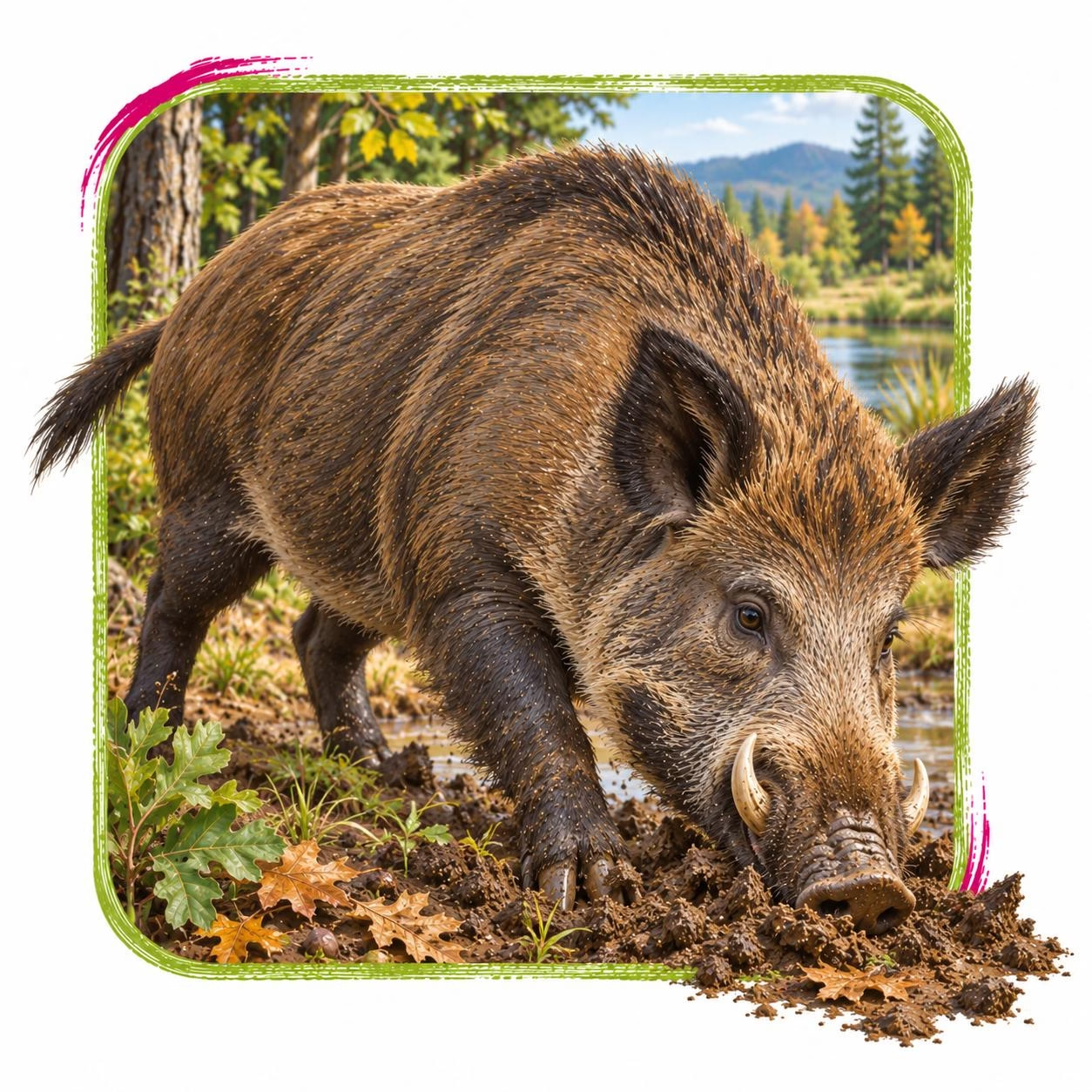
Wild Boar in its natural Temperate and tropical forests, woodlands, scrublands, grasslands, wetlands, farmland, mountains, semi-deserts, reedbeds, and human-modified landscapes with food, cover, and water habitat