
Ambulocetus Facts for Kids
Ambulocetus was an early whale from Eocene Pakistan. It was not a dinosaur and not a modern whale, but a semiaquatic mammal that could move on land and swim in water. Its name means walking whale, and its nearly complete skeleton helped scientists understand how whale ancestors shifted from land toward the sea.
Quick Ambulocetus Facts
- Animal Type: Prehistoric semiaquatic whale
- Group: Early cetacean and ambulocetid
- Known For: Walking whale name, Pakistan fossils, Tethys Sea coast, strong limbs, swimming tail, pups, fish diet, and land-to-water whale evolution
- Lived During: Early to middle Eocene, about 48 to 47 million years ago
- Diet: Fish, aquatic animals, and possibly animals near shore
What You’ll Learn
Discover 10 incredible ambulocetus facts for kids about walking on land, swimming, strong limbs, hunting, and its place in whale evolution, plus a quiz, glossary, and activity
Clear explanations make them ideal for children, families, teachers, and little fact-hunters.
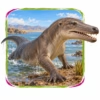
10 Fun Ambulocetus Facts for Kids
1. Ambulocetus Was a Whale Relative
Ambulocetus was an early cetacean, which means it belonged on the whale, dolphin, and porpoise branch.
Kid Decode: It was a whale cousin with legs, which is evolution doing a plot twist in flippers.
2. Its Name Means Walking Whale
Ambulocetus comes from words meaning walking whale.
Kid Decode: A name that tells the headline before the article begins.
3. It Lived in Pakistan
Ambulocetus fossils were found in the Kuldana Formation of Pakistan, in rocks linked with warm coastal waters of the ancient Tethys Sea.
Kid Decode: Pakistan once held coastal habitats where early whales paddled around.
4. It Could Move on Land
Ambulocetus had strong limbs and probably could walk awkwardly on land, though it was better suited to watery places than running across dry ground.
Kid Decode: Not a land athlete, more of a shoreline waddler with ambitions.
5. It Could Swim
Its body, limbs, and tail suggest Ambulocetus could swim powerfully, perhaps by paddling and using up-and-down body movement.
Kid Decode: Walking whale, swimming whale, very busy transition whale.
6. It Had Large Feet
Ambulocetus had big feet that may have helped push through water, perhaps with webbing in life.
Kid Decode: Those feet were not just feet. They were almost flipper drafts.
7. It Hunted in Water
Ambulocetus likely ate fish and other aquatic animals, and may have ambushed prey near shore.
Kid Decode: Imagine a mammal crocodile-style hunter, but on the road to becoming whale-ish.
8. It Had Ears Built for Water
Studies of early whales show hearing changes that helped them sense sound in water, and Ambulocetus is part of that story.
Kid Decode: Its ears were joining the underwater listening club.
9. Baby Ambulocetus Were Pups
Baby early whales can be called pups, like baby whales and dolphins today.
Kid Decode: A pup from this species would have belonged to a family halfway between shore and sea.
10. It Helped Explain Whale Evolution
Ambulocetus became famous because it preserved many features showing how whales evolved from land mammals into fully aquatic animals.
Kid Decode: This fossil is a bridge with bones instead of bricks.
The Weirdest Ambulocetus Fact
Ambulocetus was a whale with working legs, showing that the ancestors of modern whales once walked before becoming ocean giants.
Try This Ambulocetus Activity
Ambulocetus Drawing Activity
Draw Ambulocetus near an Eocene Pakistan shoreline. Add long body, strong legs, big feet, swimming tail, pup clue, fish, Tethys Sea waves, muddy bank, fossil skeleton tag, and a “walking whale” label.
Quick Ambulocetus Quiz
- Was Ambulocetus a dinosaur? Answer: No, it was an early whale mammal.
- What does Ambulocetus mean? Answer: Walking whale.
- Where were Ambulocetus fossils found? Answer: Pakistan.
- Could Ambulocetus swim? Answer: Yes, it was semiaquatic.
- What did Ambulocetus likely eat? Answer: Fish and other aquatic animals.
Mini Glossary
- Cetacean: A whale, dolphin, porpoise, or extinct relative.
- Semiaquatic: Living partly in water and partly on land.
- Tethys Sea: An ancient sea that once covered parts of Asia and nearby regions.
- Pup: A baby whale, dolphin, or similar mammal.
- Eocene: A time period after the dinosaurs when early whales evolved.
 Squirrel Facts for Kids
 Fennec Fox Facts for Kids
 Emperor Scorpion Facts for Kids
 Barinasuchus Facts for Kids
More Animal Facts for Kids
Visit the full animal facts library or explore a focused animal group.
More Extinct Animal Facts for Kids
Discover dinosaurs, Ice Age giants, prehistoric sea creatures, recently extinct species, and other animals from the past.
Fact check note: Fact checked with New York Tech Ambulocetus family-tree page, Kuldana Formation early whale summaries, original walking whale description notes, and trusted whale evolution education sources.

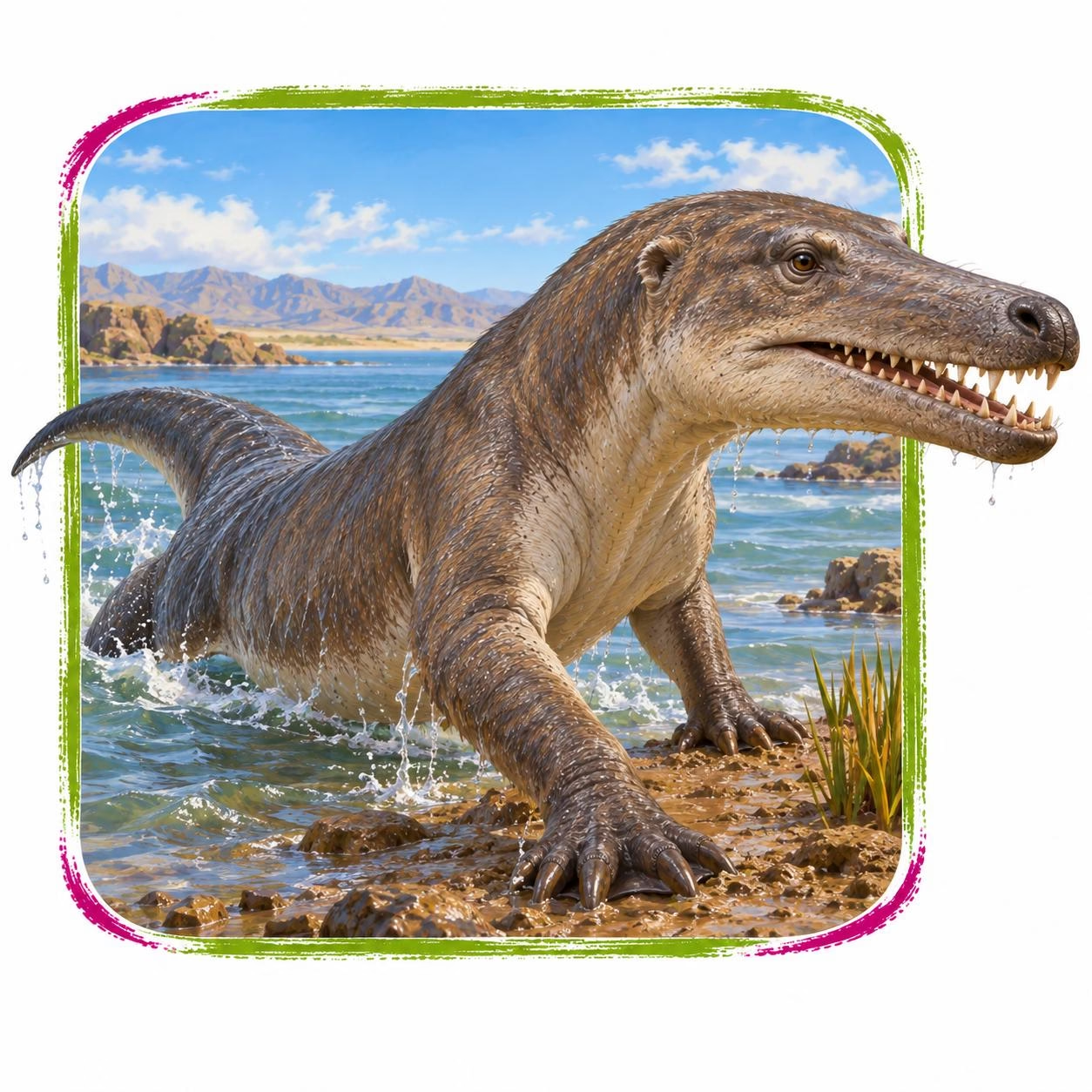
Ambulocetus in its natural Eocene Pakistan coastal waters, Kuldana Formation shorelines, warm Tethys Sea margins, muddy banks, river mouths, shallow marine habitats, lagoons, and semiaquatic hunting areas habitat