
Amebelodon Facts for Kids
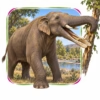
Amebelodon was a shovel-tusked proboscidean that lived mainly in North America during the Miocene. It was an elephant relative with an elongated lower jaw carrying two flattened incisor tusks. The tusks were narrower than Platybelodon’s broad cutting plate, and wear marks show that Amebelodon used them in several ways, especially stripping and scraping bark rather than constantly digging through swamp mud.
Quick Amebelodon Facts
- Animal Type: Extinct proboscidean mammal
- Group: Amebelodontid shovel-tusker
- Known For: Long lower jaw, flattened lower tusks, varied tusk use, elephant-like body, and North American fossils
- Lived During: Miocene, especially roughly 15–5 million years ago
- Diet: Leaves, twigs, bark, and other vegetation
What You’ll Learn
Explore 10 unusual amebelodon facts for kids about shovel-like tusks, trunks, large bodies, plant diets, and prehistoric North America, with a quiz, glossary, and activity
These easy facts are made for kids, parents, teachers, and curious young learners.
10 Fun Amebelodon Facts for Kids
1. Amebelodon Was an Elephant Relative
Amebelodon belonged to Proboscidea, the same mammal order as living elephants, but it came from an extinct shovel-tusked branch.
Kid Decode: It joined the elephant family with a chin stretched into a remarkable tool rack.
2. Its Lower Jaw Was Very Long
The fused front of the lower jaw projected far beyond the cheek teeth and supported a pair of enlarged incisors.
Kid Decode: Its chin continued travelling long after an elephant jaw would normally stop.
3. It Had Two Flattened Lower Tusks
The lower incisors were broad and flattened, creating the shovel-tusker appearance behind its nickname.
Kid Decode: The shovel was made from teeth rather than metal or bone plates.
4. It Also Had Upper Tusks
Amebelodon carried a second pair of tusks in the upper jaw, though their size and shape varied among species and individuals.
Kid Decode: Four tusk positions gave this elephant relative a crowded facial toolbox.
5. It Probably Had an Elephant-Like Trunk
Amebelodon is sometimes drawn with a short flattened trunk, but fossils do not support that exact shape and a more elephant-like flexible trunk is safer.
Kid Decode: The nose should not be flattened merely because the lower jaw was.
6. It Stripped Bark From Trees
Microscopic wear on lower tusks indicates repeated scraping and stripping against plant material such as bark.
Kid Decode: Its lower teeth may have worked like giant bark-peeling chisels.
7. It Was an Opportunistic Feeder
Tusk wear shows several use patterns, suggesting that Amebelodon gathered different plant foods instead of relying on one highly specialised feeding trick.
Kid Decode: The shovel-tusker kept a varied plant menu and more than one eating technique.
8. It Was Not Mainly a Swamp Dredger
Modern studies found little support for the old image of Amebelodon spending most of its time scooping soft water plants from muddy bottoms.
Kid Decode: The famous shovel belonged in the woodland workshop more than the swamp kitchen.
9. Species Varied Greatly in Size
Some species were moderate elephant-sized animals, while the large form traditionally called Amebelodon britti stood about 2.3 to 2.7 metres at the pelvis and was extremely heavy.
Kid Decode: The genus ranged from big to enormous without using one standard body setting.
10. Some Giant Species Have Been Reclassified
Several large forms once placed in Amebelodon are now often assigned to genera such as Konobelodon, so older books may list different names.
Kid Decode: The shovel-tusker family tree has undergone several rounds of label rearrangement.
The Weirdest Amebelodon Fact
Its flattened lower tusks looked like digging shovels, but microscopic scars show that they often worked more like bark scrapers and plant-processing tools.
Try This Amebelodon Activity
Amebelodon Drawing Activity
Draw Amebelodon stripping bark in a Miocene North American woodland. Add an elongated lower jaw, two flattened lower tusks, a flexible elephant-like trunk, upper tusks, rounded molars, a tree with scraped bark, leafy branches, and a comparison panel showing Amebelodon’s narrow shovel beside Platybelodon’s wider one.
Quick Amebelodon Quiz
- Was Amebelodon a modern elephant? Answer: No, it was an extinct proboscidean relative.
- Where were its shovel-like tusks located? Answer: At the front of its elongated lower jaw.
- What did tusk wear show? Answer: Frequent scraping and stripping of plant material such as bark.
- Is a short flattened trunk proven? Answer: No, that old reconstruction is not supported by the fossils.
- Why may older books list different species? Answer: Some giant forms have been moved into other genera.
Mini Glossary
- Proboscidean: A mammal belonging to the order containing elephants and their extinct relatives.
- Amebelodontid: A member of an extinct family of shovel-tusked proboscideans.
- Lower Incisor Tusk: An enlarged front tooth growing from the lower jaw.
- Tusk Wear: Scratches, polish, and damage that reveal how a tusk was used.
- Opportunistic Feeder: An animal able to use several foods or feeding methods.
 Camel Facts for Kids
 Hellbender Facts for Kids
 Servaline Genet Facts for Kids
 Argentavis Facts for Kids
More Animal Facts for Kids
Visit the full animal facts library or explore a focused animal group.
More Extinct Animal Facts for Kids
Discover dinosaurs, Ice Age giants, prehistoric sea creatures, recently extinct species, and other animals from the past.
Fact check note: Fact checked with Lambert’s 1992 feeding and tusk-wear study, Semprebon and colleagues’ 2022 analysis of Florida shovel-tuskers, the Florida Museum’s Amebelodon britti account, and modern revisions separating some giant forms into Konobelodon.

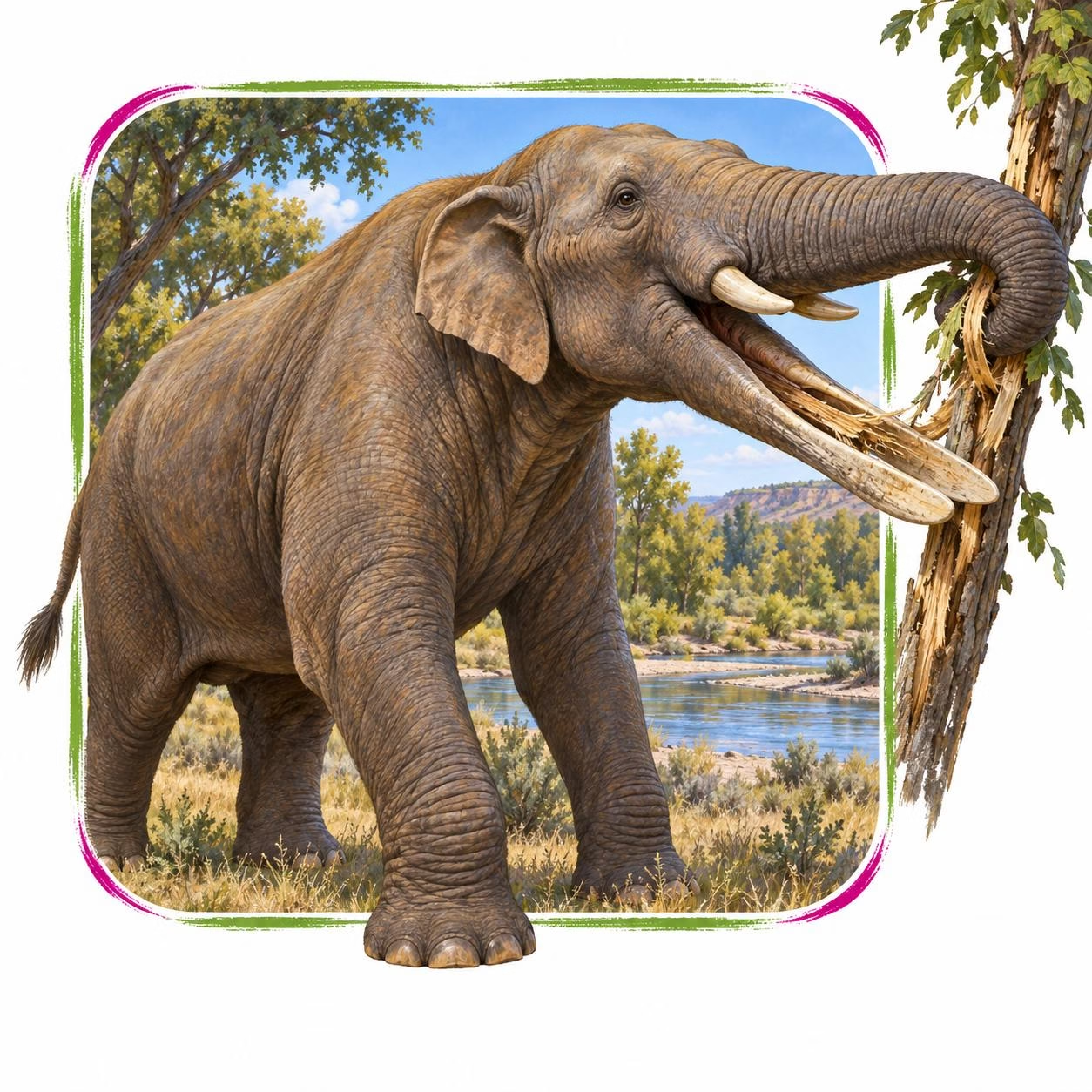
Amebelodon in its natural Miocene open woodlands, wooded grasslands, river floodplains, forest edges, seasonal plains, and mixed terrestrial habitats across North America habitat