
American Cheetah Facts for Kids
The American cheetah was an extinct North American cat from the genus Miracinonyx. This page focuses on Miracinonyx trumani, the best-known species from the Late Pleistocene. It looked cheetah-like, with long limbs and a lightly built body, but genetic and anatomical studies place it closer to pumas than to the living African cheetah. It probably hunted pronghorn and other hoofed animals, yet its exact speed and hunting style remain debated.
Quick American Cheetah Facts
- Animal Type: Extinct cat
- Group: Puma-lineage felid
- Known For: Long limbs, cheetah-like shape, open-country hunting, and abundant Natural Trap Cave fossils
- Lived During: Pleistocene, with M. trumani surviving until roughly 13,000 years ago
- Diet: Pronghorn, sheep, young horses, and other medium-sized mammals
What You’ll Learn
Explore 10 fascinating american cheetah facts for kids about this extinct Ice Age predator, its long legs, speed adaptations, habitat, and relatives, with a quiz, glossary, and activity
These easy facts are made for kids, parents, teachers, and curious young learners.
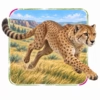
10 Fun American Cheetah Facts for Kids
1. It Was Not a True Cheetah
Despite its nickname, Miracinonyx was not a member of the living cheetah genus Acinonyx. Genetic evidence places it on the puma branch of the cat family.
Kid Decode: The name says cheetah, but the family tree points toward the cougar.
2. It Evolved a Cheetah-Like Body Separately
Long legs, a light frame, enlarged nasal passages, and other running-related traits evolved independently in Miracinonyx and the African cheetah.
Kid Decode: Evolution built two speedy-looking cats from different family blueprints.
3. It Was Roughly Puma-Sized
Miracinonyx trumani was a large, slender cat often reconstructed around puma size or somewhat larger, although body-mass estimates vary among fossils.
Kid Decode: It carried a runner’s outline without shrinking into a small cat.
4. It Probably Ran Fast
Its long lower limbs, flexible spine, and open-country anatomy suggest rapid pursuit, but scientists cannot calculate one reliable top speed from bones alone.
Kid Decode: The fossil skeleton brings running shoes but no stopwatch.
5. It Was Less Specialised Than a Living Cheetah
Recent brain and skeletal research shows that Miracinonyx did not copy every extreme adaptation of Acinonyx, so it may have combined pursuit with more flexible hunting tactics.
Kid Decode: It looked cheetah-like without becoming a perfect Ice Age duplicate.
6. Its Claws Were Probably More Retractile
Miracinonyx retained claw and foot features that were less specialised for constant ground grip than the partly non-retractile claws of a living cheetah.
Kid Decode: Its paws kept more cat-like claw storage than a modern cheetah’s running spikes.
7. Pronghorn Were Important Prey
Stable-isotope evidence from Natural Trap Cave supports pronghorn as a major food source, though sheep, horses, and other prey also contributed to its diet.
Kid Decode: Pronghorn appeared often on the menu, but they were not the only course.
8. Natural Trap Cave Preserved Many Fossils
A deep cave in Wyoming trapped numerous Miracinonyx individuals along with other Ice Age animals, providing some of the genus’s best skeletons.
Kid Decode: One hidden hole became an accidental library of American cheetah bones.
9. It Used More Than Open Plains
Although suited to prairies and steppe, Miracinonyx fossils also occur near rocky slopes and canyon country, suggesting a broader habitat range.
Kid Decode: This cat could leave the racetrack and enter the rocky maze.
10. It Vanished Near the End of the Ice Age
Miracinonyx disappeared during the late Pleistocene megafaunal losses, when climates, prey communities, and human pressures were changing across North America.
Kid Decode: The final sprint ended during one of the continent’s biggest ecological shake-ups.
The Weirdest American Cheetah Fact
The American cheetah looked remarkably similar to the African cheetah, yet it was more closely related to pumas and evolved its runner-like body independently.
Try This American Cheetah Activity
American Cheetah Drawing Activity
Draw Miracinonyx trumani running across an Ice Age North American plain. Add a long-legged puma-like body, small rounded head, flexible back, long tail, partly retractile claws, pronghorn ahead, rocky canyon slopes in the distance, and a Natural Trap Cave fossil inset. Label its exact top speed “unknown.”
Quick American Cheetah Quiz
- Was the American cheetah a true cheetah? Answer: No, it belonged closer to the puma branch.
- What was its scientific genus? Answer: Miracinonyx.
- Which prey animal was important in its diet? Answer: Pronghorn.
- Where were many fossils found? Answer: Natural Trap Cave in Wyoming.
- Do scientists know its exact top speed? Answer: No.
Mini Glossary
- Felid: A member of the cat family.
- Convergent Evolution: The independent evolution of similar features in different lineages.
- Cursorial: Adapted for efficient running on land.
- Stable Isotope: A chemical form preserved in fossils that can help reveal ancient diets.
- Pleistocene: The geologic epoch commonly called the Ice Age, lasting from about 2.58 million to 11,700 years ago.
 Bowerbird Facts for Kids
 Goldfinch Facts for Kids
 Gentoo Penguin Facts for Kids
 Japanese Sea Lion Facts for Kids
More Animal Facts for Kids
Visit the full animal facts library or explore a focused animal group.
More Extinct Animal Facts for Kids
Discover dinosaurs, Ice Age giants, prehistoric sea creatures, recently extinct species, and other animals from the past.
Fact check note: Fact checked with Barnett and colleagues’ 2005 ancient-DNA study of Miracinonyx, Figueirido and colleagues’ 2022 brain reconstruction, Higgins and colleagues’ 2023 isotope study of Natural Trap Cave predators, and comparative studies of Miracinonyx locomotion and puma-lineage evolution.

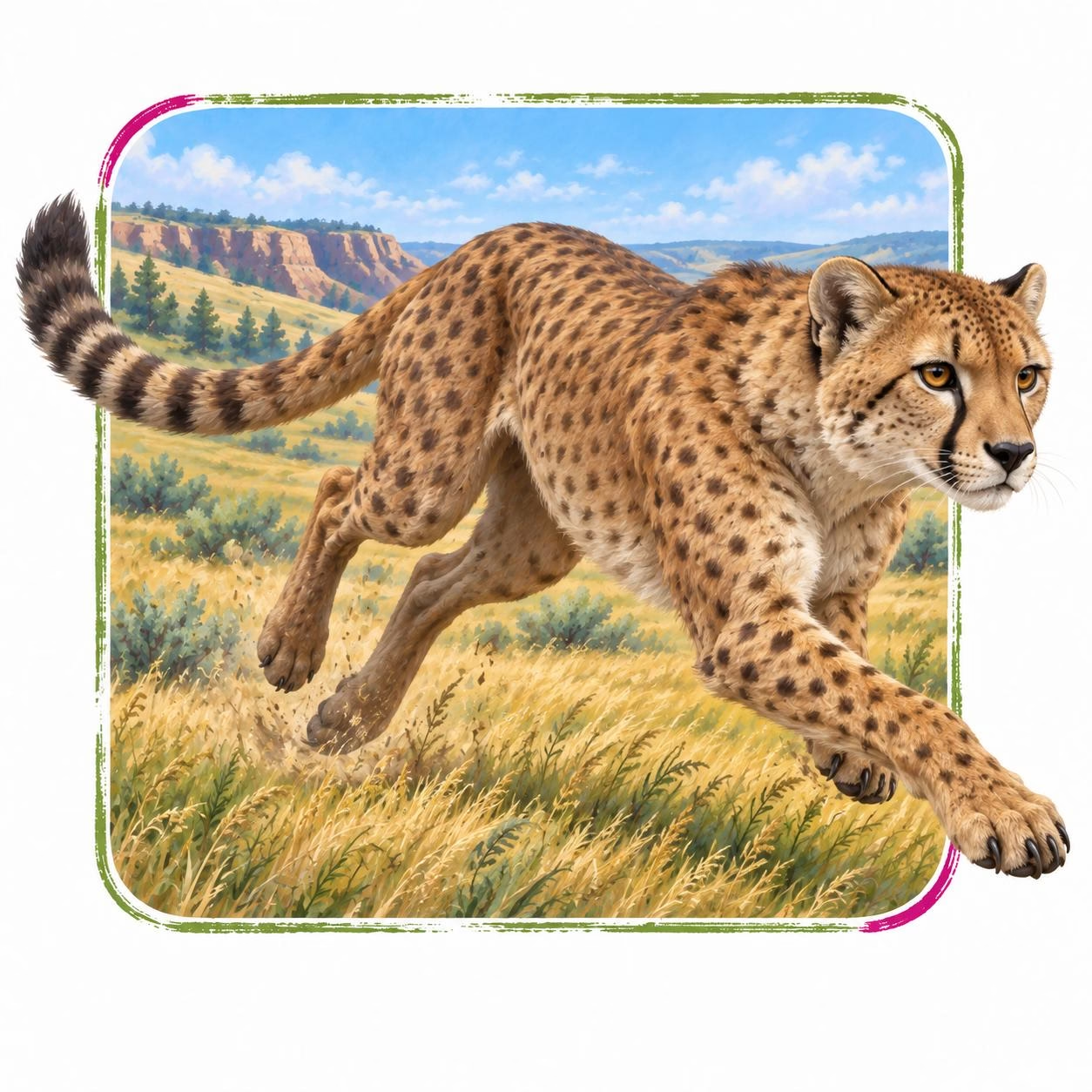
American Cheetah in its natural Pleistocene prairies, steppe, open woodlands, high plains, rocky slopes, canyon country, and cool grassland habitats across North America habitat