
Anancus Facts for Kids
Anancus was a large elephant-like proboscidean that lived across Africa, Europe, and Asia from the Late Miocene into the Early Pleistocene. It had a short lower jaw, a hanging trunk, ridged molars, and no lower tusks. Its most spectacular features were two slender upper tusks that projected forward in nearly straight lines and could grow longer than a small car.
Quick Anancus Facts
- Animal Type: Extinct proboscidean mammal
- Group: Anancine elephantoid, traditionally called a gomphothere
- Known For: Very long straight upper tusks, short lower jaw, trunk, ridged molars, and wide Afro-Eurasian range
- Lived During: Late Miocene to Early Pleistocene, roughly 8.5–2 million years ago
- Diet: Leaves, twigs, bark, fruit, seeds, and sometimes grass, depending on species and habitat
What You’ll Learn
Discover 10 amazing anancus facts for kids about long straight tusks, massive bodies, plant diets, and ancient elephant relatives, plus a quiz, glossary, and activity
Simple explanations make them useful for children, families, teachers, and little fact-hunters.

10 Fun Anancus Facts for Kids
1. Anancus Was a Proboscidean
Anancus belonged to Proboscidea, the mammal order containing elephants and many extinct elephant-like relatives.
Kid Decode: It entered the elephant family parade carrying two astonishingly straight spears.
2. Its Tusks Were Nearly Straight
The upper tusks projected far forward with little curvature, inspiring a name that means uncurved.
Kid Decode: Its face seemed to forget where the tusks were supposed to stop.
3. Some Tusks Exceeded Three Metres
A large Anancus arvernensis tusk from Romania measured about 3.7 metres long.
Kid Decode: One tooth stretched longer than a small family car is wide.
4. It Had No Lower Tusks
Unlike many earlier gomphothere-like proboscideans, Anancus had a shortened lower jaw without projecting lower tusks.
Kid Decode: The lower jaw retired its tusks while the upper pair handled all the drama.
5. It Probably Had a Hanging Trunk
Its shortened jaw and elephant-like skull suggest a free-hanging trunk more similar to that of modern elephants than to earlier long-jawed proboscideans.
Kid Decode: The nose became the main food-grabbing tool as the lower jaw shortened.
6. It Was About Elephant Size
Two relatively complete Anancus arvernensis skeletons stood around 2.5 to 2.6 metres at the shoulder.
Kid Decode: It reached familiar elephant height while carrying much less familiar tusks.
7. It Weighed Around Five to Six Tonnes
A three-dimensional volumetric reconstruction estimated about 5.2 to 6 tonnes for Anancus arvernensis.
Kid Decode: Its body matched a large modern elephant before the tusks added several metres of extra spectacle.
8. Its Molars Had Four Main Ridges
Most Anancus molars were tetralophodont, meaning they carried four major transverse ridges for crushing plant food.
Kid Decode: Its back teeth processed plants across four chunky chewing hills.
9. Its Diet Varied by Species
European Anancus arvernensis was mainly a browser, while some African and Asian populations ate more grass or followed mixed diets.
Kid Decode: The genus adjusted its menu as forests, woodlands, and grasslands changed around it.
10. It Spread Across Afro-Eurasia
Anancus fossils are known from Africa, Europe, and Asia, including early records from the Siwalik region of Pakistan.
Kid Decode: Its straight-tusked fossil trail stretched across three continents.
The Weirdest Anancus Fact
Anancus could carry nearly straight tusks more than 3.5 metres long, yet each was a single enlarged tooth growing from the upper jaw.
Try This Anancus Activity
Anancus Drawing Activity
Draw Anancus walking through a Pliocene woodland. Add an elephant-like body, hanging trunk, short lower jaw, no lower tusks, two extremely long straight upper tusks, four-ridged molars in a cutaway bubble, leafy branches, fruit, and a 3.7-metre tusk scale.
Quick Anancus Quiz
- Was Anancus a dinosaur? Answer: No, it was a proboscidean mammal.
- What shape were its famous tusks? Answer: Very long and nearly straight.
- Did it have lower tusks? Answer: No, its shortened lower jaw lacked projecting lower tusks.
- How much did Anancus arvernensis probably weigh? Answer: About 5.2 to 6 tonnes.
- What did it eat? Answer: Mainly plant food, with diets varying from browsing to mixed feeding.
Mini Glossary
- Proboscidean: A mammal belonging to the order containing elephants and their extinct relatives.
- Anancine: A member of the extinct proboscidean group containing Anancus and close relatives.
- Tetralophodont: Having four major ridges across a molar tooth.
- Brevirostrine: Having a shortened lower jaw or snout.
- Browser: An herbivore that mainly eats leaves, twigs, bark, fruit, and shrubs.
 Mamba Facts for Kids
 Starling Facts for Kids
 Iberian Lynx Facts for Kids
 Mauritian Blue Pigeon Facts for Kids
More Animal Facts for Kids
Visit the full animal facts library or explore a focused animal group.
More Extinct Animal Facts for Kids
Discover dinosaurs, Ice Age giants, prehistoric sea creatures, recently extinct species, and other animals from the past.
Fact check note: Fact checked with Romano and colleagues’ 2023 volumetric body-mass study, Anancus tusk-mass research, craniofacial evolution reviews, dental-microwear studies, and Afro-Eurasian fossil records.

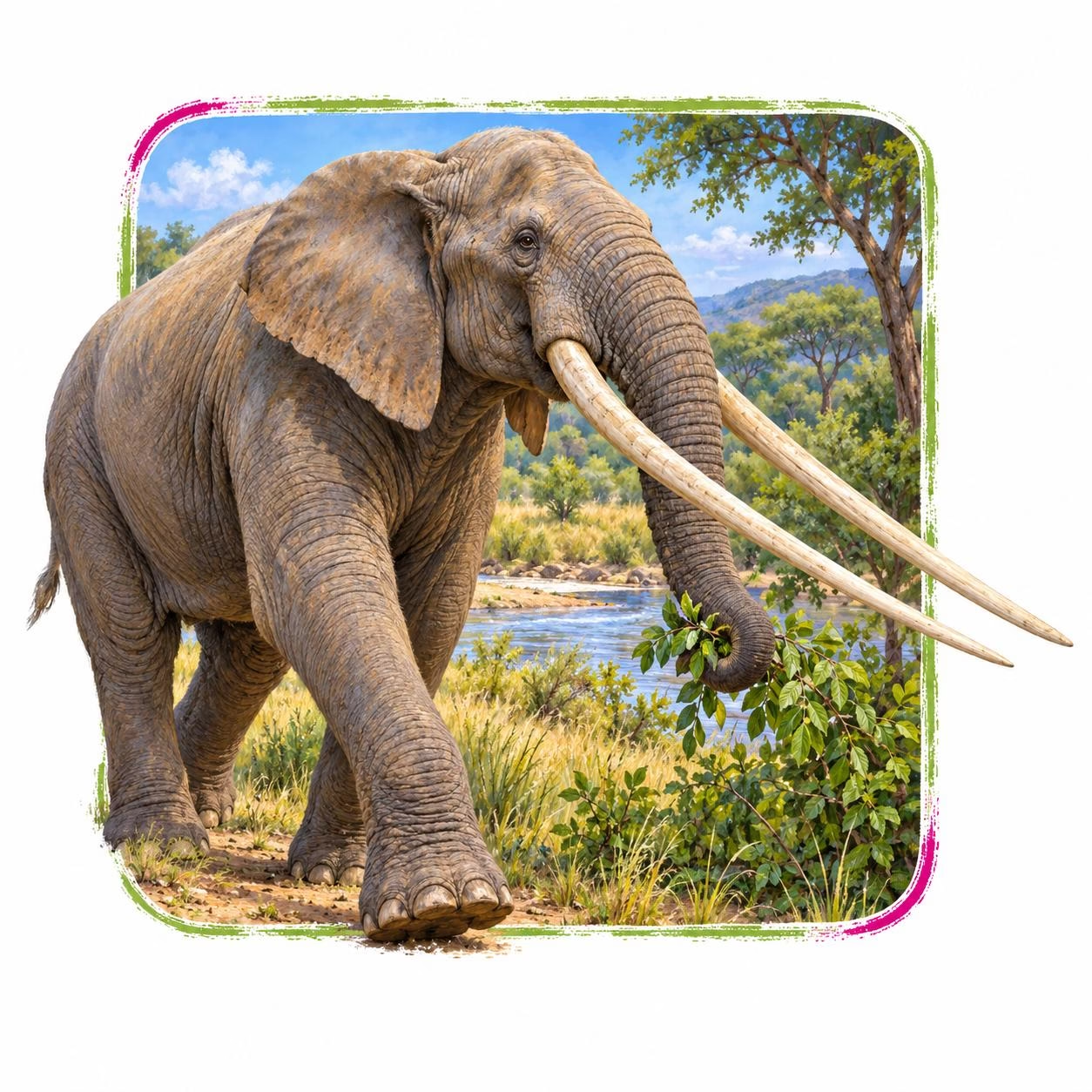
Anancus in its natural Late Miocene to Early Pleistocene woodlands, forest edges, wooded savannas, river valleys, open grasslands, and mixed terrestrial habitats across Afro-Eurasia habitat