
Astrapotherium Facts for Kids
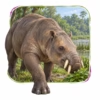
Astrapotherium was a large plant-eating mammal that lived in South America during the Early and Middle Miocene. It was not an elephant, tapir, hippopotamus, or rhinoceros, but a member of the entirely extinct order Astrapotheria. Four enlarged canine teeth formed tusks, while retracted nasal bones suggest a flexible upper lip or short trunk.
Quick Astrapotherium Facts
- Animal Type: Extinct South American native ungulate
- Group: Astrapotheriid
- Known For: Four canine tusks, probable short proboscis, long body, powerful forelimbs, and unusual plantigrade feet
- Lived During: Early to Middle Miocene, roughly 18–12 million years ago
- Diet: Leaves, twigs, shoots, and other browse
What You’ll Learn
Explore 10 unusual astrapotherium facts for kids about tusks, a possible short trunk, heavy bodies, plant diets, and prehistoric South America, with a quiz, glossary, and activity
These simple facts are made for kids, parents, teachers, and curious young learners.
10 Fun Astrapotherium Facts for Kids
1. Astrapotherium Was an Astrapothere
It belonged to Astrapotheria, an extinct order of large South American mammals with no living members.
Kid Decode: Its family reunion has no modern guests because the entire branch vanished.
2. It Was Not an Elephant or Tapir
Astrapotherium independently evolved elephant- and tapir-like features without belonging to either group.
Kid Decode: Evolution assembled a familiar-looking face from completely different family-tree parts.
3. It Was About Two and a Half Metres Long
Astrapotherium magnum reached roughly 2.5 metres in body length and about one tonne, with estimates varying among methods.
Kid Decode: It brought rhino-scale bulk to a mammal unlike any creature alive today.
4. It Had Four Canine Tusks
Both upper and lower canine teeth became enlarged and projected from the jaws as two pairs of tusks.
Kid Decode: Its mouth carried four tusks instead of the elephant’s familiar upper pair.
5. It Probably Had a Short Trunk
The nasal opening was retracted high on the skull, suggesting a muscular proboscis or highly flexible upper lip.
Kid Decode: The fossil skull hints at a trunk, but the missing soft tissue refuses to reveal its exact length.
6. It Had Broad Lower Incisors
Large lower front teeth probably worked against a tough pad at the front of the upper jaw, where upper incisors were absent.
Kid Decode: Its lower teeth may have clipped plants against a built-in mouth cushion.
7. Its Body Was Long and Low
Astrapotherium had an elongated trunk, short limbs, and a body shape sometimes compared with a large tapir or hippopotamus.
Kid Decode: The creature stretched its bulk lengthwise rather than towering high above the ground.
8. Its Forelimbs Were Very Strong
The front limbs were more robust than the hind limbs and could withstand high mechanical loads.
Kid Decode: Its front half arrived built like heavy machinery while the rear stayed comparatively lighter.
9. It May Have Been Comfortable in Water
Limb proportions and fossil environments suggest some swimming ability or aquatic habits, but a fully semi-aquatic lifestyle is not certain.
Kid Decode: The water-loving idea has evidence behind it, but it is not a fossilised swimming video.
10. It Was Mainly a Browser
Low-crowned cheek teeth and habitat studies indicate that Astrapotherium fed mostly on leaves and other soft vegetation in wooded environments.
Kid Decode: Its short trunk and tusked mouth probably worked among branches rather than mowing open grasslands.
The Weirdest Astrapotherium Fact
Astrapotherium combined four canine tusks, a probable short trunk, broad lower incisors, and a long low body in one mammal unrelated to elephants or tapirs.
Try This Astrapotherium Activity
Astrapotherium Drawing Activity
Draw Astrapotherium beside an Early Miocene Patagonian river. Add a long low body, short plantigrade legs, especially strong forelimbs, four canine tusks, broad lower incisors, a cautious short trunk, leafy branches, muddy banks, and a “not an elephant” family-tree sign.
Quick Astrapotherium Quiz
- Was Astrapotherium an elephant? Answer: No, it belonged to the extinct order Astrapotheria.
- How many canine tusks did it have? Answer: Four, one upper and one lower pair.
- What suggests it had a short trunk? Answer: Its retracted nasal opening.
- What did it probably eat? Answer: Leaves, twigs, and other browse.
- Is a semi-aquatic lifestyle certain? Answer: No, swimming ability is supported but the exact lifestyle remains debated.
Mini Glossary
- Astrapothere: A member of an extinct order of large South American herbivorous mammals.
- Canine Tusk: An enlarged canine tooth projecting beyond the mouth.
- Proboscis: An elongated flexible nose or upper lip.
- Plantigrade: Walking with most or all of the sole placed on the ground.
- Browser: An herbivore that eats leaves, twigs, and shrubs.
 Deer Facts for Kids
 Caterpillar Facts for Kids
 Sandpiper Facts for Kids
 Dinomischus Facts for Kids
More Animal Facts for Kids
Visit the full animal facts library or explore a focused animal group.
More Extinct Animal Facts for Kids
Discover dinosaurs, Ice Age giants, prehistoric sea creatures, recently extinct species, and other animals from the past.
Fact check note: Fact checked with Cassini and colleagues’ paleobiology of Santacrucian ungulates, Kramarz and Bond’s astrapotheriid anatomical research, Milewski and Dierenfeld’s proboscis review, and Santa Cruz Formation fossil studies.

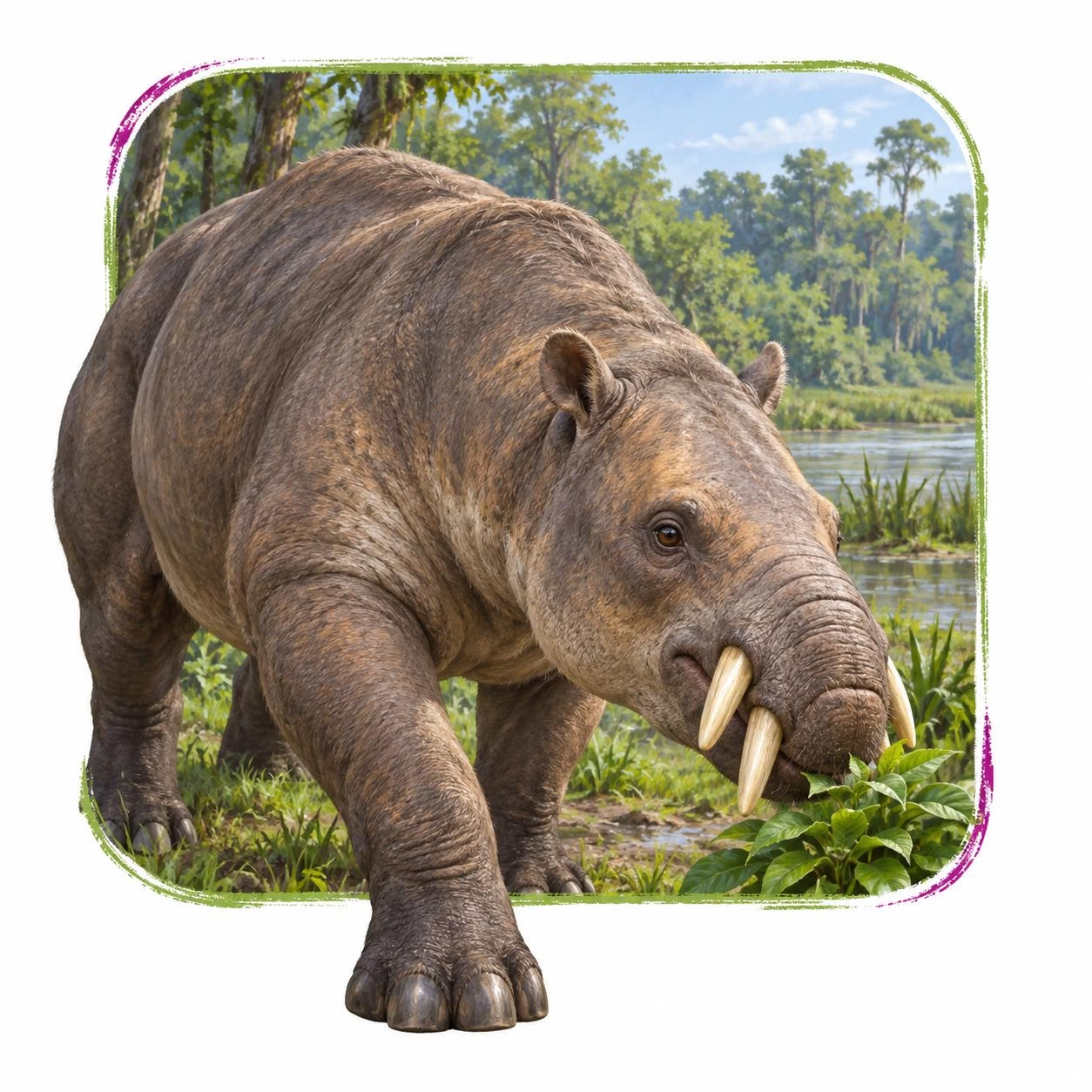
Astrapotherium in its natural Early and Middle Miocene wooded floodplains, humid lowlands, river margins, marshy areas, forest edges, and closed habitats of South America habitat