
Atopodentatus Facts for Kids
Atopodentatus was a strange plant-eating marine reptile that lived in what is now China during the Middle Triassic. It was not a dinosaur. Its skull widened sideways at the front like a hammer, where chisel-shaped teeth scraped plants from rocks. Hundreds of thin teeth farther back then strained the loosened plant pieces from the water.
Quick Atopodentatus Facts
- Animal Type: Prehistoric marine reptile
- Group: Early sauropterygian relative
- Known For: Hammer-shaped jaws, chisel teeth, needle-tooth filter, underwater grazing, and an unusually early plant-eating lifestyle
- Lived During: Middle Triassic, about 244 million years ago
- Diet: Marine plants and algae
What You’ll Learn
Discover 10 bizarre atopodentatus facts for kids about its hammer-shaped jaw, unusual teeth, plant diet, swimming, and Triassic seas, plus a quiz, glossary, and activity
These facts are explained simply for kids, parents, teachers, and curious little fact-finders.
10 Fun Atopodentatus Facts for Kids
1. Atopodentatus Was a Marine Reptile
Atopodentatus was an aquatic reptile from the Triassic Period, not a dinosaur, fish, turtle, or marine mammal.
Kid Decode: It entered the sea with reptile ancestry and a mouth no one could have predicted.
2. Its Head Was Hammer-Shaped
The front ends of both jaws widened sideways, creating a broad hammer-like feeding surface unlike that of any other known reptile.
Kid Decode: Its face looked like an underwater vacuum nozzle designed by a toolbox.
3. Front Teeth Scraped Plants
Rows of chisel-shaped teeth lined the straight front edges of the jaws and probably scraped algae and other plants from hard surfaces.
Kid Decode: The front of its mouth worked like a living seaweed scraper.
4. Side Teeth Formed a Filter
Densely packed needle-shaped teeth along the sides of the jaws formed a mesh that trapped plant pieces while water escaped.
Kid Decode: First scrape, then strain: its mouth ran a two-step underwater salad machine.
5. It Was an Early Marine Herbivore
Atopodentatus is among the earliest known marine reptiles adapted mainly for eating plants rather than hunting animals.
Kid Decode: In a sea full of predators, this reptile chose the floating vegetable aisle.
6. It Grew About Three Metres Long
Reconstructions suggest that Atopodentatus reached roughly 3 metres in length, with an elongated body and sturdy limbs.
Kid Decode: It was about car-length, but much stranger at the front bumper.
7. It Lived in Ancient China
Its fossils were found in Middle Triassic rocks of Yunnan Province in southwestern China.
Kid Decode: A Chinese fossil site preserved one of evolution’s most unusual eating tools.
8. Its First Skull Was Misunderstood
The first crushed skull made the jaws look like a vertical zipper, but better fossils later revealed the true hammer-shaped design.
Kid Decode: The fossil puzzle fooled scientists until less-squashed skulls supplied the missing plot twist.
9. It Probably Fed Near the Seafloor
Its strong limbs and specialised jaws suggest that it searched shallow water and scraped plant growth from rocks or the seabed.
Kid Decode: It may have cruised the bottom like a reptilian lawn mower with flippers.
10. Its Name Means Strange Teeth
Atopodentatus means unusual or peculiar teeth, while the species name unicus means unique.
Kid Decode: The name basically announces that the dentistry department had never seen anything like it.
The Weirdest Atopodentatus Fact
Atopodentatus used two completely different tooth systems in one hammer-shaped mouth: chisel teeth scraped plants, and needle teeth filtered the pieces from water.
Try This Atopodentatus Activity
Atopodentatus Drawing Activity
Draw Atopodentatus feeding in a Middle Triassic coastal sea. Add a broad hammer-shaped snout, chisel teeth across the front, needle-like filtering teeth along the sides, an elongated body, sturdy limbs, underwater plants, algae-covered rocks, drifting plant pieces, and a two-step “scrape and strain” diagram.
Quick Atopodentatus Quiz
- Was Atopodentatus a dinosaur? Answer: No, it was a marine reptile.
- What shape was the front of its jaws? Answer: Broad and hammer-like.
- What did its chisel teeth do? Answer: Scrape plants from hard surfaces.
- What did its needle-shaped teeth do? Answer: Filter plant pieces from water.
- Where were its fossils found? Answer: Yunnan Province in China.
Mini Glossary
- Herbivore: An animal that eats plants.
- Sauropterygian: A member of a broad reptile group that includes plesiosaurs and several earlier aquatic relatives.
- Filter Feeding: Straining small food particles from water.
- Chisel Tooth: A broad-edged tooth suited to scraping or cutting.
- Middle Triassic: The middle part of the Triassic Period.
 Stone Marten Facts for Kids
 Koi Facts for Kids
 Possum Facts for Kids
 Sea Mink Facts for Kids
More Animal Facts for Kids
Visit the full animal facts library or explore a focused animal group.
More Extinct Animal Facts for Kids
Discover dinosaurs, Ice Age giants, prehistoric sea creatures, recently extinct species, and other animals from the past.
Fact check note: Fact checked with Chun and colleagues’ 2016 Science Advances redescription of Atopodentatus unicus and the original Triassic fossil description from Yunnan, China.

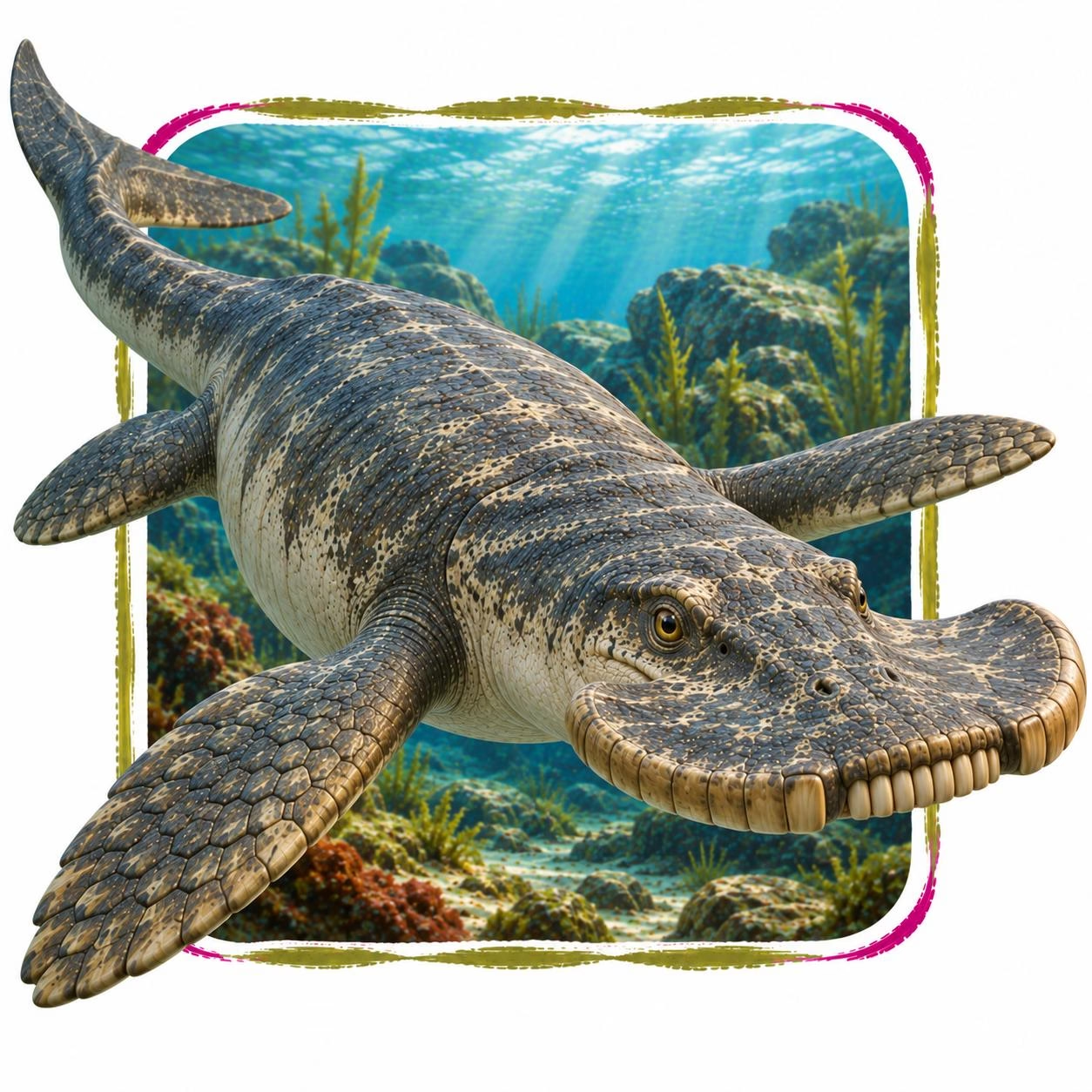
Atopodentatus in its natural Middle Triassic shallow coastal seas, algae-covered rocky bottoms, lagoons, nearshore waters, plant-rich seabeds, and warm marine habitats of ancient China habitat