
Avaceratops Facts for Kids
Avaceratops was a small horned dinosaur from Late Cretaceous Montana. It was not Triceratops, though it belonged to the same wider ceratopsian group. Avaceratops had a parrot-like beak, a frill at the back of the skull, and probably browsed on plants in wet, forested Judith River habitats.
Quick Avaceratops Facts
- Animal Type: Horned dinosaur
- Group: Ceratopsid ceratopsian
- Known For: Small body, Montana fossils, short solid-looking frill, parrot-like beak, hatchlings, Judith River Formation, plant diet, and Late Cretaceous horned dinosaur diversity
- Lived During: Late Cretaceous, late Campanian, about 78 to 75 million years ago
- Diet: Ferns, cycads, conifers, flowering plants, and other low vegetation
What You’ll Learn
Discover 10 fascinating avaceratops facts for kids about its frill, beak, horned face, plant diet, and Cretaceous habitats, plus a quiz, glossary, and activity
Easy explanations make these facts great for children, families, teachers, and little fact-finders.
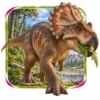
10 Fun Avaceratops Facts for Kids
1. Avaceratops Was a Dinosaur
Avaceratops was a ceratopsian dinosaur, the horned-face group that also includes Triceratops.
Kid Decode: Horned dinosaur club, small Montana edition.
2. It Was Not Triceratops
Avaceratops lived earlier than Triceratops and was much smaller, with a simpler frill.
Kid Decode: Not every horned dinosaur was a three-horned celebrity.
3. Its Name Honors Ava
The name Avaceratops honors Ava Cole, wife of fossil finder Eddie Cole, and ceratops means horned face.
Kid Decode: A dinosaur named for Ava with a face from the horned-dinosaur toolbox.
4. It Lived in Montana
Avaceratops fossils come from the Judith River Formation of central Montana.
Kid Decode: Montana once had wet dinosaur country, not just modern ranchland.
5. It Was a Plant Eater
Like other ceratopsians, Avaceratops was a herbivore with a strong beak for biting plants.
Kid Decode: That beak was a prehistoric garden clipper.
6. It Had a Frill
Avaceratops had a bony frill at the back of its skull, and its exact frill shape helped scientists compare it with other ceratopsians.
Kid Decode: The frill was part shield shape, part species signal, part fossil puzzle.
7. Its Fossil Was Young
The main Avaceratops skeleton may have belonged to a juvenile or subadult, so scientists are careful about adult size and features.
Kid Decode: One young dinosaur can make a big classification headache.
8. It May Have Had Brow Horns
A referred skull showed brow horn cores, but some assignments and details remain debated.
Kid Decode: Horned dinosaur facts sometimes come with tiny question marks.
9. Baby Avaceratops Were Hatchlings
Avaceratops dinosaurs hatched from eggs, so babies can be called hatchlings.
Kid Decode: A tiny hatchling could grow into a beaked plant muncher with a frill.
10. It Shows Ceratopsian Variety
Avaceratops helps show that Late Cretaceous North America had many kinds of horned dinosaurs, not just Triceratops.
Kid Decode: The horned-dinosaur family had more designs than a costume cupboard.
The Weirdest Avaceratops Fact
Avaceratops is famous partly because its best skeleton may be young, so scientists must separate baby features from adult dinosaur clues.
Try This Avaceratops Activity
Avaceratops Drawing Activity
Draw Avaceratops in a wet Judith River forest. Add a small horned dinosaur body, parrot-like beak, short frill, hatchling egg clue, ferns, conifers, Montana fossil tag, and a “small horned dinosaur” label.
Quick Avaceratops Quiz
- Was Avaceratops a dinosaur? Answer: Yes, it was a horned ceratopsian dinosaur.
- Was Avaceratops the same as Triceratops? Answer: No, it was smaller and lived earlier.
- Where was Avaceratops found? Answer: Montana in North America.
- What did Avaceratops eat? Answer: Plants such as ferns, cycads, conifers, and low vegetation.
- What were baby Avaceratops dinosaurs called? Answer: Hatchlings.
Mini Glossary
- Ceratopsian: A horned or beaked dinosaur group that includes Triceratops and its relatives.
- Frill: A bony shield-like structure at the back of some horned dinosaur skulls.
- Herbivore: An animal that eats plants.
- Hatchling: A baby animal newly hatched from an egg.
- Judith River Formation: A Late Cretaceous rock formation in Montana with many dinosaur fossils.
 Mongoose Facts for Kids
 Tamarin Facts for Kids
 Black Mamba Facts for Kids
 Olorotitan Facts for Kids
More Animal Facts for Kids
Visit the full animal facts library or explore a focused animal group.
More Extinct Animal Facts for Kids
Discover dinosaurs, Ice Age giants, prehistoric sea creatures, recently extinct species, and other animals from the past.
Fact check note: Fact checked with Avaceratops morphology research, Judith River Formation summaries, ceratopsian classification notes, and trusted dinosaur education sources.

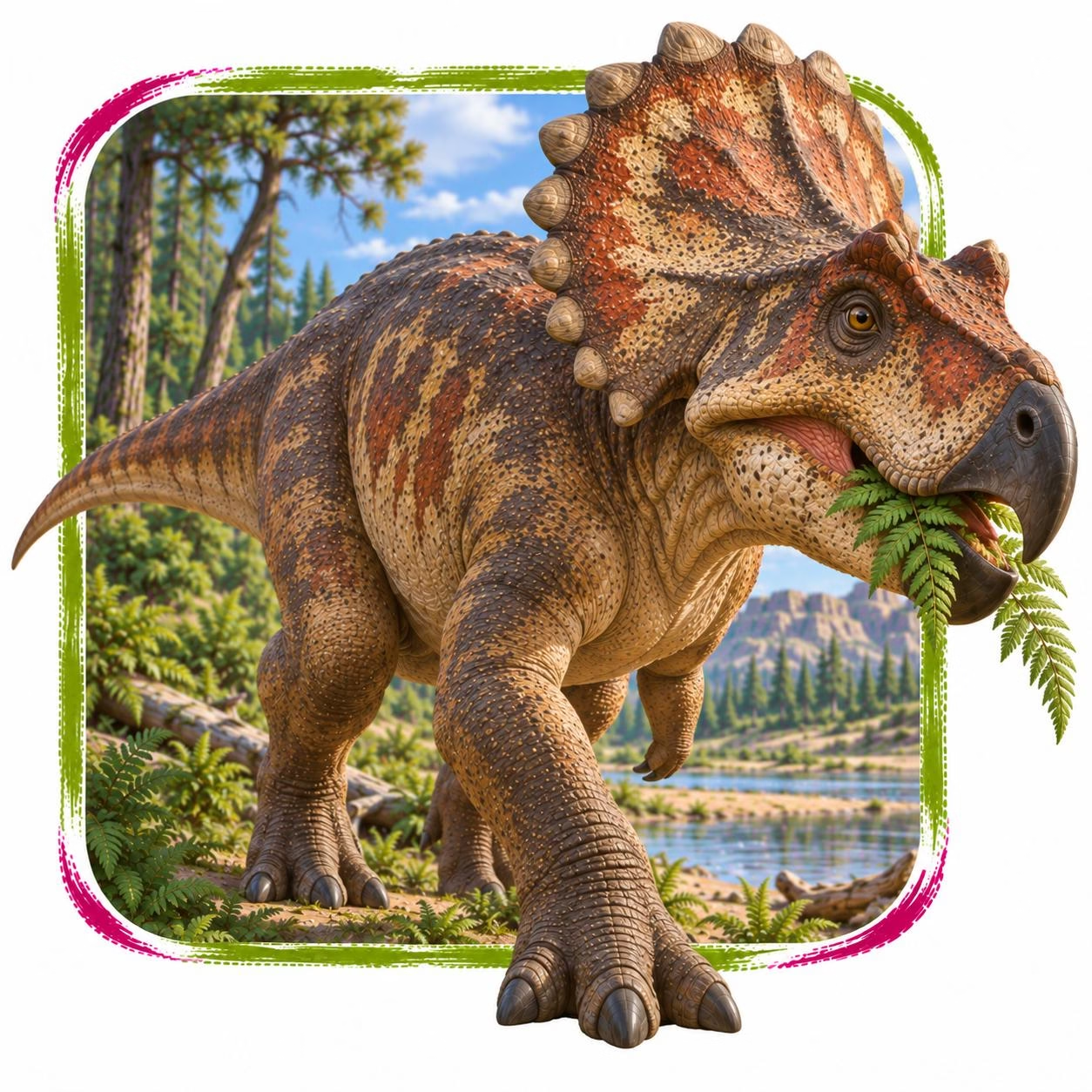
Avaceratops in its natural Late Cretaceous Montana floodplains, Judith River Formation habitats, wet forests, stream channels, lowland woodlands, fern-rich ground cover, coastal plain ecosystems, and North American ceratopsian habitats habitat