
Azhdarcho Facts for Kids
Azhdarcho was a long-necked pterosaur that lived in what is now Uzbekistan during the Late Cretaceous, about 92 million years ago. It was not a dinosaur, although it shared its world with dinosaurs. Fossils show extremely stretched neck bones, wing and leg bones, and pieces of its skull and jaws, but much of its complete appearance must still be reconstructed from relatives.
Quick Azhdarcho Facts
- Animal Type: Flying reptile
- Group: Azhdarchid pterosaur
- Known For: Hyper-long neck bones, toothless jaws, dragon-inspired name, Uzbekistan fossils, and giving Azhdarchidae its family name
- Lived During: Late Cretaceous, around 92 million years ago
- Diet: Probably small vertebrates and other animals caught on land or near water
What You’ll Learn
Explore 10 fascinating azhdarcho facts for kids about its long neck, large wings, toothless beak, walking, and Cretaceous skies, plus a quiz, glossary, and activity
These easy facts are made for kids, parents, teachers, and curious young learners.
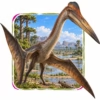
10 Fun Azhdarcho Facts for Kids
1. Azhdarcho Was Not a Dinosaur
Azhdarcho was a pterosaur, a flying reptile from a different branch of the reptile family tree than dinosaurs.
Kid Decode: It flew over dinosaur country without holding a dinosaur membership card.
2. It Had an Extremely Long Neck
The middle neck vertebrae of Azhdarcho were greatly elongated, producing the spear-like neck described in its species name.
Kid Decode: Its neck bones looked stretched by the fossil equivalent of a taffy machine.
3. Its Neck Was Probably Stiff
The long neck vertebrae fitted together in a way that likely limited sideways bending, although the neck could still move as a working structure.
Kid Decode: Long did not mean floppy. This neck was built more like a controlled crane.
4. It Lived in Uzbekistan
Azhdarcho fossils come from the Bissekty Formation in the Kyzyl Kum region of Uzbekistan.
Kid Decode: Its fossil home is desert today, but the Cretaceous landscape held rivers, wetlands, and many animals.
5. It Is Known From Many Fragments
More than 200 bone fragments have been studied, including parts of the skull, jaws, neck, back, shoulder girdle, wings, and legs.
Kid Decode: The skeleton arrived as a very large box of ancient puzzle pieces.
6. It Gave Its Name to a Pterosaur Family
Azhdarcho is the type genus of Azhdarchidae, the long-necked pterosaur family that also includes giants such as Quetzalcoatlus.
Kid Decode: This medium-sized flyer lent its name to some of the biggest fliers ever.
7. Its Name Refers to a Dragon
The name Azhdarcho comes from a Central Asian word for a dragon-like creature, while lancicollis means lance neck.
Kid Decode: Dragon name plus spear neck is a spectacular scientific-name recipe.
8. It Probably Walked on Four Limbs
Like other pterodactyloid pterosaurs, Azhdarcho likely moved on the ground using both its feet and folded wing hands.
Kid Decode: On land it used four-point pterosaur mode instead of bird-style two-leg mode.
9. It May Have Stalked Small Prey
Scientists often reconstruct azhdarchids as ground stalkers that used long beaks to grab small animals, though Azhdarcho’s exact diet remains uncertain.
Kid Decode: Imagine a flying reptile using stork tactics in a dinosaur-filled landscape.
10. Baby Azhdarchos Were Hatchlings
Pterosaurs laid eggs, so a newly emerged baby Azhdarcho can be called a hatchling.
Kid Decode: Even a dragon-named flier began inside an egg.
The Weirdest Azhdarcho Fact
Azhdarcho was not one of the very biggest pterosaurs, yet it became the namesake of the entire azhdarchid family, including several gigantic species.
Try This Azhdarcho Activity
Azhdarcho Drawing Activity
Draw Azhdarcho stalking across a Late Cretaceous floodplain in Uzbekistan. Add a very long neck, long toothless beak, folded wings, four-limbed walking pose, small prey animal, river channel, reeds, distant dinosaurs, Kyzyl Kum fossil map, and a dragon-name label.
Quick Azhdarcho Quiz
- Was Azhdarcho a dinosaur? Answer: No, it was a pterosaur.
- Where were its best-known fossils found? Answer: Uzbekistan.
- What body feature was especially long? Answer: Its neck.
- What does its name refer to? Answer: A dragon-like creature.
- How did pterosaurs reproduce? Answer: They laid eggs.
Mini Glossary
- Pterosaur: A flying reptile that lived during the age of dinosaurs.
- Azhdarchid: A member of a long-necked pterosaur family.
- Vertebra: One of the bones forming the backbone or neck.
- Toothless Beak: Jaws covered by a beak without teeth.
- Type Genus: The genus that gives a biological family its name.
 Peregrine Falcon Facts for Kids
 Sperm Whale Facts for Kids
 Gecko Facts for Kids
 Zuniceratops Facts for Kids
More Animal Facts for Kids
Visit the full animal facts library or explore a focused animal group.
More Extinct Animal Facts for Kids
Discover dinosaurs, Ice Age giants, prehistoric sea creatures, recently extinct species, and other animals from the past.
Fact check note: Fact checked with Averianov’s 2010 osteology of Azhdarcho lancicollis, the 2013 neck reconstruction study, Bissekty Formation research, and peer-reviewed work on azhdarchid anatomy and feeding.

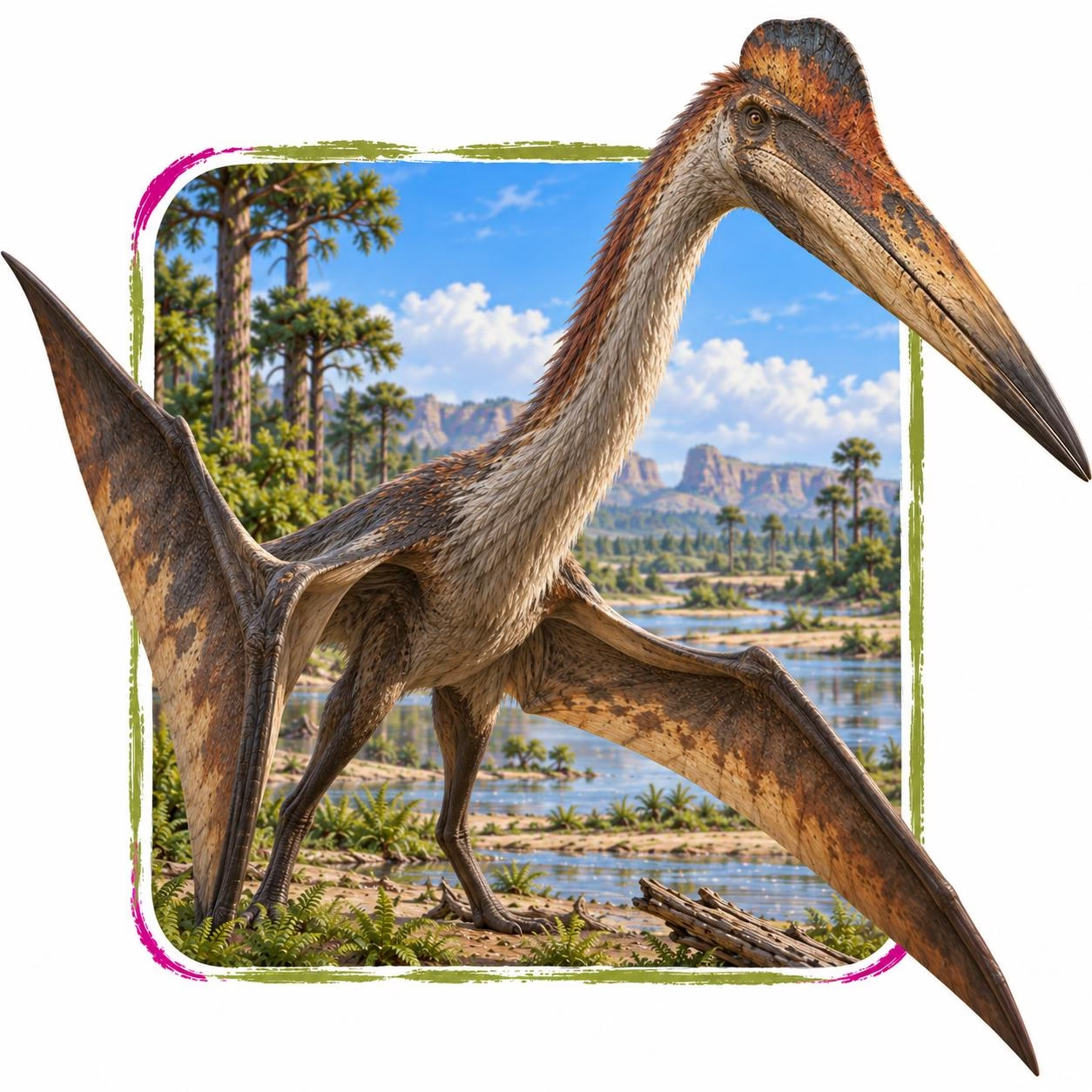
Azhdarcho in its natural Late Cretaceous floodplains, river margins, wetlands, woodland edges, sandy channels, and diverse lowland habitats of the Bissekty Formation habitat