
Bachman’s Warbler Facts for Kids
Bachman’s Warbler was a small migratory songbird from North America and Cuba. It was not a dinosaur, and it was not a common backyard warbler. It bred in wet forests and cane thickets of the southeastern United States, wintered in Cuba, and was officially delisted by the U.S. Fish and Wildlife Service due to extinction in 2023.
Quick Bachman’s Warbler Facts
- Animal Type: Recently extinct bird
- Group: Wood warbler and songbird
- Known For: Yellow male feathers, swampy breeding habitat, cane thickets, migration to Cuba, chicks, rare sightings, and official extinction delisting in 2023
- Lived During: Holocene, last accepted records in the late 1900s
- Diet: Insects, spiders, caterpillars, and other small invertebrates
What You’ll Learn
Explore 10 fascinating bachman’s warbler facts for kids about yellow feathers, migration, swamp forests, insect hunting, and its disappearance, plus a quiz, glossary, and activity
Easy explanations make them fun for children, families, teachers, and young nature lovers.
10 Fun Bachman’s Warbler Facts for Kids
1. Bachman’s Warblers Were Birds
Bachman’s Warblers were tiny songbirds in the wood warbler group.
Kid Decode: Small bird, giant mystery, very quiet ending.
2. They Were Not Dinosaurs
Bachman’s Warblers lived in modern times, long after non-bird dinosaurs vanished.
Kid Decode: No dinosaur feathers here, just a lost swamp song.
3. Males Had Yellow Markings
Male Bachman’s Warblers had yellow faces and underparts with darker head and throat markings.
Kid Decode: This little bird carried sunshine on its front.
4. They Lived in Wet Forests
Bachman’s Warblers bred in swampy bottomland forests, cane thickets, and wet shrubby habitats in the southeastern United States.
Kid Decode: Their nursery needed water, trees, cane, and cover.
5. They Migrated to Cuba
Bachman’s Warblers were migratory, spending breeding seasons in the United States and winters in Cuba.
Kid Decode: Tiny wings, international travel plan.
6. They Ate Insects
Bachman’s Warblers fed on insects, spiders, caterpillars, and other small invertebrates.
Kid Decode: Its menu was crunchy, tiny, and usually hiding on leaves.
7. Baby Bachman’s Warblers Were Chicks
Baby Bachman’s Warblers can be called chicks, like baby songbirds today.
Kid Decode: A chick would have begun life in a hidden swampy nest.
8. Habitat Loss Was a Major Problem
Clearing wet forests, draining wetlands, losing canebrakes, and losing winter habitat in Cuba all helped drive the species down.
Kid Decode: When both summer home and winter home disappear, migration becomes a trap.
9. Sightings Became Very Rare
After the mid-1900s, reports became rare and hard to confirm, and no recent reports have proved the bird survives.
Kid Decode: The song faded into maybe, then into official silence.
10. It Was Declared Extinct by U.S. Officials
The U.S. Fish and Wildlife Service removed Bachman’s Warbler from the endangered species list due to extinction in 2023.
Kid Decode: This tiny warbler became one of the newest official U.S. extinction lessons.
The Weirdest Bachman’s Warbler Fact
Bachman’s Warbler may have depended on very specific swampy habitats, so losing those places helped erase a bird that many people had never even heard of.
Try This Bachman’s Warbler Activity
Bachman’s Warbler Drawing Activity
Draw Bachman’s Warbler in a southeastern swamp forest. Add yellow face and chest, dark throat markings, cane thicket, wet trees, hidden nest, chick, insects, Cuba migration arrow, and a “lost swamp songbird” label.
Quick Bachman’s Warbler Quiz
- Was Bachman’s Warbler a dinosaur? Answer: No, it was a bird.
- What kind of bird was it? Answer: A wood warbler and songbird.
- Where did it breed? Answer: Wet forests and cane thickets in the southeastern United States.
- Where did it winter? Answer: Cuba.
- When did U.S. officials delist it due to extinction? Answer: 2023.
Mini Glossary
- Warbler: A small songbird, often active and insect-eating.
- Canebrake: A dense area of cane plants, often in wet lowlands.
- Migration: Seasonal movement between breeding and wintering areas.
- Insectivore: An animal that eats insects.
- Habitat Loss: When an animal’s home is damaged or destroyed.
 Condor Facts for Kids
 Leopard Gecko Facts for Kids
 Tiger Shark Facts for Kids
 Barosaurus Facts for Kids
More Animal Facts for Kids
Visit the full animal facts library or explore a focused animal group.
More Extinct Animal Facts for Kids
Discover dinosaurs, Ice Age giants, prehistoric sea creatures, recently extinct species, and other animals from the past.
Fact check note: Fact checked with U.S. Fish and Wildlife Service Bachman’s Warbler records, Federal Register extinction delisting rule, BirdLife factsheet, and trusted songbird conservation sources.

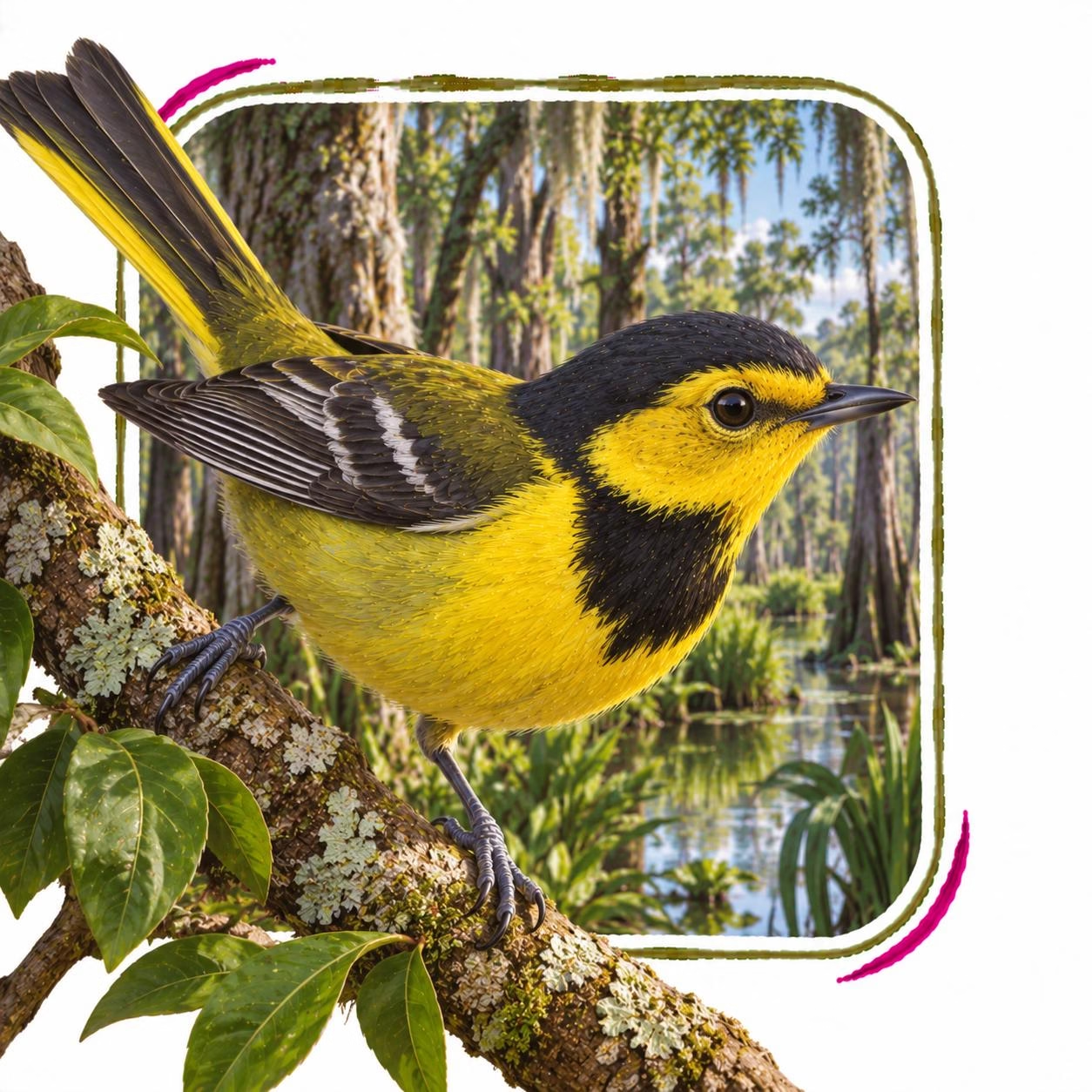
Bachman’s Warbler in its natural Southeastern U.S. swamp forests, bottomland hardwoods, canebrakes, wet shrublands, river floodplains, and Cuban winter forests habitat