
Barinasuchus Facts for Kids
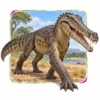
Barinasuchus was a giant sebecid crocodyliform that hunted on land in Cenozoic South America. It was a distant crocodile relative, not a dinosaur or a modern crocodile that simply left the water. Its known fossils are mostly a damaged snout and lower jaw, but the tall narrow skull and blade-like serrated teeth identify it as a formidable terrestrial predator.
Quick Barinasuchus Facts
- Animal Type: Extinct terrestrial crocodyliform
- Group: Sebecid notosuchian
- Known For: Huge deep skull, serrated blade-like teeth, land-based predatory lifestyle, and highly uncertain body size
- Lived During: Eocene to Miocene, roughly 42–12 million years ago based on referred fossils
- Diet: Meat from terrestrial vertebrates and carrion
What You’ll Learn
Learn 10 fearsome barinasuchus facts for kids about its large skull, sharp teeth, powerful legs, land hunting, and prehistoric South America, plus a quiz, glossary, and activity
Simple explanations make them great for children, families, teachers, and young reptile fans.
10 Fun Barinasuchus Facts for Kids
1. Barinasuchus Was a Crocodyliform
Barinasuchus belonged to the broad reptile lineage containing crocodiles and their many extinct relatives.
Kid Decode: It was crocodile kin wearing the body plan of a land predator.
2. It Belonged to the Sebecids
Sebecids were terrestrial notosuchians that survived in South America long after the non-bird dinosaurs disappeared.
Kid Decode: This branch kept large reptile hunters walking on land deep into the Age of Mammals.
3. It Was Not a Modern Crocodile on Holiday
Its tall skull, slicing teeth, and relatives’ skeletons show a lineage adapted to land rather than a river crocodile taking an occasional walk.
Kid Decode: The design began on dry ground instead of merely visiting it.
4. Its Preserved Jaw Is About Seventy Centimetres Long
The damaged Venezuelan specimen measures roughly 70 centimetres from the snout tip to the preserved rear portion of the lower jaw.
Kid Decode: Even the broken fossil is longer than many school desks are deep.
5. Its Complete Skull May Have Approached One Metre
Researchers reconstructed the missing rear of the skull and suggested a total skull length near one metre, though this remains approximate.
Kid Decode: A metre-long head makes an impressive claim even before the unknown body arrives.
6. Its Snout Was Tall and Narrow
The rostrum was deep from top to bottom and compressed from side to side, a shape called oreinirostral.
Kid Decode: Its face resembled a meat-cutting blade more than a flat river paddle.
7. Its Teeth Were Built for Slicing
Many teeth were laterally flattened and serrated, producing the ziphodont cutting edges common among land-hunting crocodyliforms.
Kid Decode: Each tooth carried a steak-knife edge forged by evolution.
8. Its Front and Rear Teeth Differed
Teeth near the front were longer and more conical, while those farther back were shorter and more strongly compressed.
Kid Decode: The mouth switched tools as the tooth row travelled backward.
9. Its Size Estimates Vary Wildly
Published length reconstructions range from roughly 3 to 4 metres to more than 6 metres, while a 2025 evolutionary analysis estimated a mass near 500 kilograms; all depend heavily on comparisons with other species.
Kid Decode: One incomplete skull has launched an entire fleet of competing measuring tapes.
10. Its Fossils Span Northern South America
Material assigned to Barinasuchus has been reported from Venezuela, Peru, and Argentina, although not every referral is equally complete.
Kid Decode: This land crocodile left scattered clues across a continent rather than one tidy skeleton.
The Weirdest Barinasuchus Fact
Barinasuchus may have been among the largest terrestrial crocodyliforms of the Cenozoic, yet almost every full-body reconstruction grows from incomplete skull and jaw material rather than a complete skeleton.
Try This Barinasuchus Activity
Barinasuchus Drawing Activity
Draw Barinasuchus stalking across a Miocene South American floodplain. Add a deep narrow snout, blade-like serrated teeth, muscular land-walking limbs based cautiously on other sebecids, a long balancing tail, hoofed mammal prey, and a fossil panel showing the known partial jaw beside several competing body-size estimates.
Quick Barinasuchus Quiz
- Was Barinasuchus a dinosaur? Answer: No, it was a terrestrial crocodyliform.
- Which extinct group did it belong to? Answer: The sebecids.
- What shape was its snout? Answer: Tall and compressed from side to side.
- What did its serrated teeth help it do? Answer: Slice flesh.
- Why is its total body size uncertain? Answer: No complete skeleton or skull is known.
Mini Glossary
- Crocodyliform: A member of the broader reptile group containing crocodilians and many extinct relatives.
- Sebecid: A member of a group of land-dwelling predatory crocodyliforms from the Cenozoic.
- Notosuchian: A diverse mainly southern crocodyliform group, many members of which lived on land.
- Oreinirostral: Having a tall, deep snout rather than a broad flat one.
- Ziphodont: Having laterally flattened, serrated, blade-like teeth.
 Chimpanzee Facts for Kids
 European Wildcat Facts for Kids
 Moon Jelly Facts for Kids
 Hyaenodon Facts for Kids
More Animal Facts for Kids
Visit the full animal facts library or explore a focused animal group.
More Extinct Animal Facts for Kids
Discover dinosaurs, Ice Age giants, prehistoric sea creatures, recently extinct species, and other animals from the past.
Fact check note: Fact checked with Paolillo and Linares’s 2007 description of Barinasuchus arveloi, Molnar and de Vasconcellos’s 2016 size reconstruction, Martin and colleagues’ 2022 study of giant sebecid anatomy, Bravo and colleagues’ 2025 notosuchian body-mass analysis, and Gayford and colleagues’ 2024 warning about proxy-based fossil size estimates.

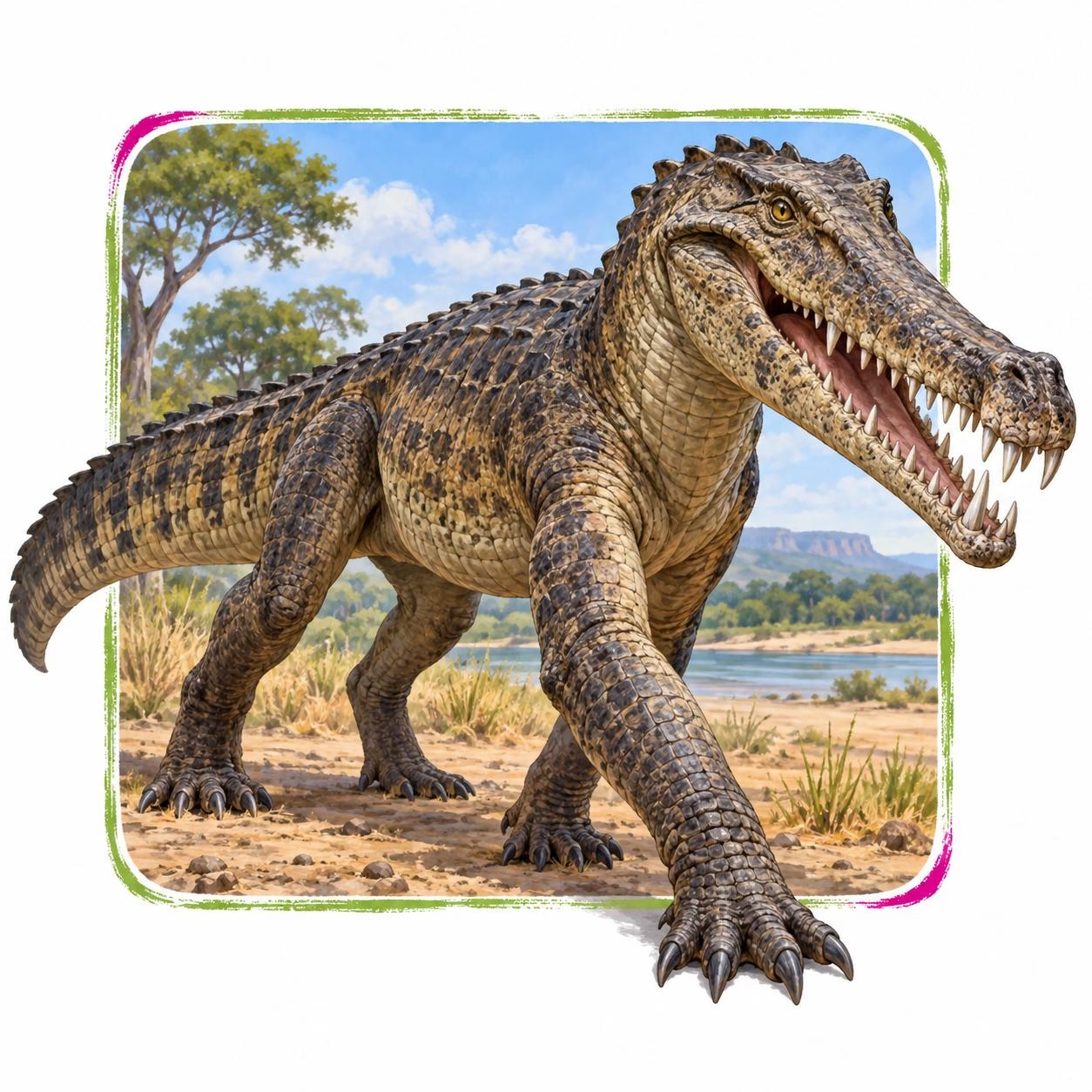
Barinasuchus in its natural Eocene and Miocene floodplains, open woodlands, river valleys, dry lowlands, and terrestrial habitats across northern and western South America habitat