
Baryonyx Facts for Kids
Baryonyx was a large spinosaurid theropod that lived in Early Cretaceous Europe. Its name means heavy claw, referring to the enormous claw on each hand. A long narrow snout, conical teeth, fish scales preserved near the stomach, and bones from a young iguanodont show that Baryonyx ate fish but was not limited to one kind of prey.
Quick Baryonyx Facts
- Animal Type: Theropod dinosaur
- Group: Spinosaurid
- Known For: Giant thumb claw, long narrow snout, conical teeth, and direct fossil evidence of fish eating
- Lived During: Early Cretaceous, about 130–125 million years ago
- Diet: Fish, dinosaurs, and other available animal food
What You’ll Learn
Learn 10 incredible baryonyx facts for kids about a crocodile-like snout, giant claws, fish-eating, sharp teeth, and Cretaceous life, plus a quiz, glossary, and activity
Simple explanations make them great for children, families, teachers, and young dinosaur fans.
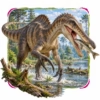
10 Fun Baryonyx Facts for Kids
1. Its Name Means Heavy Claw
The name Baryonyx combines Greek words for heavy and claw. The first large claw discovered measured about 31 centimetres along its curve and belonged to the thumb.
Kid Decode: The dinosaur was named after one hand weapon before the rest of the skeleton left the ground.
2. A Fossil Hunter Found It in England
William Walker discovered the first Baryonyx bones in a clay pit in Surrey, England, in 1983. The species Baryonyx walkeri was later named in his honour.
Kid Decode: One unusual claw in a British clay pit opened the door to an entirely new dinosaur.
3. It Was a Spinosaurid
Baryonyx belonged to Spinosauridae, the theropod family containing Suchomimus, Irritator, and Spinosaurus. It was an earlier and more completely known member than several famous relatives.
Kid Decode: The heavy claw joined the same strange dinosaur family as the giant sail-backed Spinosaurus.
4. Its Snout Resembled a Crocodile’s
The skull was long and narrow, with a widened rosette near the tip and a notch behind it. These features converged on shapes seen in fish-catching crocodilians, although Baryonyx was a dinosaur.
Kid Decode: The face borrowed a fishing shape without turning the dinosaur into a crocodile.
5. Its Teeth Gripped Slippery Prey
Baryonyx had many conical teeth with very fine serrations. They were less blade-like than the teeth of large meat-slicing theropods and suited gripping fish and other prey.
Kid Decode: The mouth carried a crowded row of pointed fish-holding pegs.
6. Fish Scales Were Found Near Its Stomach
Acid-etched scales and teeth from the fish Scheenstia were preserved in the body cavity of the holotype. This provided the first direct evidence that a non-bird theropod dinosaur ate fish.
Kid Decode: The final meal left tiny fossil receipts inside the dinosaur.
7. It Also Ate a Young Dinosaur
Abraded bones from a juvenile iguanodont were found in the same abdominal region. Baryonyx may have hunted it or scavenged its carcass, and the fossils cannot reveal which.
Kid Decode: The menu contained fish and dinosaur, but the chef’s exact hunting method remains missing.
8. Its Arms Were Powerful
Robust shoulder and arm bones supported strong forelimbs with three-fingered hands. The giant thumb claws may have helped hold, tear, or manipulate prey, but dramatic fish-hooking behaviour is not directly preserved.
Kid Decode: The arms were real power tools, even if nobody filmed how they were used.
9. It Walked on Two Legs
Baryonyx was a bipedal theropod with strong hind limbs and a long tail for balance. An old suggestion that it regularly walked on four limbs is not supported by its hand anatomy.
Kid Decode: The hands carried giant claws, but the feet handled ordinary dinosaur walking duty.
10. It Lived Around Rivers and Wetlands
The Wealden landscape included rivers, floodplains, lakes, lagoons, and seasonal wetlands. Baryonyx probably hunted near water and may have waded or swum, but how aquatic it was remains debated.
Kid Decode: It owned excellent riverbank equipment without becoming a dinosaur submarine.
The Weirdest Baryonyx Fact
Baryonyx preserved both fish remains and juvenile iguanodont bones in its abdominal region, giving scientists a rare fossil snapshot of a dinosaur diet containing aquatic and land animals.
Try This Baryonyx Activity
Baryonyx Riverbank Drawing Activity
Draw Baryonyx walking beside an Early Cretaceous river. Add a long narrow snout with a widened tip, many conical teeth, strong three-fingered arms, one huge thumb claw on each hand, powerful hind legs, a balancing tail, fish in shallow water, and a small fossil-stomach inset showing fish scales and iguanodont bones.
Quick Baryonyx Quiz
- What does Baryonyx mean? Answer: Heavy claw.
- Where was the first skeleton discovered? Answer: Surrey, England.
- Which dinosaur family contained Baryonyx? Answer: Spinosauridae.
- What direct evidence showed that it ate fish? Answer: Fish scales and teeth preserved near its stomach.
- Did it eat only fish? Answer: No, juvenile iguanodont bones were also found.
Mini Glossary
- Theropod: A mostly meat-eating dinosaur from the group that also produced birds.
- Spinosaurid: A long-snouted theropod related to Spinosaurus.
- Holotype: The single specimen used to define and name a species.
- Piscivory: Feeding on fish.
- Convergent Evolution: The independent evolution of similar features in different lineages.
 Waterbuck Facts for Kids
 Cow Facts for Kids
 Ibex Facts for Kids
 Schomburgk's Deer Facts for Kids
More Animal Facts for Kids
Visit the full animal facts library or explore a focused animal group.
More Extinct Animal Facts for Kids
Discover dinosaurs, Ice Age giants, prehistoric sea creatures, recently extinct species, and other animals from the past.
Fact check note: Fact checked with Charig and Milner’s 1986 naming paper and 1997 monograph on Baryonyx walkeri, the Natural History Museum’s holotype resources, Buffetaut and colleagues’ spinosaurid feeding evidence, Barker and colleagues’ 2023 spinosaurid palaeoneurology study, and recent debate on spinosaurid aquatic ecology.

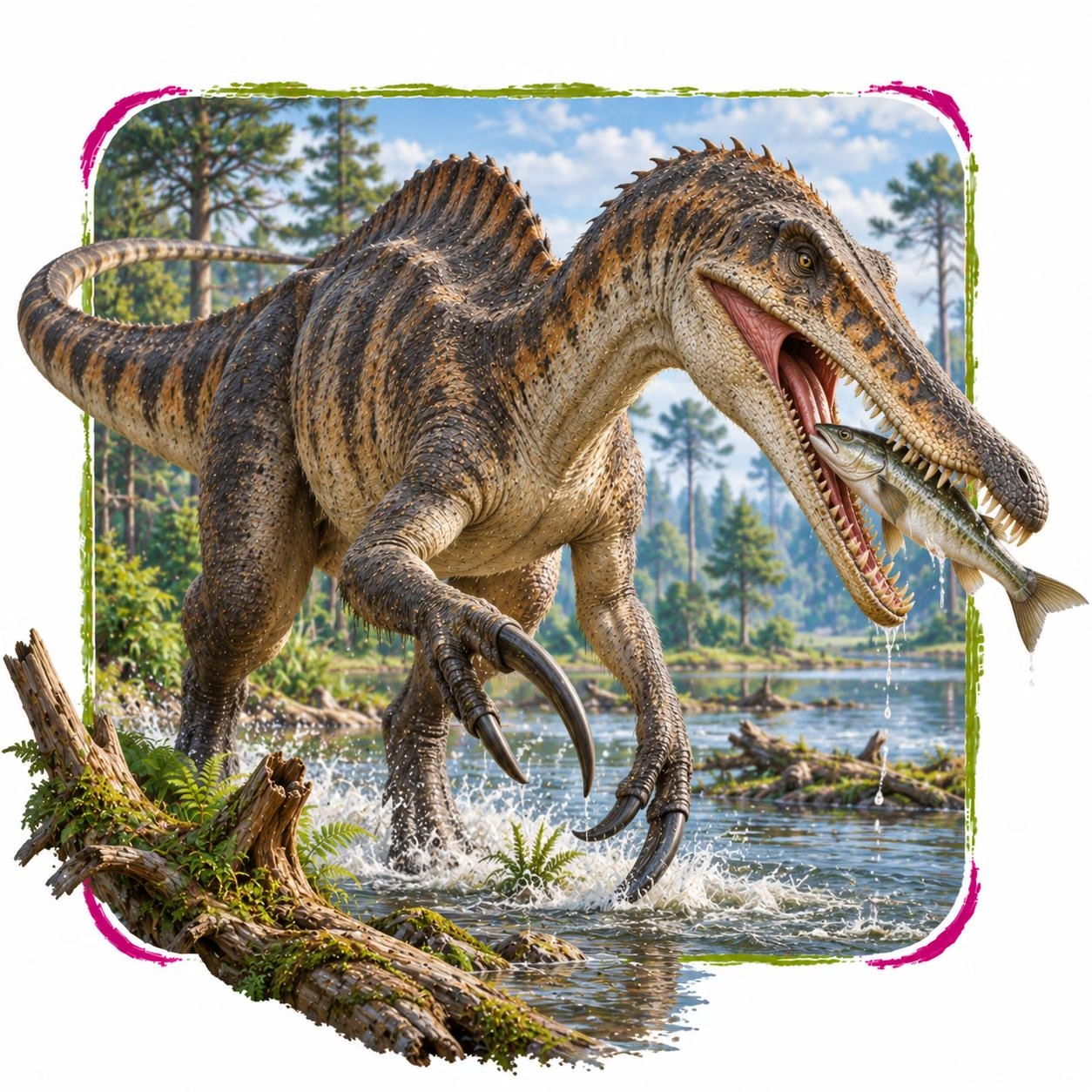
Baryonyx in its natural Early Cretaceous rivers, floodplains, lakes, lagoons, wetlands, mudflats, and forested lowlands of western Europe habitat