
Basilosaurus Facts for Kids
Basilosaurus was a long-bodied ancient whale from the Late Eocene. It was not a dinosaur or a lizard, even though its name means king lizard because early scientists first misunderstood its fossils. Basilosaurus lived in warm seas, had sharp teeth, tiny external hind limbs, and was a top ocean predator before modern whales evolved.
Quick Basilosaurus Facts
- Animal Type: Prehistoric whale
- Group: Basilosaurid archaeocete whale
- Known For: King lizard name, long eel-like body, sharp teeth, tiny hind limbs, pups, Eocene seas, Dorudon prey evidence, and early whale evolution
- Lived During: Late Eocene, about 41 to 34 million years ago
- Diet: Fish, sharks, smaller whales, and other marine animals
What You’ll Learn
Explore 10 amazing basilosaurus facts for kids about its long body, sharp teeth, ocean swimming, hunting, and early whale evolution, with a quiz, glossary, and activity
These easy facts are made for kids, parents, teachers, and curious young learners.
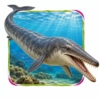
10 Fun Basilosaurus Facts for Kids
1. Basilosaurus Was a Whale
Basilosaurus was an ancient whale, not a dinosaur, reptile, or sea serpent.
Kid Decode: Name says lizard, bones say whale. Fossils love a naming prank.
2. Its Name Means King Lizard
Basilosaurus got its name when early scientists thought its fossils belonged to a giant marine reptile.
Kid Decode: The name stuck, even after the animal switched teams to whale.
3. It Had a Long Body
Basilosaurus had a very long, slender body, often described as eel-like compared with modern whales.
Kid Decode: Less chunky whale, more ocean ribbon with teeth.
4. It Had Sharp Teeth
Basilosaurus had different kinds of teeth for grabbing and cutting prey, unlike modern baleen whales.
Kid Decode: This whale brought a proper predator toolkit in its jaws.
5. It Had Tiny Hind Legs
Fossils show Basilosaurus had small external hind limbs with knees and toes, but they were too small for walking.
Kid Decode: Tiny legs on a whale are evolution’s little footnote, literally.
6. It Was Fully Aquatic
Unlike earlier walking whales, Basilosaurus lived fully in the sea and could not walk on land.
Kid Decode: The land chapter was over. This whale belonged to the water.
7. It Was a Top Predator
Basilosaurus hunted large fish, sharks, and smaller whales, including Dorudon according to bite-mark evidence.
Kid Decode: The Eocene sea had a long-bodied boss predator.
8. It Lived in Warm Eocene Seas
Fossils are known from the southeastern United States, North Africa, Jordan, and other ancient sea deposits.
Kid Decode: Its bones show up where warm shallow seas once spread across the map.
9. Baby Basilosaurus Were Pups
Baby Basilosaurus can be called pups because living whales and dolphins use that baby name.
Kid Decode: A pup with tiny hind legs and a long whale future is peak evolution storytelling.
10. It Helped Prove Whale Evolution
Basilosaurus fossils helped scientists understand that whales evolved from land mammals and still carried tiny hind-limb remnants.
Kid Decode: This whale is a museum sign saying, look, bodies keep history.
The Weirdest Basilosaurus Fact
Basilosaurus was named king lizard, but it was actually a whale with tiny hind legs hidden in plain sight.
Try This Basilosaurus Activity
Basilosaurus Drawing Activity
Draw Basilosaurus swimming through a warm Eocene sea. Add a long body, sharp teeth, tiny hind legs, pup clue, fish, shark, Dorudon silhouette, ancient shoreline, fossil vertebra tag, and a “king lizard whale” label.
Quick Basilosaurus Quiz
- Was Basilosaurus a dinosaur? Answer: No, it was an ancient whale.
- What does Basilosaurus mean? Answer: King lizard.
- Why is the name confusing? Answer: Early scientists mistook it for a reptile.
- Did Basilosaurus have tiny hind legs? Answer: Yes, but they were not used for walking.
- What did Basilosaurus eat? Answer: Fish, sharks, smaller whales, and other marine animals.
Mini Glossary
- Archaeocete: An ancient whale from the early history of cetaceans.
- Basilosaurid: A member of an extinct family of ancient whales that included Basilosaurus.
- Hind Limb: A back leg, even if tiny or no longer used for walking.
- Pup: A baby whale or dolphin.
- Eocene: A time period after the dinosaurs when early whales evolved and spread.
 Leatherback Turtle Facts for Kids
 Leopard Gecko Facts for Kids
 Cone Snail Facts for Kids
 Deinocheirus Facts for Kids
More Animal Facts for Kids
Visit the full animal facts library or explore a focused animal group.
More Extinct Animal Facts for Kids
Discover dinosaurs, Ice Age giants, prehistoric sea creatures, recently extinct species, and other animals from the past.
Fact check note: Fact checked with New York Tech Basilosaurus family-tree page, Science hind-limb paper summary, Basilosaurus fossil summaries, and trusted whale evolution education sources.

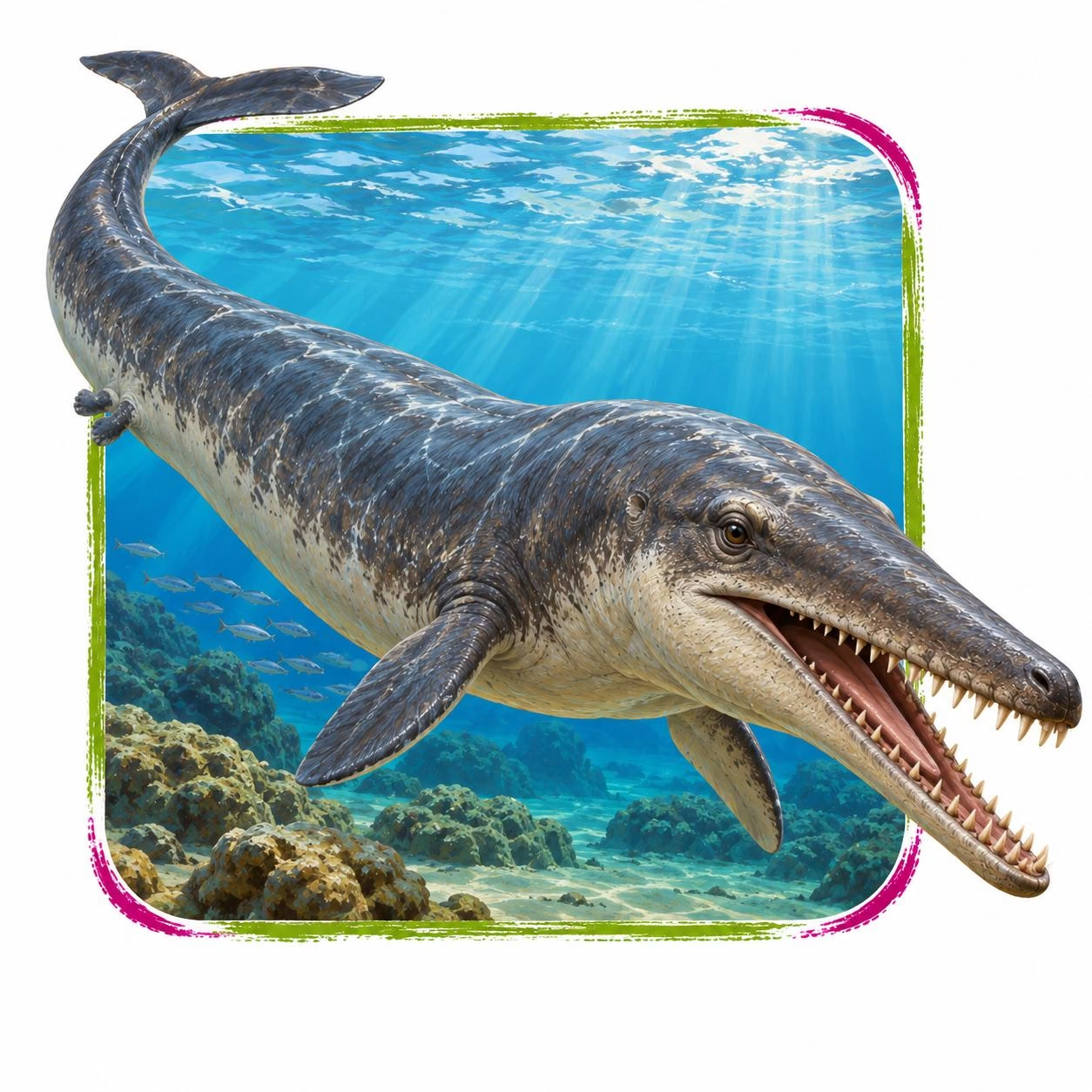
Basilosaurus in its natural Late Eocene warm shallow seas, southeastern North American marine deposits, North African Tethys Sea habitats, Egyptian Wadi Al-Hitan waters, Jordanian sea deposits, open coastal waters, and predator-rich marine ecosystems habitat