
Bathornis Facts for Kids
Bathornis was a genus of long-legged terrestrial birds that lived in North America from the Late Eocene into the Early Miocene. It belonged to Cariamiformes, the branch containing living seriemas and extinct terror birds, but Bathornis formed its own family, Bathornithidae. Short wings, powerful legs, a large skull, and a hooked beak indicate a flightless ground predator, although the genus includes several species of different sizes known from fossils of varying completeness.
Quick Bathornis Facts
- Animal Type: Extinct flightless predatory bird
- Group: Bathornithid cariamiform
- Known For: Long strong legs, reduced wings, hooked beak, North American range, and a long-lived genus
- Lived During: Late Eocene to Early Miocene, roughly 37–20 million years ago
- Diet: Meat from small and medium vertebrates, insects, and carrion
What You’ll Learn
Learn 10 fascinating bathornis facts for kids about long legs, strong beaks, ground hunting, flightless relatives, and prehistoric North America, plus a quiz, glossary, and activity
Simple explanations make them fun for children, families, teachers, and young bird fans.
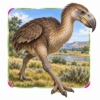
10 Fun Bathornis Facts for Kids
1. Bathornis Was a Cariamiform
Bathornis belonged to the bird order containing living seriemas and the extinct phorusrhacids commonly called terror birds.
Kid Decode: It was a North American cousin in the broader family gathering of long-legged ground hunters.
2. It Had Its Own Family
Modern studies generally place Bathornis in Bathornithidae, a distinct extinct family rather than inside the true terror-bird family.
Kid Decode: It carried the predator-bird look without needing a phorusrhacid membership card.
3. It Lived for Millions of Years
Species assigned to Bathornis span from the Late Eocene through the Oligocene and into the Early Miocene, a range of roughly 17 million years.
Kid Decode: This bird genus kept clocking in while entire mammal communities changed around it.
4. It Lived in North America
Fossils are best known from Wyoming, Colorado, Nebraska, South Dakota, and other parts of the western and central United States.
Kid Decode: Its tracks through time cross the fossil-rich heart of the North American plains.
5. It Was Flightless
Bathornis grallator had proportionally short wings and reduced flight-related structures, indicating that even this once-debated species could not fly.
Kid Decode: The wings had retired while the legs took over every journey.
6. Its Legs Were Long and Powerful
Elongated hindlimb bones and a reduced rear toe suited rapid, efficient movement across the ground.
Kid Decode: It carried its hunting equipment on two tall stilts powered by muscle.
7. It Had a Large Hooked Beak
The skull of Bathornis grallator shows a deep beak with a hooked tip and reinforced cheek region suited to gripping and tearing food.
Kid Decode: Its face brought a built-in meat hook to the Paleogene food web.
8. One Species Was Mistaken for a Vulture
Bathornis grallator was originally named Neocathartes and reconstructed as a terrestrial New World vulture before later study recognised it as a bathornithid.
Kid Decode: A fossil bird spent decades wearing the wrong vulture name tag.
9. Species Varied in Size
Some Bathornis species were comparable with large modern seriemas, while others approached emu-sized or larger proportions.
Kid Decode: The genus offered several sizes of the same long-legged predator idea.
10. It Shared the Land With Mammal Predators
Bathornis lived alongside hyaenodonts, nimravids, entelodonts, and other carnivorous mammals, showing that large predatory birds remained important in North American ecosystems.
Kid Decode: The Age of Mammals still left room on the hunting roster for a formidable bird.
The Weirdest Bathornis Fact
A partial skeleton once celebrated as a ground-dwelling vulture was later unmasked as Bathornis, a flightless relative of seriemas and terror birds.
Try This Bathornis Activity
Bathornis Drawing Activity
Draw Bathornis grallator striding through an Eocene North American floodplain. Add long powerful legs, a reduced rear toe, tiny flightless wings, a large head, a hooked beak, low woodland and wetland plants, and a museum label changing from “terrestrial vulture” to “bathornithid.”
Quick Bathornis Quiz
- Could Bathornis fly? Answer: Most or all species were flightless.
- Which living birds are among its closest broad relatives? Answer: Seriemas.
- Where did Bathornis live? Answer: North America.
- What was Bathornis grallator first mistaken for? Answer: A terrestrial New World vulture.
- What did its hooked beak suggest? Answer: A predatory, meat-eating diet.
Mini Glossary
- Cariamiform: A bird from the order containing seriemas, terror birds, bathornithids, and close relatives.
- Bathornithid: A member of the extinct North American bird family Bathornithidae.
- Flightless: Unable to fly.
- Raptorial: Adapted for catching or eating animal prey.
- Hypotarsus: A projection and groove system on a bird’s ankle region that guides leg tendons.
 Guanaco Facts for Kids
 Monarch Butterfly Facts for Kids
 Bee Facts for Kids
 Columbian Mammoth Facts for Kids
More Animal Facts for Kids
Visit the full animal facts library or explore a focused animal group.
More Extinct Animal Facts for Kids
Discover dinosaurs, Ice Age giants, prehistoric sea creatures, recently extinct species, and other animals from the past.
Fact check note: Fact checked with Cracraft’s 1968 and 1971 Bathornithidae revisions, Olson’s 1985 reassignment of Neocathartes, Mayr’s 2016 osteological study of Bathornis grallator, and recent Cariamiformes phylogenetic analyses.

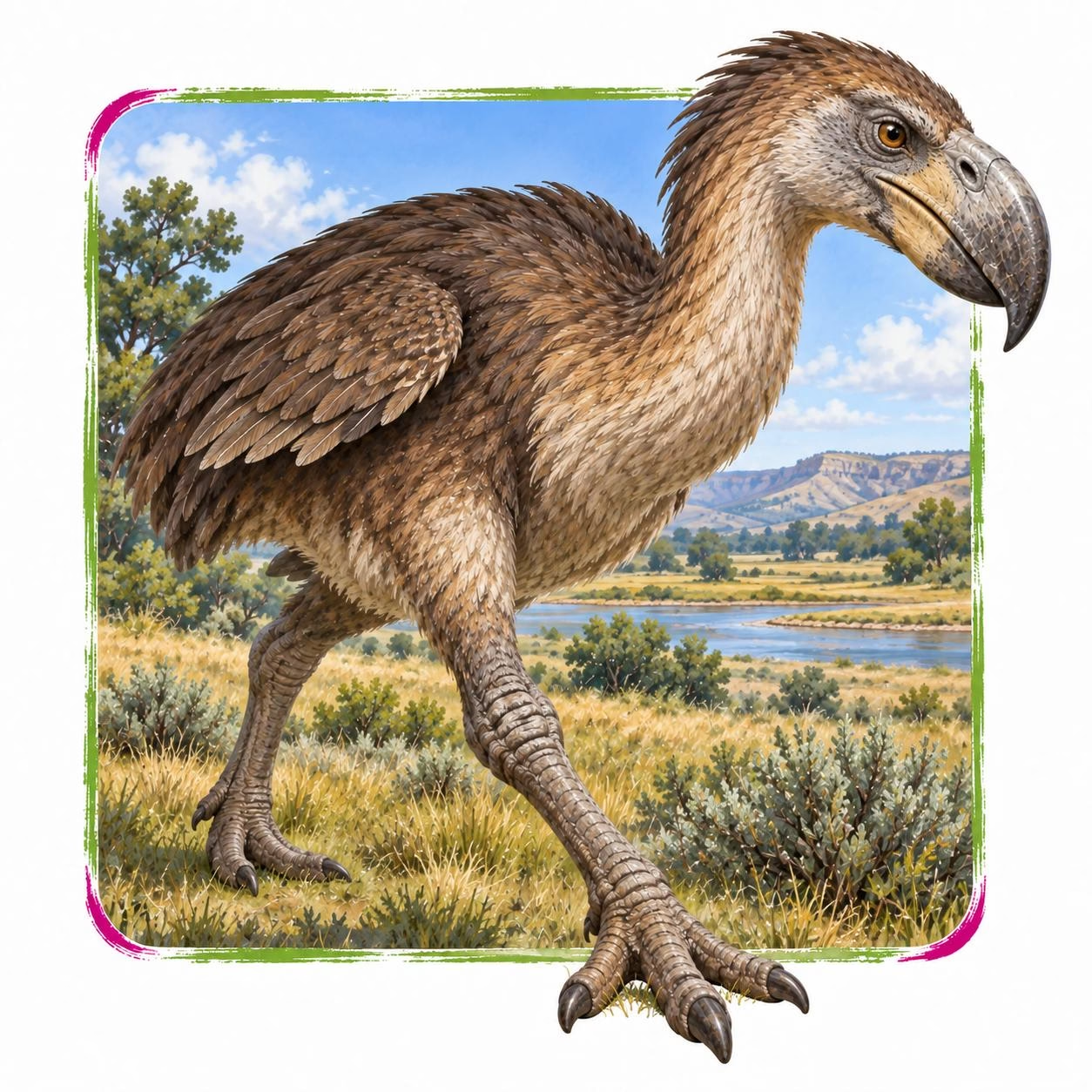
Bathornis in its natural Late Eocene to Early Miocene floodplains, wetlands, open woodlands, grasslands, river valleys, and plains of western and central North America habitat