
Broad-Faced Potoroo Facts for Kids
The Broad-Faced Potoroo was a small extinct marsupial from southwestern Australia. It was not a dinosaur or a rat, although potoroos are sometimes called rat-kangaroos. Scientists know it from a few specimens, subfossil bones, and old records, which makes this little potoroo a museum detective story with whiskers.
Quick Broad-Faced Potoroo Facts
- Animal Type: Recently extinct marsupial
- Group: Potoroo and potoroid marsupial
- Known For: Broad skull, short muzzle, small rounded ears, joeys, southwestern Australian range, few specimens, last live capture in 1875, and extinction by the early 1900s
- Lived During: Holocene, last live capture in 1875
- Diet: Poorly known, likely fungi, roots, seeds, tubers, insects, and other ground foods
What You’ll Learn
Explore 10 rare broad-faced potoroo facts for kids about hopping, forest habitats, feeding, small size, and extinction, with a quiz, glossary, and activity
These simple facts are written for kids, parents, teachers, and curious young animal lovers.
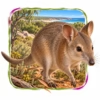
10 Fun Broad-Faced Potoroo Facts for Kids
1. Broad-Faced Potoroos Were Marsupials
Broad-Faced Potoroos were small marsupials, so mothers carried tiny young in a pouch.
Kid Decode: Pouch nursery plus tiny hopping body: classic Australian mammal magic.
2. They Were Potoroos
Potoroos are small kangaroo relatives, sometimes called rat-kangaroos because of their size and shape.
Kid Decode: Not a rat, not a kangaroo, but somehow a little of both in nickname energy.
3. They Had Broad Faces
The name comes from a relatively broad skull and shorter muzzle compared with some other potoroos.
Kid Decode: This potoroo had a face built for the species-name spotlight.
4. They Lived in Southwestern Australia
Historical specimens came from southwestern Australia, while subfossil remains show a wider old range across southern and western Australia.
Kid Decode: Its old map was bigger than the few museum specimens suggest.
5. They Were Small
Preserved specimens show it was a small potoroo, around rabbit-sized or smaller, with a tail shorter than the body.
Kid Decode: Pocket-sized by kangaroo standards, still fascinating by science standards.
6. The Habitat Is Mysterious
Scientists are not fully sure about its habitat, but it probably used semi-arid coastal districts, open country, and shrubland rather than dense wet forest.
Kid Decode: This animal left a habitat question mark in the sand.
7. Its Diet Is Poorly Known
Broad-Faced Potoroos likely ate ground foods such as fungi, roots, seeds, tubers, and perhaps insects, based on potoroo relatives.
Kid Decode: Dinner clues come from cousins, bones, and careful guessing.
8. Baby Potoroos Were Joeys
Baby Broad-Faced Potoroos can be called joeys, like baby kangaroos, wallabies, and potoroos today.
Kid Decode: A joey would have started life pouch-small and hidden.
9. Very Few Were Collected
Only a small number of live specimens were collected, with the last live capture recorded in 1875.
Kid Decode: Science blinked, and the potoroo was almost gone.
10. It Was Extinct by the Early 1900s
The Broad-Faced Potoroo likely disappeared after 1875 and before about 1905, possibly due to hunting, habitat change, introduced predators, and a shrinking range.
Kid Decode: By the time people looked carefully, the little potoroo had left the stage.
The Weirdest Broad-Faced Potoroo Fact
The Broad-Faced Potoroo is so poorly known that scientists still have to piece together its life from a handful of skins, skulls, and subfossil bones.
Try This Broad-Faced Potoroo Activity
Broad-Faced Potoroo Drawing Activity
Draw a Broad-Faced Potoroo in southwestern Australian shrubland. Add a broad face, short muzzle, small rounded ears, joey in pouch, sandy ground, fungi, roots, seeds, museum specimen tag, and a “lost potoroo mystery” label.
Quick Broad-Faced Potoroo Quiz
- Was the Broad-Faced Potoroo a rat? Answer: No, it was a marsupial.
- Where did it live? Answer: Southwestern Australia, with older remains across southern and western Australia.
- What made its head unusual? Answer: It had a broad skull and short muzzle.
- What are baby potoroos called? Answer: Joeys.
- When was the last live capture? Answer: 1875.
Mini Glossary
- Potoroo: A small kangaroo relative in the potoroid group.
- Marsupial: A mammal whose young often develop in a pouch.
- Subfossil: An old bone or remain that is not fully fossilized.
- Joey: A baby marsupial.
- Specimen: A preserved animal or plant used for scientific study.
 Great White Shark Facts for Kids
 Quoll Facts for Kids
 Javan Rhino Facts for Kids
 Entelodon Facts for Kids
More Animal Facts for Kids
Visit the full animal facts library or explore a focused animal group.
More Extinct Animal Facts for Kids
Discover dinosaurs, Ice Age giants, prehistoric sea creatures, recently extinct species, and other animals from the past.
Fact check note: Fact checked with IUCN Broad-Faced Potoroo summaries, Atlas of Living Australia status notes, Kiddle kid summary, and trusted potoroo extinction education sources.

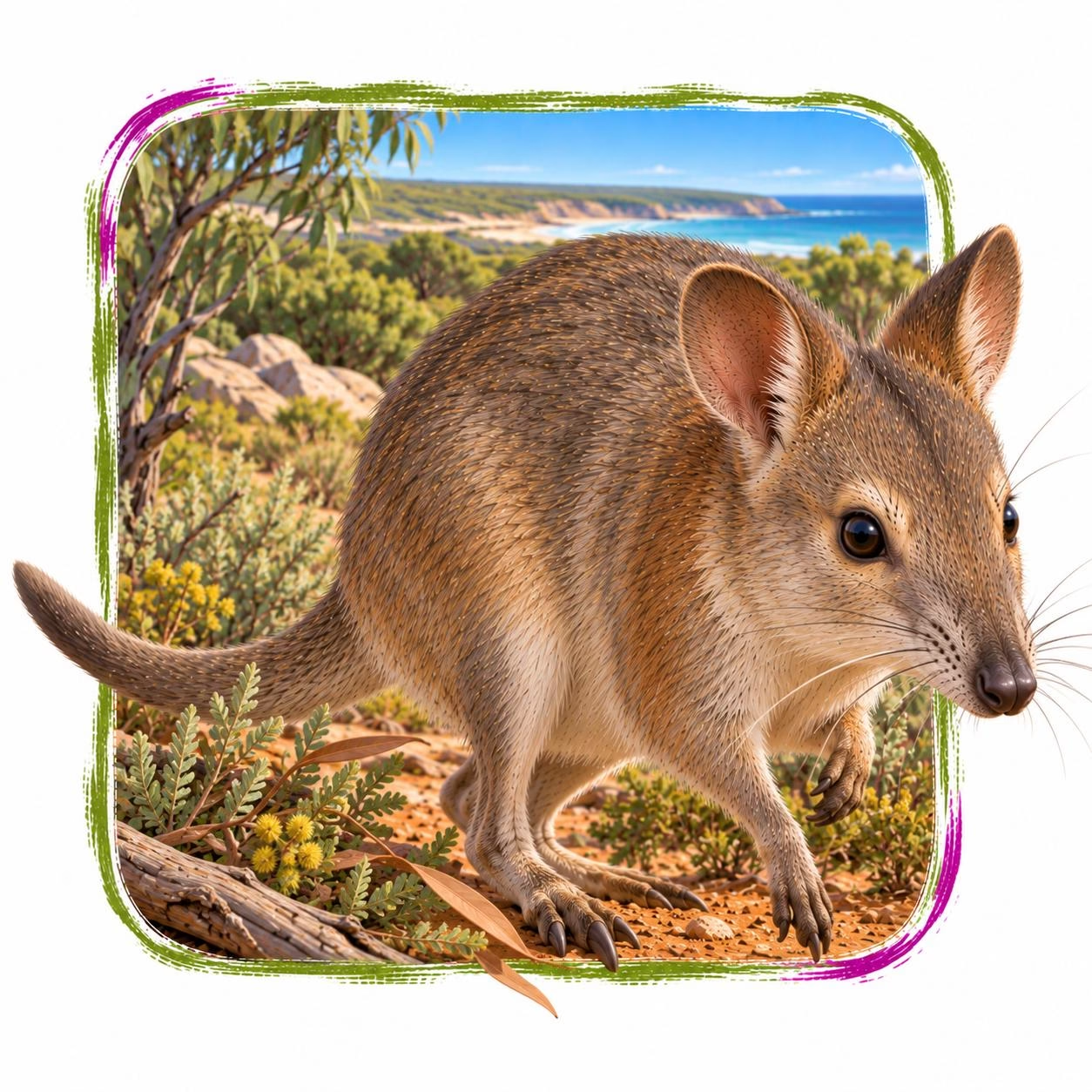
Broad-Faced Potoroo in its natural Southwestern Australian semi-arid coastal districts, shrublands, open sandy country, low scrub, dry plains, Kangaroo Island subfossil sites, and southern Australian habitats habitat