
Canadaspis Facts for Kids
Canadaspis was a small bivalved arthropod that lived near the Cambrian seafloor about 505 million years ago. Two shell-like valves covered much of its front body, while jointed limbs underneath helped it walk, swim, breathe, and move food toward its mouth. Modern research places it among early mandibulates, the broad arthropod branch that later includes crustaceans, insects, and myriapods.
Quick Canadaspis Facts
- Animal Type: Extinct marine arthropod
- Group: Hymenocarine and early mandibulate
- Known For: Bivalved carapace, small eyes, mandibles, eight limb-bearing trunk segments, biramous limbs, and coordinated moulting
- Lived During: Middle Cambrian, about 505 million years ago
- Diet: Coarse organic particles, carrion, and other small food near the seafloor
What You’ll Learn
Explore 10 fascinating canadaspis facts for kids about its two-part shell, many legs, swimming, feeding, and Cambrian seas, with a quiz, glossary, and activity
Easy explanations make them great for children, families, teachers, and young nature fans.
10 Fun Canadaspis Facts for Kids
1. Canadaspis Was an Early Arthropod
Canadaspis belonged to the hymenocarines, an extinct group now widely interpreted as early members of the mandibulate arthropod branch.
Kid Decode: It stood near the opening chapters of the enormous insect-and-crustacean family story.
2. Its Carapace Had Two Valves
A pair of shell-like valves joined along the back and covered roughly half of the animal’s total body length.
Kid Decode: Its front half travelled inside a hinged Cambrian jacket.
3. The Largest Carapaces Reached About Five Centimetres
Known carapace valves range from under 1 centimetre to about 5.2 centimetres long.
Kid Decode: The shell alone could stretch across much of a child’s palm.
4. It Had Small Eyes and Sensory Appendages
The rounded head carried a pair of small elongated eyes, short segmented antennulae, and another pair of unsegmented frontal appendages.
Kid Decode: Its head brought several tiny tools for checking the water ahead.
5. It Had True Mandibles
Rounded jaw appendages with toothed inner edges helped Canadaspis break up or manipulate food.
Kid Decode: Those little jaws placed it in the arthropod club named after mandibles.
6. Its Limbs Had Two Branches
Each of the eight thoracic segments carried a biramous limb with an inner walking branch and an outer flap-like branch.
Kid Decode: One limb package handled both leg work and paddle work.
7. The Outer Limb Branches Carried Gills
Broad exopods with thin lamellae probably moved water and helped the animal breathe.
Kid Decode: Its breathing gear fluttered along the outside of its many legs.
8. It Fed Near the Seafloor
Spines along the inner parts of its limbs may have swept coarse food particles toward the mouth as it walked over sediment.
Kid Decode: Rows of legs turned the muddy bottom into a moving snack conveyor.
9. Its Abdomen Had No Legs
Behind the eight limb-bearing trunk segments were seven spinose abdominal segments without walking limbs.
Kid Decode: The rear half dropped the leg collection and finished with a prickly tail end.
10. Groups May Have Moulted Together
Assemblages of empty carapaces suggest that multiple Canadaspis sometimes shed their outer coverings at the same place and time.
Kid Decode: A Cambrian crowd may have scheduled wardrobe changes together.
The Weirdest Canadaspis Fact
Fossil gatherings suggest that groups of Canadaspis may have moulted in coordination, revealing surprisingly complex behaviour in a tiny Cambrian arthropod.
Try This Canadaspis Activity
Canadaspis Drawing Activity
Draw Canadaspis walking just above the Burgess Shale seafloor. Add two rounded carapace valves, small eyes, short antennulae, toothed mandibles, eight pairs of biramous limbs, feathery outer gill branches, seven legless abdominal segments, food particles in the mud, and a pile of shed carapaces.
Quick Canadaspis Quiz
- Was Canadaspis a dinosaur? Answer: No, it was a marine arthropod.
- What covered much of its front body? Answer: A two-valved carapace.
- What jaw structures did it have? Answer: Mandibles.
- How many thoracic segments carried limbs? Answer: Eight.
- What unusual group behaviour may its fossils record? Answer: Coordinated moulting.
Mini Glossary
- Carapace: A hard protective covering over part of an animal’s body.
- Mandible: A jaw appendage used to bite, crush, or handle food.
- Biramous Limb: An appendage divided into two branches.
- Exopod: The outer branch of a two-branched arthropod limb.
- Moulting: Shedding an old outer covering so the body can grow.
 Coquerel's Sifaka Facts for Kids
 Chamois Facts for Kids
 Meerkat Facts for Kids
 Moeritherium Facts for Kids
More Animal Facts for Kids
Visit the full animal facts library or explore a focused animal group.
More Extinct Animal Facts for Kids
Discover dinosaurs, Ice Age giants, prehistoric sea creatures, recently extinct species, and other animals from the past.
Fact check note: Fact checked with Briggs’s 1978 anatomical monograph, Izquierdo-López and Caron’s mandibulate research, Haug and colleagues’ coordinated-moulting study, and Royal Ontario Museum Burgess Shale records.

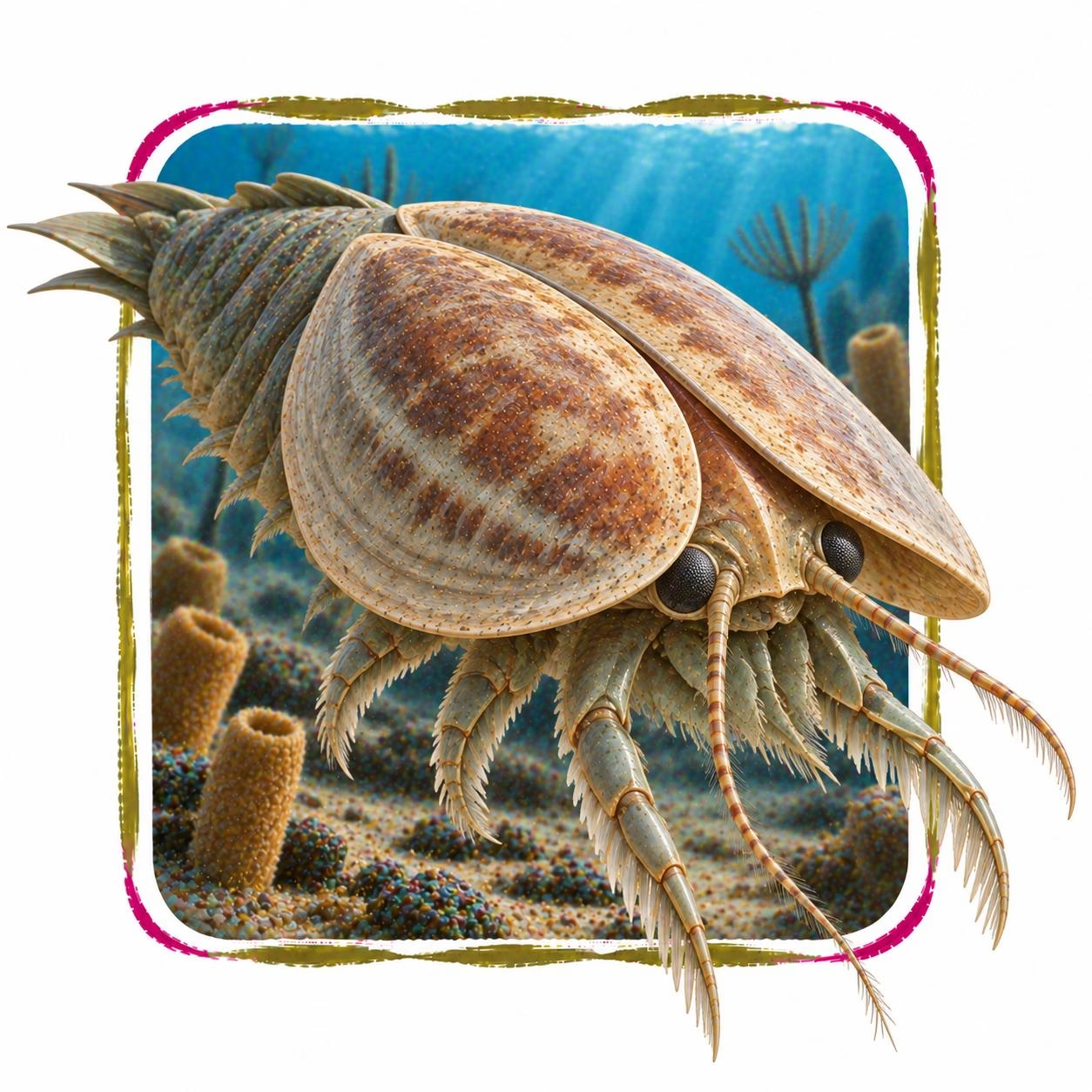
Canadaspis in its natural Middle Cambrian muddy seafloors, low swimming zones above sediment, quiet offshore shelf waters, sponge communities, and particle-rich bottom habitats habitat