
Caspian Tiger Facts for Kids
The Caspian Tiger was a tiger population that once lived across parts of Central Asia, the Caucasus, northern Iran, eastern Turkey, and nearby regions. It was not a dinosaur and not a sea animal, despite the Caspian name. This tiger used river forests, reed beds, and tugai habitats before disappearing in the 1900s.
Quick Caspian Tiger Facts
- Animal Type: Recently extinct mammal
- Group: Tiger and big cat
- Known For: Central Asian range, river corridors, reed beds, thick fur, cubs, wild boar and deer prey, cotton farming habitat loss, and extinction in the 1900s
- Lived During: Holocene, likely until the mid-to-late 1900s
- Diet: Wild boar, deer, gazelles, wild asses, livestock, and other prey
What You’ll Learn
Learn 10 fascinating caspian tiger facts for kids about its large body, striped coat, vast range, hunting, and extinction, plus a quiz, glossary, and activity
Everything is explained simply for kids, parents, teachers, and young animal explorers.
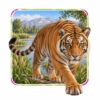
10 Fun Caspian Tiger Facts for Kids
1. Caspian Tigers Were Big Cats
Caspian Tigers were tigers in the big-cat group Panthera, not dinosaurs or mythical beasts.
Kid Decode: They were stripe-powered river ghosts of Central Asia.
2. They Did Not Live in the Sea
The Caspian Tiger was named after the Caspian region, but it lived on land in river forests, reed beds, and thickets.
Kid Decode: Caspian name, zero swimming-through-the-sea lifestyle.
3. They Used River Corridors
Caspian Tigers often lived along rivers and wetlands where prey and cover were available.
Kid Decode: In dry country, rivers became tiger highways.
4. They Liked Reed Beds and Tugai Forests
Important habitats included reed beds, tugai forests, thickets, and sparse woodland near water.
Kid Decode: Tugai forest sounds fancy, but to a tiger it meant shade, cover, and dinner possibilities.
5. They Had Thick Fur
Caspian Tigers lived in cooler northern and inland areas, so their fur was often described as thick compared with tropical tiger populations.
Kid Decode: Stripes plus winter coat: Central Asian tiger fashion.
6. They Ate Wild Boar and Deer
Caspian Tigers hunted wild boar, deer, gazelles, wild asses, and sometimes livestock.
Kid Decode: Their menu followed rivers, reeds, hooves, and tusks.
7. Baby Caspian Tigers Were Cubs
Baby Caspian Tigers can be called cubs, like baby tigers today.
Kid Decode: A cub began hidden in cover while its mother hunted.
8. Habitat Was Turned Into Farmland
River forests and reed beds were cleared or changed for crops such as cotton, shrinking the tiger’s habitat.
Kid Decode: Cotton fields replaced tiger cover, one river bend at a time.
9. People Killed Tigers and Their Prey
Hunting, predator control, and the decline of prey animals all helped drive the Caspian Tiger toward extinction.
Kid Decode: When prey vanished and hunters arrived, the stripes had nowhere to hide.
10. Amur Tigers Are Close Relatives
Genetic studies show Caspian Tigers were very closely related to Amur Tigers, which is why some projects discuss using Amur Tigers in Central Asian restoration efforts.
Kid Decode: The lost tiger’s closest living echo may wear Siberian stripes.
The Weirdest Caspian Tiger Fact
The Caspian Tiger did not roam a sea, but followed river forests and reed beds like a striped shadow through dry Central Asian landscapes.
Try This Caspian Tiger Activity
Caspian Tiger Drawing Activity
Draw a Caspian Tiger beside a Central Asian river. Add orange fur, black stripes, thick winter coat, cub, reed beds, tugai trees, wild boar tracks, deer, cotton field warning sign, and a “lost river tiger” label.
Quick Caspian Tiger Quiz
- Was the Caspian Tiger a dinosaur? Answer: No, it was a mammal and big cat.
- Did Caspian Tigers live in the sea? Answer: No, they lived on land near rivers, forests, and reed beds.
- What did Caspian Tigers eat? Answer: Wild boar, deer, gazelles, wild asses, and other prey.
- What are baby tigers called? Answer: Cubs.
- What living tiger is closely related to the Caspian Tiger? Answer: The Amur Tiger.
Mini Glossary
- Panthera: The big-cat group that includes tigers, lions, leopards, jaguars, and snow leopards.
- Tugai Forest: A river-side woodland or thicket found in dry Central Asian regions.
- Reed Bed: A wet habitat filled with tall reed plants.
- Cub: A baby tiger, lion, bear, or similar mammal.
- Habitat Restoration: Repairing or rebuilding habitats so wildlife can return.
 Cockatoo Facts for Kids
 Capuchin Monkey Facts for Kids
 Iguana Facts for Kids
 Fukuisaurus Facts for Kids
More Animal Facts for Kids
Visit the full animal facts library or explore a focused animal group.
More Extinct Animal Facts for Kids
Discover dinosaurs, Ice Age giants, prehistoric sea creatures, recently extinct species, and other animals from the past.
Fact check note: Fact checked with WWF Caspian Tiger restoration feasibility notes, Caspian Tiger range and habitat summaries, Amur-Caspian tiger genetic relationship research, and trusted tiger conservation sources.

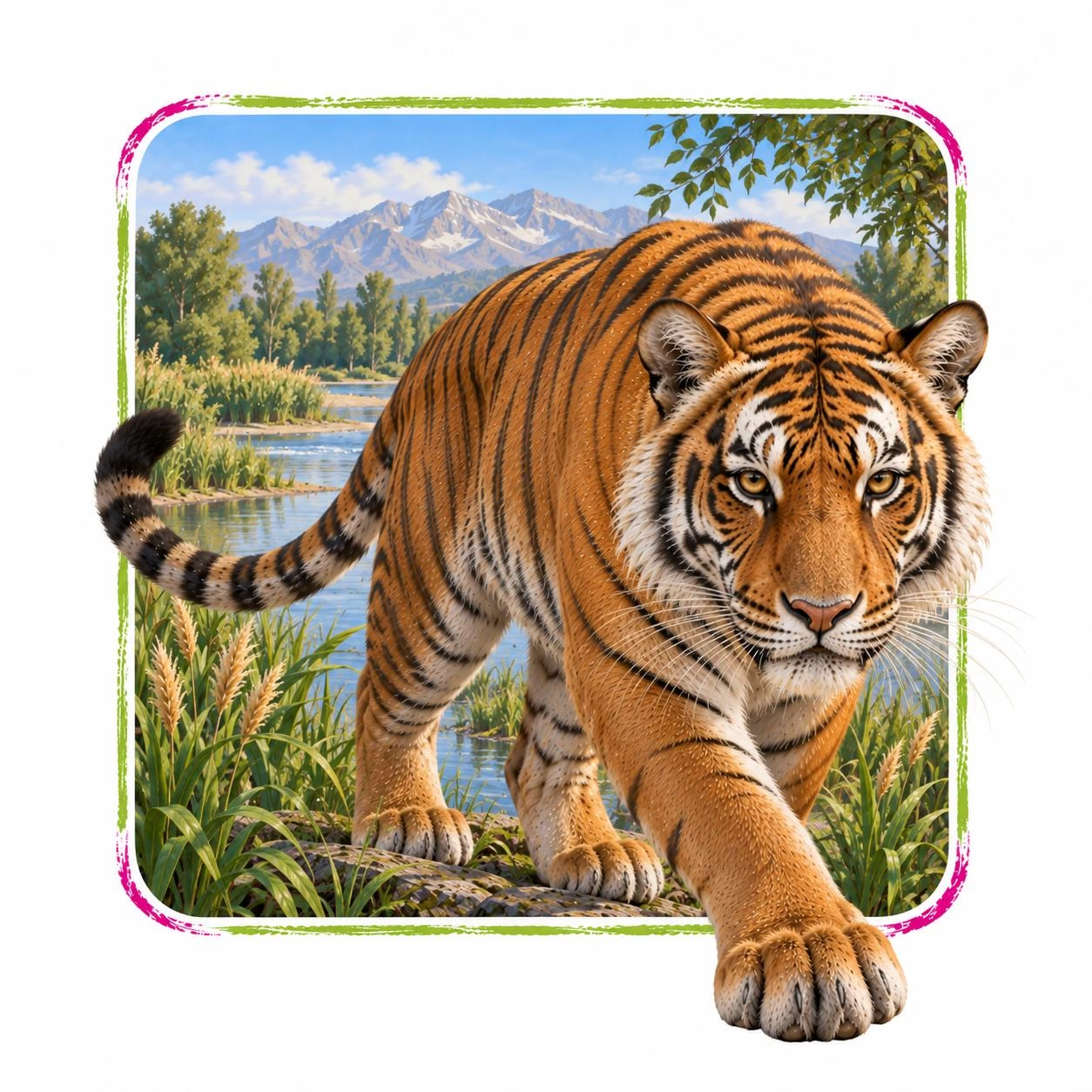
Caspian Tiger in its natural Central Asian river corridors, tugai forests, reed beds, thickets, sparse woodlands, Caspian region wetlands, and desert-edge waterways habitat